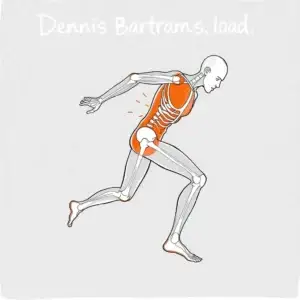
Why Walking Feels Heavy Before Your First Step Even Begins
Why Walking Feels Heavy when the body begins guarding movement before either foot leaves the ground.
Before The Day Begins, Why Walking Feels Heavy
The first useful clue may appear while both feet remain grounded.
When The Body Guards, Why Walking Feels Heavy
A cautious step often begins before the leg has moved.
Without Obvious Pain, Why Walking Feels Heavy
The body may prepare for difficulty before you notice the effort.
Why Walking Feels Heavy Before the First Step
Most people notice walking only when something begins to feel wrong.
A cautious step often begins before the leg has moved.
Why Walking Feels Heavy Without An Obvious Reason
The body may be preparing for difficulty long before you feel the effort.
Before I leave the bedroom each morning, I do the self-maintenance routines Dennis Bartram showed me.
I am well past three score years and ten, yet I now walk with a lightness that feels more like floating than trudging. I can get down to the floor and rise again without stopping to plan every hand position, knee movement, or escape route.
That change did not arrive through one heroic effort. It came from looking after the body’s moving parts before they began shouting for attention.
The real benefit is not the routine itself.
It is the freedom that quietly appears afterwards.
Why Walking Feels Heavy Before The First Step
 Most people notice walking only when something begins to feel wrong.
A knee complains. A hip feels tight. The back becomes tired. One foot seems reluctant to leave the ground. Attention naturally goes to the part making the most noise.
That makes sense, but it may send us to the end of the story rather than the beginning.
Walking starts before the foot swings forward.
The body must first allow one side to support you while the other becomes free to move. Weight shifts, the ankle responds, the eyes choose a direction, and breathing either continues or pauses.
When the sequence flows, the step feels ordinary.
When the body hesitates, grips, leans, braces, or holds its breath, the same step can feel heavier than it should.
Here is the overlooked distinction: the place where you feel effort may not be where effort first entered the movement.
The Body Can Guard Without Asking Permission
You do not have to feel frightened for the body to behave cautiously.
A previous stumble, an old painful episode, a period of inactivity, or years of moving around stiffness can teach the body to prepare for trouble. That preparation may continue long after you have stopped thinking about it.
Toes grip inside the shoes.
The shoulders tighten.
The head moves forward.
The breath pauses.
One side takes the weight while the other waits for permission to move.
None of these clues is dramatic. That is why they are missed.
Someone may say, “My leg feels heavy,” while the change started with a held breath and delayed transfer from the other side. The moving leg receives the blame because that is where the struggle becomes visible.
But the body had already set the scene.
Experienced observation does not ask only, “Where does it hurt?”
It also asks, “What happened immediately before that?”
Why Trying Harder Can Make Walking Feel Harder
The usual answer to a heavy step is more effort.
Lift the foot higher. Take a longer stride. Pull the shoulders back. Tighten the middle. Push harder through the leg.
That may create a more deliberate-looking walk, but deliberate does not always mean natural.
Imagine carrying an empty tray as though it holds six full cups. Your arms stiffen, your shoulders rise, your breathing changes, and your steps shorten. The tray has not become heavier, yet your preparation has made the task more demanding.
Walking can change in the same way.
The body may treat an ordinary transfer of weight as something requiring protection. It adds tension to create certainty. Then the tension itself becomes part of the problem.
This is why my morning routine matters.
I am not forcing my body into position. I am reminding it how to move, release, respond, and share the work. The reward is not a perfect posture held like a soldier on parade. It is movement that happens without a committee meeting in my head.
I bend, turn, reach, get down and rise again.
The body knows what to do.
A Whole-Body Conversation
A foot does not walk by itself.
Walking is a conversation between the ground and the whole body. The foot receives pressure, the ankle adapts, weight transfers, the trunk rotates, and the opposite arm responds.
When those parts cooperate, effort is shared.
When one part becomes fixed or late, another may take on extra work. The body still crosses the room, but with more tension than the task requires.
The stiff hip may be the victim rather than the culprit.
The important question is not merely which part moves.
It is whether each part joins the movement at the right moment.
A Simple Clue Before You Leave The Chair
The next time you stand and prepare to walk, do not correct anything.
Do not force yourself upright, lengthen the stride, or deliberately swing your arms.
Just notice the first moment.
Before your foot leaves the ground, ask:
Did I hold my breath?
Did I lean?
Did my toes grip?
Did one shoulder rise?
Did I rush my weight onto one side?
Did I hesitate before trusting the other foot?
You are not diagnosing yourself. You are observing the beginning of the sequence.
That first moment can tell you more than watching the tenth step, because momentum and habit may have hidden the preparation that started it all.
Does your body expect movement to be easy?
Or does it prepare as though something must be protected?
Feel Good Every Day
That is why my slogan is simple:
Feel Good Every Day – Want To Know More? Ask Me How.
It is not a promise of eternal youth.
It is an invitation to stop treating stiffness, hesitation, and awkward movement as things that can only be addressed after they become painful.
My morning self-maintenance has given me back a sense of agility I remember from my thirties and forties. The routines are non-negotiable because their benefit waits in every ordinary movement that follows.
For me, that means dressing without wrestling with balance and reaching the floor without fearing the return journey.
That is my experience, not a guarantee for anyone else.
Dennis did not show me how to fight my age. He showed me how to maintain movement.
The walk feels lighter. The floor no longer feels like a one-way journey. Movement arrives without overthinking it.
And all of that begins before I leave the bedroom.
In Section Two, we will look more closely at the quiet signals that appear before a heavy step—and why the body may be guarding movement without you realising it.
Why Walking Feels Heavy When The Signals Stay Quiet
The body rarely sends a brass band ahead of trouble.
More often, it whispers.
A foot lands a little harder. One arm moves less. The breath catches for half a second. The head dips towards the floor before the first step begins.
Nothing appears serious enough to stop the day.
Yet these small details can reveal that the body is no longer sharing movement as freely as it once did.
That was the change I had failed to understand before Dennis showed me the value of daily self-maintenance.
I had thought movement was something you either possessed or gradually lost with age.
Now I see it differently.
Movement can be maintained.
The First Step Tells A Bigger Story
Watch somebody rise from a chair and begin walking.
The first step often tells you more than the next ten.
Once momentum arrives, the body can disguise its preparation. Habit takes over. The feet keep moving, and the person reaches the other side of the room.
The beginning is different.
That is where you may see a pause, a sideways lean, a hand reaching for support, or one foot being carefully placed before the body trusts it.
The person may not feel frightened.
They may not even recognise that they are hesitating.
The body has learned a protective route and now uses it automatically.
This is why Walking Feels Heavy cannot be answered by looking only at the leg that feels slow.
The earlier clue may be hiding in the foot that remains on the floor.
When One Side Refuses To Let Go
Walking requires one side to release while the other accepts.
It sounds simple because we have done it since childhood.
But consider what happens when the supporting side does not quite trust the transfer.
The moving foot travels forward, yet the body remains behind. For a moment, both legs are trying to keep control.
The new foot is being asked to receive the body.
The old foot is reluctant to release it.
That small disagreement creates extra work.
Imagine passing a cup from one hand to the other while the first hand refuses to let go. The second hand has to pull. The first hand tightens. A simple exchange becomes a struggle.
A heavy step can feel much the same.
The leg moving forward may appear to be the problem, but the real delay may lie in the side that has not yet released.
That is one of the quiet distinctions experienced movement observers notice.
They do not merely watch what moves.
They watch what fails to let go.
Why Walking Feels Heavy When Breathing Stops
Breathing is another clue hiding in plain sight.
Most people notice their breath only after exertion. Few notice the tiny pause that can happen before effort begins.
Stand up, turn, or prepare to step onto one leg and the breath may briefly stop.
The shoulders rise.
The ribs stiffen.
The middle of the body becomes more rigid.
For a moment, that tension may feel like security.
However, the body has also made itself less adaptable at the precise moment it needs to transfer weight and respond.
Try lifting an empty box while breathing normally.
Then imagine lifting the same box while holding your breath and tightening your shoulders.
The box has not changed.
Your preparation has made it feel heavier.
This does not mean every pause in breathing is harmful or that people should force deep breaths while walking.
The useful question is simpler:
Does my breathing continue naturally when my balance changes?
That one observation can reveal whether the body is treating an ordinary step like a difficult task.
The Eyes Can Change The Whole Walk
Looking down often feels sensible.
You want to see where your feet are going. You may be checking the carpet, pavement, kerb, or uneven ground.
Yet when the eyes remain fixed close to the feet, the head can move forward, and the upper body may become more guarded.
The walk shortens.
The shoulders stiffen.
Natural rotation reduces.
The body begins organising every step around the ground immediately in front of it.
Once again, the obvious advice would be: “Lift your head.”
That may be too blunt.
Forcing the chin upwards can replace one fixed position with another.
Dennis’s approach has taught me to think less about holding a correct pose and more about allowing the body to respond.
The difference matters.
A body held upright can still be rigid.
A body moving naturally can adjust without looking perfect in a frozen photograph.
Why Walking Feels Heavy After Small Habits Add Up
One small change may seem unimportant.
A slightly shorter step.
One foot landing more loudly.
A shoulder held a little higher.
The hand on one side staying closer to the thigh.
Each clue can be dismissed because it does not look dramatic.
But walking repeats.
A small interruption repeated across a bedroom, down a street, around a shop, and throughout the day is no longer a small event.
The body learns from repetition.
It can learn freedom, timing, and adaptability.
It can also learn caution.
That is why I no longer wait for something to hurt before giving my body attention.
My morning routine is maintenance, not emergency repair.
The benefit arrives later when I walk, bend, reach, turn, dress, and get down to the floor without having to calculate every movement.
The routine itself may occupy only part of the morning.
Its value travels with me for the rest of the day.
My Walk No Longer Feels Like Work
There is a word I keep returning to.
Float.
That is how my walk now feels.
Not because I am trying to perform a special walking technique. I am not marching, forcing a stride, or holding myself rigidly upright.
The body moves.
I can get down to the floor and come back up without first planning where each hand must go.
That matters enormously when you are well past three score years and ten.
It is easy to accept reduced movement as the admission price for getting older.
A slower rise.
A guarded turn.
A hand placed on every nearby piece of furniture.
A private calculation before going down to the floor: “How will I get back up?”
My experience has shown me that age and neglected movement are not always the same thing.
I cannot promise another person the same outcome. Bodies, histories, and circumstances differ.
But I can honestly say what changed for me after Dennis showed me how to maintain the moving parts of my body.
I feel more flexible.
I feel more agile.
Movement no longer arrives with the muscle, joint, back, wrist, neck, or shoulder discomfort I had once begun to regard as normal.
Most importantly, I feel confident inside my own movement.
Gentle “Movement Sequence” Fixes Back Pain in 5 Minutes a Day

A Simple First-Step Check
Tomorrow morning, before rushing into the day, notice your first three steps.
Do not try to improve them.
Observe:
Does one foot remain planted longer?
Does your breath stop?
Do you lean before stepping?
Does one arm stay close to the body?
Are your eyes fixed on the floor?
Does the first step feel different from the third?
This is not a medical test, and it cannot diagnose the reason for pain, balance loss, or walking difficulty. New, severe, or worsening symptoms need appropriate professional assessment.
The purpose is awareness.
You are looking for the first moment where movement becomes effort.
That first moment may be more useful than the later complaint.
Feel Good Every Day
I used to think the point of exercise was to complete the exercise.
Now I understand that the real point is what the body can do afterwards.
Can you turn without bracing?
Can you reach without fear?
Can you get onto the floor and return naturally?
Can you walk without feeling as though every step requires permission?
That is why the message on this site will keep coming back to four simple words:
Feel Good Every Day
And the invitation that follows is just as simple:
Want To Know More? Ask Me How.
Dennis taught me that body maintenance does not have to begin with pain.
It can begin with noticing.
The quiet foot contact.
The held breath.
The delayed transfer.
The movement that once happened naturally but has gradually collected tension around it.
Post Two will investigate why we instinctively watch the painful or stiff body part—and why Why Walking Feels Heavy may only make sense when we stop staring at the most obvious suspect.
Why Walking Feels Heavy Before The Day Has Properly Begun
The first useful clue may appear while both feet are still on the floor.