Daily Body Self-Maintenance Supports Easier Movement
Why Daily Body Self-Maintenance Matters More After 50
Daily Body Self-Maintenance After 50 Starts With How You Move
How Daily Body Self-Maintenance Supports Easier Movement
There’s a quiet realisation that tends to arrive after 50.
It’s not about pain.
It’s not about diagnosis.
It’s not even about age.
It’s the sense that your body no longer maintains itself as it once did.
Movements that once refreshed your body now leave lingering effects.
Stiffness hangs around longer.
Balance needs a bit more attention.
Walking takes a little more effort.
That moment is usually when people begin searching for daily self-care for their bodies, even if they don’t yet have the words for it.
Why Daily Body Self-Maintenance Becomes Essential After 50
For most of life, the body self-maintains automatically.
You move enough.
You change positions often.
You recover naturally.
After 50, daily life changes.
More sitting.
Less variety of movement.
Old habits settle in.
Small compensations solidify into lasting patterns.
None of this feels dramatic, but it adds up.
That’s why daily body self-maintenance isn’t about fixing something broken.
It’s about restoring what used to happen naturally.
Daily Body Self-Maintenance Is Not Exercise
This is where many people go wrong.
They hear “maintenance” and think:
workouts
routines
programs
effort
But daily body self-maintenance is not the same as exercise.
It doesn’t aim to exhaust you.
It doesn’t chase fitness goals.
It doesn’t depend on willpower.
It supports the body by preserving natural movement and ease, rather than increasing strength or endurance, as exercise aims to do.
Maintenance keeps your body operating smoothly day to day, while exercise introduces greater physical demands.
Exercise is about pushing beyond what feels easy; maintenance is about making sure movement stays available and natural.
After 50, those needs are very different.
Why the Body Stops Resetting Itself Automatically
Earlier in life, the body resets through ordinary activity.
You walk more.
You bend more.
You instinctively shift your posture.
As those inputs reduce, the body holds onto tension longer.
Joints don’t unwind as easily.
The nervous system stays somewhat guarded.
This is why people say:
“I stretch, but it doesn’t seem to stick.”
Without daily self-care, tension accumulates faster than it dissipates.
Daily Body Self-Maintenance Starts With Awareness, Not Effort
One of the biggest misunderstandings is that maintenance requires effort.
In reality, it requires attention.
Noticing:
How you stand
How you sit,
how you breathe
How you move between positions
Most tension builds because movement happens on autopilot.
Daily body self-maintenance gently brings movement back into awareness, without forcing change.
That alone begins to reduce unnecessary strain.
Why Short, Daily Input Works Better Than Big Sessions
Long sessions rely on time and motivation.
Short sessions rely on habit.
Five to fifteen minutes of daily self-care for the body provides the nervous system with regular reminders that movement is safe and supported.
Those reminders:
reduce background tension
improve coordination
restore confidence
The body responds to frequency, not intensity.
That’s why short daily input is so effective after 50.
Daily Body Self Maintenance Supports Balance Naturally
Balance rarely fails because of weakness.
It fails because the body feels uncertain.
When the nervous system senses instability, it tightens muscles to protect you. That tightening reduces balance responsiveness.
Daily body self-maintenance reduces this guarding.
As tension eases:
balance reactions speed up
posture adjusts naturally
movement feels less deliberate
People often notice balance improving without ever “training balance”.
This happens because walking reflects the body’s overall organisation.
When daily body self-maintenance keeps the spine, joints, and breath responsive, walking stops feeling like work.
It becomes something the body knows how to do again.
Why Maintenance Reduces the Need to “Think” About Movement
One of the clearest signs maintenance is working is this:
You stop monitoring your body.
You’re not correcting posture.
You’re not bracing.
You’re not reminding yourself what to do.
Movement becomes automatic again.
That’s the real goal of daily body self-maintenance – not control, but ease.
Daily Body Self-Maintenance Prevents Small Issues from Becoming Big Ones
Most movement problems don’t start big.
They start as:
slight stiffness
mild imbalance
reduced confidence
hesitation
Without maintenance, those small signals compound.
Daily body self-maintenance interrupts that process early.
It keeps the body adaptable instead of rigid.
Why This Isn’t About Perfection
You don’t need to do it perfectly.
You don’t need a flawless routine.
You don’t need discipline.
You need regular contact with your body.
Missing a day doesn’t undo progress.
Returning maintains it.
Consistency matters more than precision.
What People Usually Notice First
When daily body self-maintenance becomes part of life, people often notice:
Standing feels easier
turning feels smoother
less tension at the end of the day
more confidence in everyday movement
These changes are subtle, but their effects accumulate over time.
Where This First Section Leaves Us
Daily body self-maintenance isn’t about adding more to your day.
It’s about preventing the slow accumulation of tension and uncertainty that makes movement harder over time.
In Section 2, we’ll look at:
What daily maintenance actually looks like
Why is 5–15 minutes enough
How does it become something you want to do
But we stop here.
How Daily Body Self-Maintenance Fits Into Real Life
Once people accept that maintenance matters, the next question is practical:
How does this actually fit into my day?
Daily body self-maintenance isn’t something you schedule like an appointment. It works best when it blends into ordinary life.
It happens:
when you first get up
between sitting and standing
during quiet moments in the day
That’s why it lasts. It doesn’t compete with life; it supports it.
Why Five to Fifteen Minutes Is Enough for Daily Body Self-Maintenance
Many people assume that meaningful change requires long routines.
It doesn’t.
The nervous system responds to regular input, not long sessions. Five to fifteen minutes of daily body self-maintenance is enough to remind the body how to organise itself.
The body doesn’t measure time.
It tracks repeated input.
Short, daily input keeps joints responsive, muscles relaxed, and movement confidence intact.
Daily Body Self-Maintenance Works Because It Reduces Background Tension
Most tension isn’t obvious.
It lives in the background:
slightly raised shoulders
tight hips
shallow breathing
guarded posture
Daily body self-maintenance gently reduces this background tension before it accumulates.
As tension reduces:
movement feels easier
balance improves
fatigue decreases
This is why people often feel better without being able to point to one specific change.
Why Consistency Matters More Than Technique
People often worry about “doing it right”.
That worry creates tension, which defeats the purpose.
Daily self-maintenance of the body doesn’t depend on perfect technique. It depends on regular contact with movement and awareness.
Missing a day doesn’t erase progress.
Returning supports your progress.
Consistency keeps movement available.
How Daily Body Self-Maintenance Improves Balance Over Time
Balance improves quietly when the body feels supported.
As daily self-maintenance of the body reduces unnecessary tension, balance reactions speed up. The body stops over-controlling movement.
This happens because walking reflects the body’s overall organisation. When daily body self-maintenance keeps the spine, joints, and breathing responsive, walking stops feeling like work.
People often say:
“I didn’t realise how much effort I was using until it wasn’t there anymore.”
Daily Body Self-Maintenance Reduces End-of-Day Fatigue
Fatigue is often caused by inefficiency, not age.
When the body compensates all day, holding tension, bracing, over-stabilising, energy drains quietly.
Daily self-maintenance of the body redistributes effort more evenly across the body. Muscles stop doing work they were never designed to do.
As a result:
Energy lasts longer
stiffness reduces
recovery improves
Why Maintenance Builds Confidence Instead of Fear
Fear creeps in when movement feels unpredictable.
Daily body self-maintenance restores predictability.
The body experiences repeated moments of safe, supported movement. Over time, confidence returns, not as bravado, but as calm trust.
Confidence doesn’t come from trying harder.
It comes from feeling supported.
Daily Body Self-Maintenance Becomes Automatic Over Time
At first, maintenance feels intentional.
Then it feels familiar.
Eventually, it feels like something you miss if you skip it.
That shift usually happens within a few weeks. The body begins to expect regular care, just like it expects sleep or hydration.
This is when daily body self-maintenance stops being a task and becomes part of who you are.
Why This Approach Works Long Term
Daily body self-maintenance adapts with you.
It doesn’t rely on:
fitness levels
strength gains
youth
pushing limits
It works with the nervous system, not against it.
That’s why it continues to help as the body changes over time.
Daily Body Self-Maintenance Supports Independence
Independence isn’t about avoiding age.
It’s about maintaining capacity.
The ability to:
move freely
adjust easily
recover quickly
trust your body
Daily body self-maintenance protects these abilities quietly and reliably.
Why Less Is Often More After 50
Many people try to do too much.
More effort.
More exercises.
More routines.
Daily body self-maintenance works because it does less, more often.
Less force.
Less pressure.
Less expectation.
And more support.
What People Usually Notice After a Few Weeks
With consistent daily body self-maintenance, people often notice:
movement feels easier without thinking
Balance improves naturally
Walking takes less effort.
stiffness no longer lingers
These changes aren’t dramatic, but they’re lasting.
Daily Body Self-Maintenance Is an Investment, Not a Fix
This isn’t about fixing a problem.
It’s about maintaining a system.
Just as brushing teeth prevents tooth decay, daily self-care prevents the slow accumulation of tension and uncertainty that makes movement harder over time.
Final Thought on Daily Body Self-Maintenance
If movement has started to feel heavier, more effortful, or less confident, it doesn’t mean something is wrong.
It means your body is asking for regular care again.
Daily body self-maintenance answers that request simply and reliably.
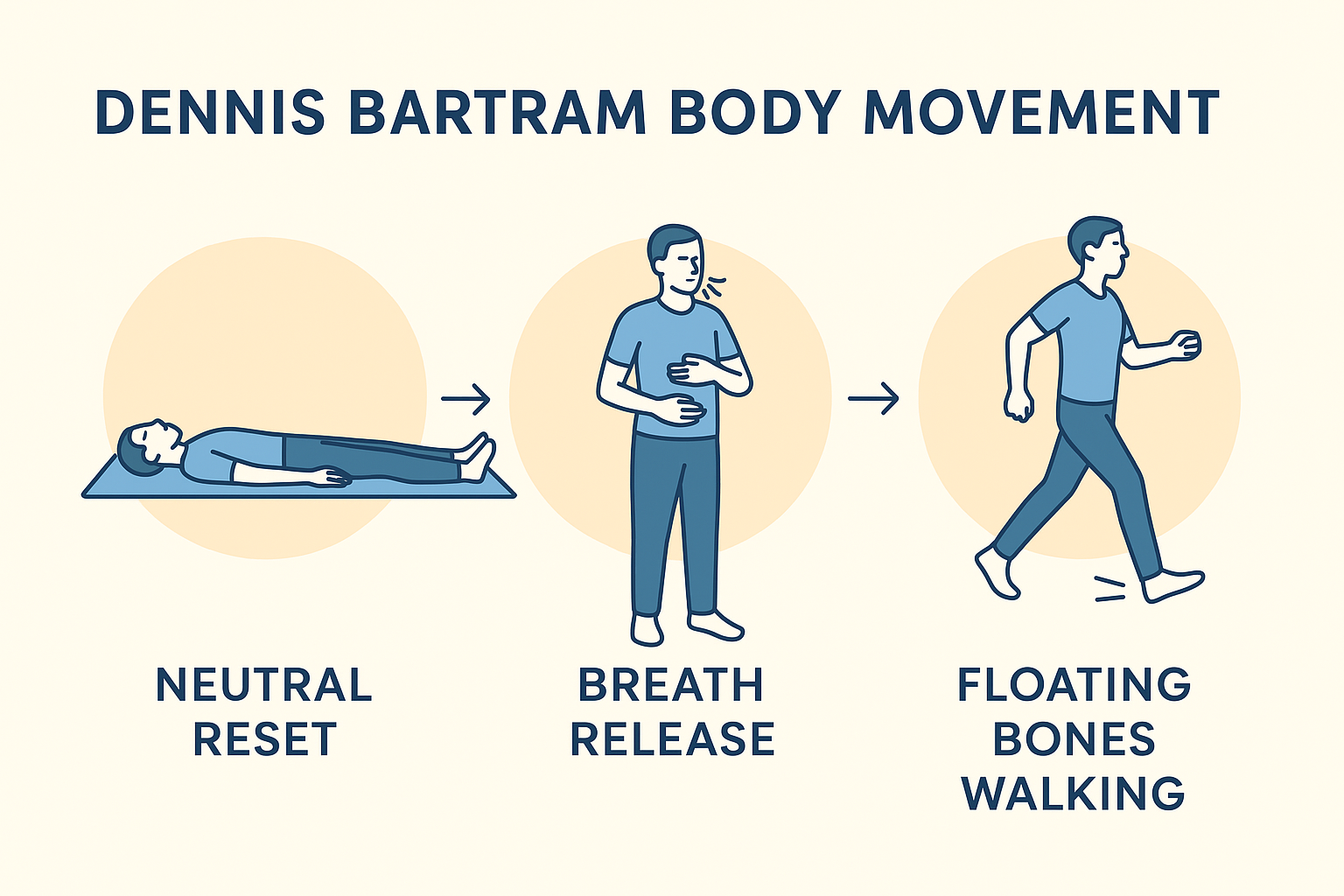
Dennis Bartram is the Director of the Active Balance Home or on the Go System Dennis’ journey began in 1969 when he qualified in Swedish remedial massage and in 1974, he began his practice in remedial sports massage and manipulative
Spinal Alignment Movement Coach for Everyday Balance Restore Strength with a Spinal Alignment Movement Coach Spinal Alignment Movement Coach for Effortless Balance…
Effortless Movement Spine Float Starts With Body Memory Why Effortless Movement Spine Float Feels Different How Effortless Movement Spine Float Restores Natural…
Daily Pain-Free Alignment Plan Works Better Than Stretching Daily Pain-Free Alignment Plan for Retirees Seeking Better Mobility Start Your Daily Pain-Free Alignment…

 There’s a quiet realisation that tends to arrive after 50.


