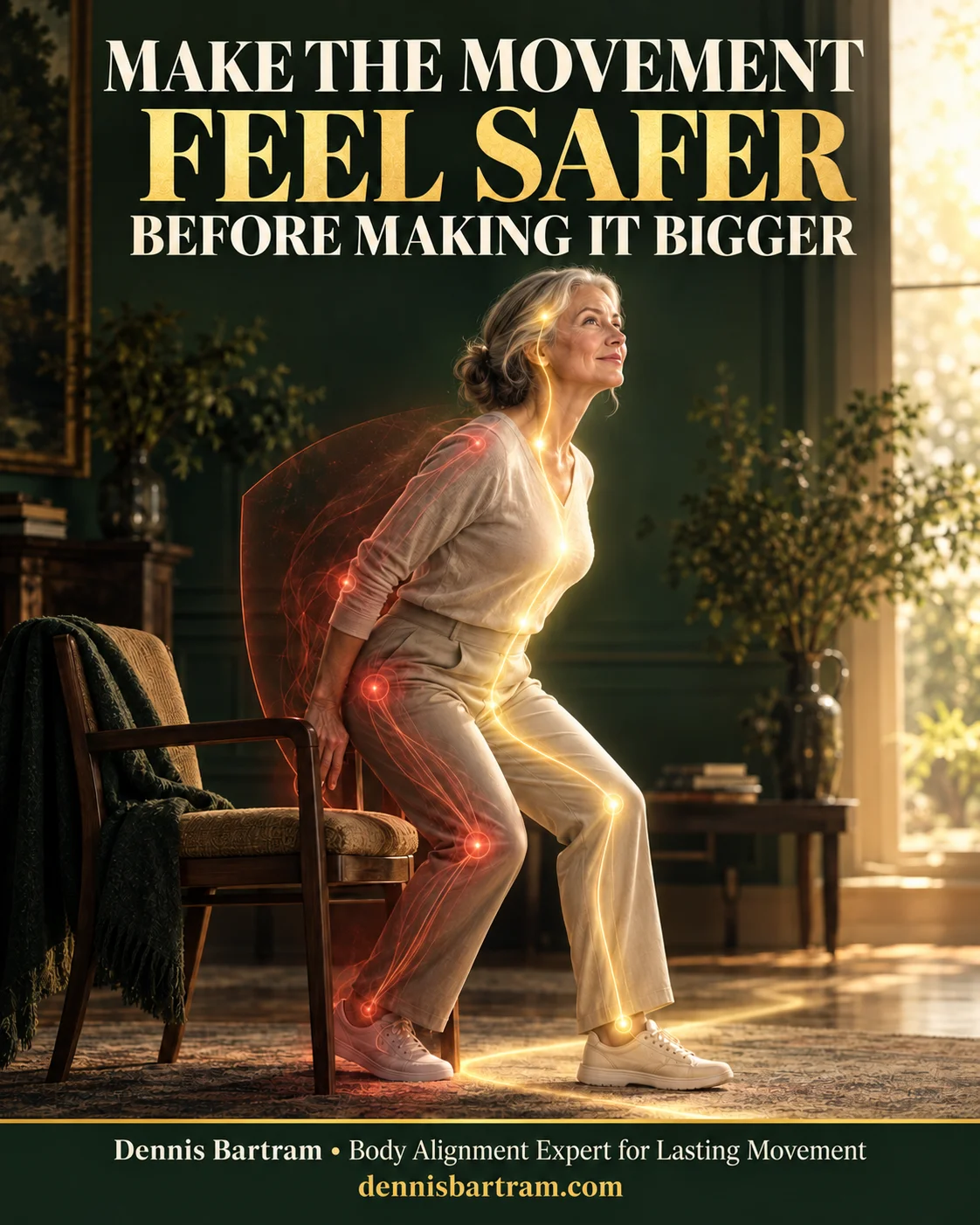
Balanced Body Movement Coach Restores Confidence Naturally
Balanced Body Movement Coach for Strength and Stability
Pain Signals Explained by a Balanced Body Movement
Daily Movement Through a Balanced Body Movement Coach Approach
“I’ve done everything I was told… so why do I still feel like I’m fighting my own body?”
That thought rarely comes during the pain itself. It shows up later, when you’re tired of adjusting or pretending it is “part of getting older” or something you should push through.
Most people don’t end up here because they lack effort. They arrive because they have tried: stretches, exercises, better food, and earlier nights. Yet issues keep circling back, sometimes louder, sometimes elsewhere.
This is where a Balanced Body Movement Coach can make a difference, not just by title, but by offering a new perspective on how your body functions.
When Symptoms Distract, a Balanced Body Movement Looks Deeper
 Pain demands attention. We zoom in, stretch the tight spot, strengthen the weak one, and rest the sore area. On the surface, it seems logical.
Sometimes it even works. For a while.
But symptoms are rarely the starting point. They’re the endpoint of compensation. The body’s way of saying, “I’ve been covering for something else, and I’m running out of options.”
A Balanced Body Movement Coach responds to pain by examining what’s not moving well enough to share the workload. They focus on identifying the cause of the pain, not just treating it.
When one part of the body stops working, another quietly steps in. That backup works overtime and becomes overloaded. Discomfort appears. Treat only the discomfort, and the body finds another workaround. That’s why issues seem to “move around.”
Why Movement Matters More Than Exercise to a Balanced Body Movement Coach
Movement is often treated like a task. Something you schedule. Something you complete. But movement is really communication. It’s how the nervous system gathers information about safety, stability, and control.
When movement feels rushed, guarded, or restricted, the body adapts. Muscles tighten. Joints stiffen. Balance becomes something you manage consciously rather than something that just happens.
A Balanced Body Movement pays close attention to how you move, not just how much, and uses advanced pattern recognition to help you retrain movements so your body receives safety signals that generic routines often miss.
That difference matters more than most people realise.
When the body feels safe, it relaxes. Energy frees up. Walking feels lighter. Standing is easier. Even breathing changes, without trying.
How Nutrition Supports Recovery According to a Balanced Body Movement
People eat well, sometimes very well, but energy stays low, inflammation lingers, and weight won’t budge. It doesn’t add up.
Food doesn’t just fuel. It signals to your body whether it’s safe, whether it can recover, or needs to hold back.
A Balanced Body Movement Coach understands that nutrition doesn’t operate in isolation and is uniquely qualified to help you troubleshoot why healthy eating hasn’t worked by restoring movement safety and addressing body stress that disrupts digestion and cravings.
Sometimes the issue isn’t what you eat, but how your body uses it.
Why Sleep Improves When a Balanced Body Movement Coach Fixes Daytime Patterns
Most sleep advice focuses on bedtime routines, screens, supplements, or mattresses. But poor sleep often begins long before night.
If the body spends the day compensating, bracing, sitting rigidly, and moving cautiously, it won’t feel calm just by lying down. The nervous system stays half-on, protective, and alert.
A Balanced Body Movement Coach looks upstream. How did the body move today? Did anything feel unstable? Effortful? Guarded?
When daytime movement feels more confident and supported, sleep often improves naturally. Not perfectly. Not overnight. But noticeably.
Because the body finally believes it’s safe to switch off.
How Stress Shows Up in the Body for a Balanced Body Movement Coach
We talk about stress as if it lives only in the mind. But stress also lives in joints that don’t trust their range, in breathing patterns that never fully drop, in muscles that stay switched on long after they’re needed.
A Balanced Body Movement Coach doesn’t tell you to “relax.” That rarely works. Instead, the aim is to reduce the body’s need to stay on high alert in the first place.
Better balance. Smoother transitions. More efficient movement. These small changes send powerful signals. The nervous system listens. And when it listens, stress stops spilling over into every corner of life.
Why Integration Beats Perfection for a Balanced Body Movement Coach
This is where expectations often clash with reality. People want the perfect plan. The one routine that fixes everything. But bodies don’t work like machines. They work like ecosystems.
A Balanced Body Movement Coach champions integration: movement that supports digestion, nutrition that aids recovery, rest that builds resilience, and stress managed throughout the whole system.
You might move more, but with less intensity. Eat more consistently, but with less rigidity. Rest more, without guilt. Push yourself, without punishment.
Those contradictions aren’t mistakes. They’re signs the system is rebalancing.
When things start working together, symptoms lose their grip. You stop scanning your body for problems. You stop bracing for the next flare-up. Trust returns slowly.
And trust, more than effort, is where real change begins.
In Part 2, we’ll show how this approach shapes actual habits and choices, simple steps that endure and make a real difference in daily life.
Why a Balanced Body Movement Coach Focuses on Root Causes
“I don’t want another plan I can’t keep. I want something that fits real life.”
That sentence matters more than most people realise. By the time someone says it, they’re no longer looking for motivation. They’re looking for relief. Seeking relief from starting over. Relief from fixing one thing only to break another. Relief from feeling like their body is a project instead of a partner.
This is where the Balanced Body Movement Coach approach stops being an idea and starts becoming practical, delivering changes that generic plans and isolated fixes can’t, by tuning into your body as a unique system, not a list of problems.
Not perfect. Not flashy. Just workable.
What Daily Life Looks Like Through a Balanced Body Movement Coach Lens
Real life doesn’t happen in gym sessions or meal plans. It happens when you get out of a chair. How do you walk to the car? Your breathing when you’re tired. How you move when no one is watching.
A Balanced Body Movement pays attention to these daily moments because their skill lies in spotting and adjusting subtle, repeated movement patterns that create tension or ease, adding a level of personalised attention most programs overlook.
If movement feels awkward or effortful in daily life, the body adapts by tightening and bracing. That low-level tension builds quietly. By the end of the day, you’re exhausted without knowing why. Sleep suffers. Appetite changes. Stress feels heavier than it should.
Nothing dramatic happened. But everything added up.
Why Small Movement Changes Create Big Shifts
People often expect change to feel intense. Hard. Earned. But the body doesn’t need to be shocked into balance. It needs to be reminded.
A Balanced Body Movement Coach might focus on smoother transitions rather than harder exercises. How you shift your weight. The way you turn. How do you pause before you move instead of rushing through everything?
These small changes tell the nervous system something important: you’re safe.
And when the body feels safe, it stops hoarding energy. It stops guarding. It starts cooperating again. Walking feels lighter. Standing feels easier. Balance improves without conscious effort.
This is why chasing fatigue rarely works. Fatigue often comes from inefficiency, not weakness.
Eating to Support the System, Not Control It
By this point, many people have tried to control their food. Tracking. Restricting. Optimising. It works for a while, then it doesn’t. Energy dips. Cravings spike. Frustration builds.
A Balanced Body Movement Coach views eating through a different lens, guiding you to rebuild a relationship with food that supports recovery in a way that restrictive diets and even most nutrition advice rarely do.
When movement quality improves and stress drops, appetite often settles naturally. Hunger cues become clearer. Satisfaction returns. Food stops feeling like a negotiation.
This isn’t about ignoring nutrition. It’s about timing it correctly within the system. A body that feels supported uses food differently than a body that feels under threat.
Sleep as a Reflection, Not a Goal
Sleep is often treated like a problem to solve. But sleep is more like a report card. It reflects how the body experienced the day.
If movement felt tense, if breathing stayed shallow, if balance felt uncertain, the nervous system doesn’t forget that just because it’s dark. It stays alert. Protective. Light-sleeping.
A Balanced Body Movement Coach doesn’t chase sleep directly. They improve the conditions that support sleep. More efficient movement. Less unnecessary tension. Better recovery signals.
When those pieces start lining up, sleep deepens without force. Not every night. But often enough to matter.
Stress Resilience Built Into the Body
Stress management advice usually lives in the mind. Think differently. Worry less. Stay positive. Useful ideas, but incomplete.
Stress is also physical. It lives in stiff joints, clenched muscles, and breathing patterns that never fully drop. If the body is always compensating, the mind never truly relaxes.
A Balanced Body Movement Coach builds stress resilience not just with mindfulness, but with expert strategies that help your body and brain trust their movement again, making lasting calm possible where mental tricks alone fall short.
When the body trusts itself, the mind follows. Not because life got easier, but because the system can handle more without tipping over.
Letting Go of the “All or Nothing” Trap
This is one of the hardest shifts for people. The belief that progress requires consistency at all costs. Miss a day, and everything falls apart.
A Balanced Body Movement Coach understands that flexibility is part of balance. Some days you move more. Some days you rest more. On some days, you eat perfectly. Some days you don’t.
What matters is the overall direction, not the daily scorecard.
The body responds better to steady input than extreme swings. Small, repeatable actions beat heroic efforts every time.
When Things Start to Feel Different
This is usually how people describe the change, not in dramatic terms, but in quieter ones.
“I don’t think about my balance as much.”
“Walking feels easier again.”
“I’m sleeping deeper without trying.”
“I have more energy, but I’m doing less.”
“Walking feels easier again.”
“I’m sleeping deeper without trying.”
“I have more energy, but I’m doing less.”
Those statements don’t sound impressive on social media. But they matter. They signal that systems are working together again.
That’s the real goal of a Balanced Body Movement Coach approach. Not perfection. Not peak performance. Just a body that feels reliable again.
Open to See This Video, And This Is What’s Already Built,
Trained & Waiting For Your First Command.
Break Free from Debt Pain, Defeat Financial Fears, And Discover Your True Desires for a Better Life!

Today’s Apprentice Task: Build One Front Door
Choosing Progress That Lasts
Real change doesn’t announce itself. It shows up gradually, in moments you almost miss. Without discomfort. Without the dread when you move. In the quiet confidence that you’re not one wrong step away from a setback.
A Balanced Body Movement Coach isn’t about fixing you. It’s about reminding your body how to work as a whole again.
When movement, nutrition, sleep, and stress stop fighting each other, effort drops. Life feels lighter. And improvement stops feeling temporary.
Not because you did more.
But because you finally addressed what was underneath it all.
What Lasting Change Looks Like with a Balanced Body Movement Coach