Floor Mobility With Support Gives Participation Its Proper Place
The help you use doesn’t erase your effort.
When Did A Helping Hand Become A Mark Against You?
An ordinary achievement can include assistance.
Count The Activity And Keep The Support In View
Describe the whole experience before judging the result.
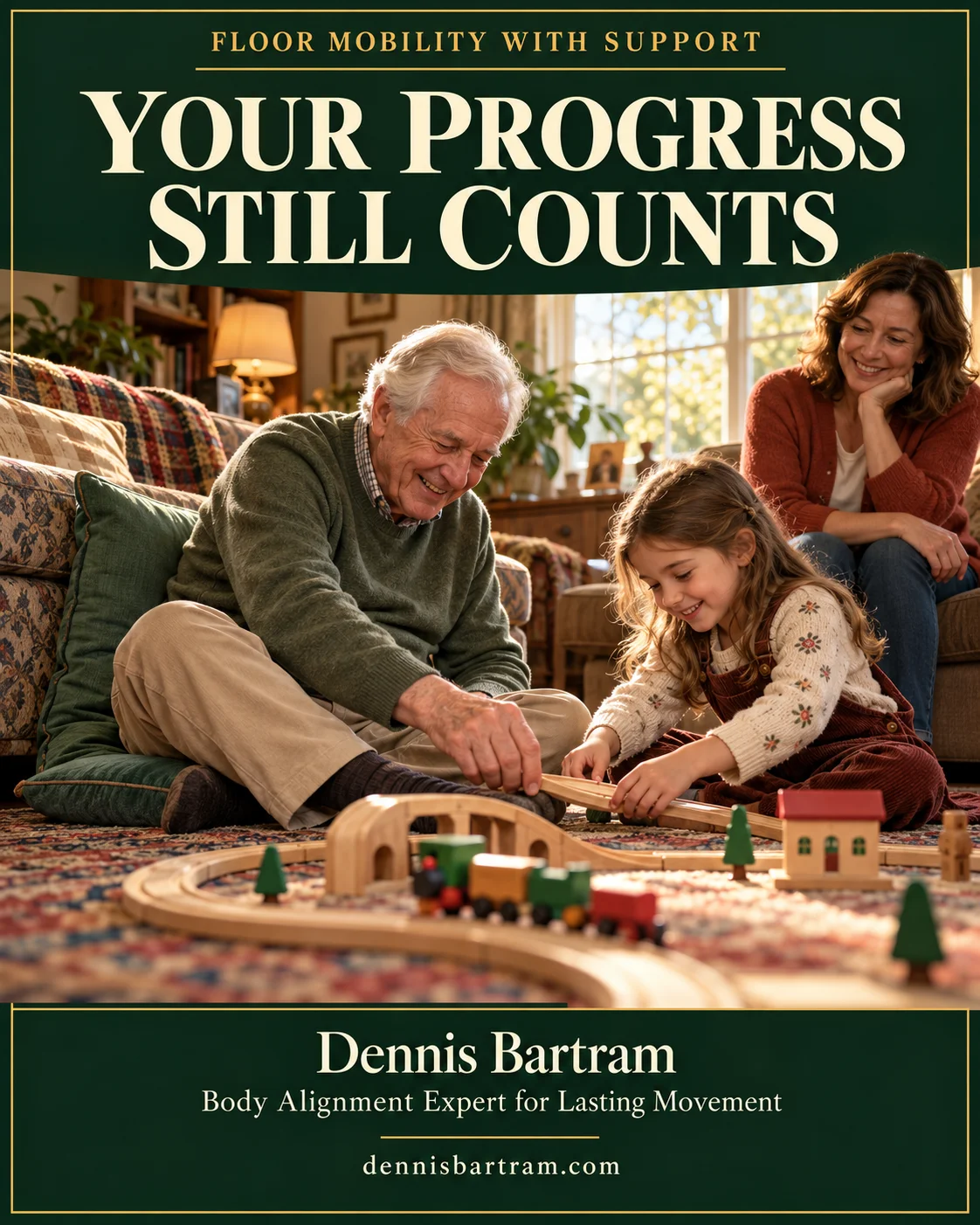
The railway had reached the sofa, the station roof was missing, and Grandad had been appointed chief engineer without an interview. Imagine Peter, an older grandfather in this illustrative example, sitting with his granddaughter as they build a wooden track across the living room. He has received individual guidance about suitable floor activity, and his daughter provides the assistance they have been shown. For a while, his attention belongs to bridges, carriages and a passenger service with a worrying disregard for timetables. Afterwards, however, he tells himself the afternoon doesn’t really count because he couldn’t get down and up alone. That is where Floor Mobility With Support deserves a closer look. Peter remembers the help but discounts the activity. The person who spent the afternoon taking part has somehow written himself out of his own achievement.
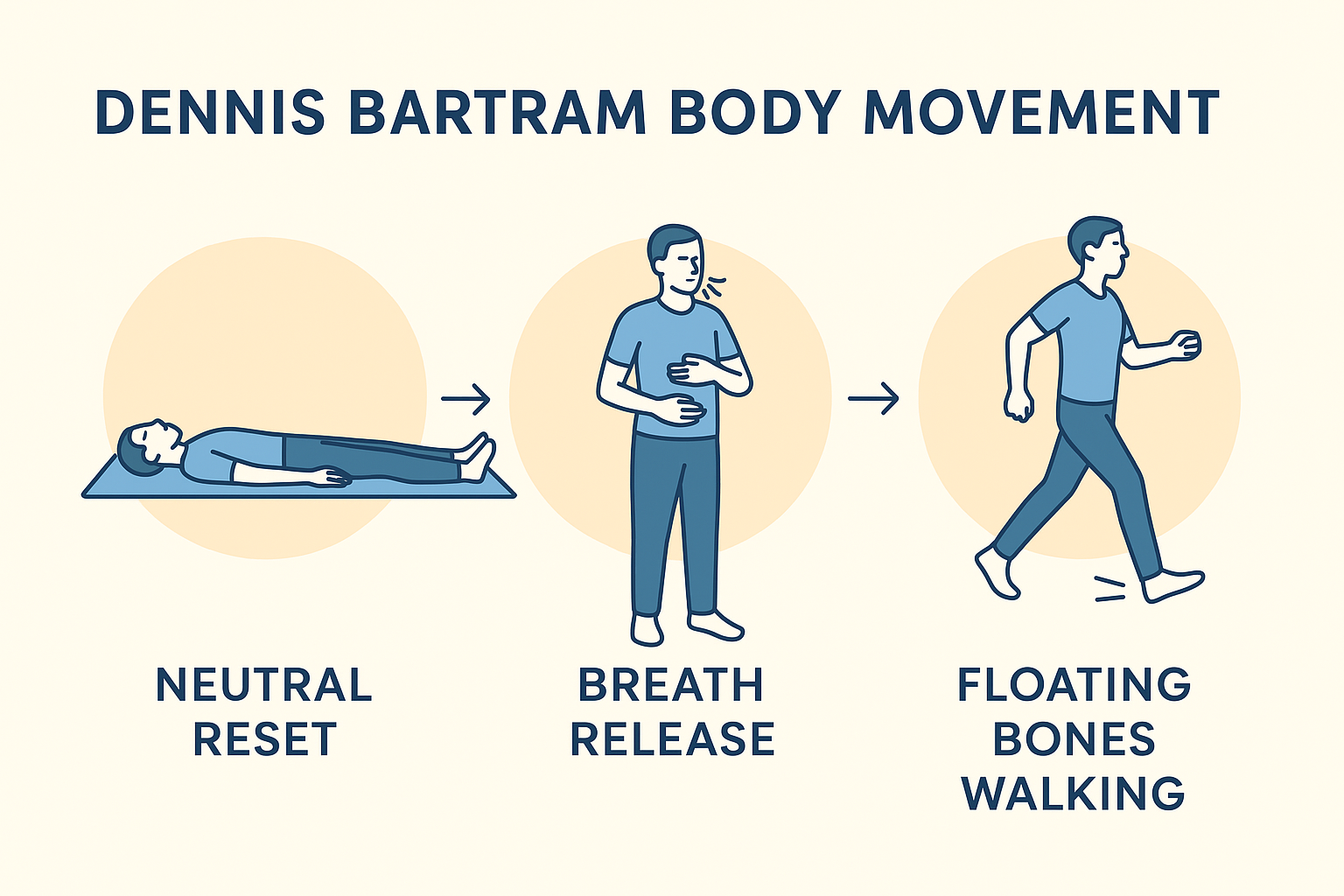
Alan’s experience could encourage someone like Peter, provided it is understood as a personal story. In his early seventies, Alan needed something to hold on to when he was down, and getting back on his feet was a real struggle. Today, he reports managing both without holding furniture after making Dennis Bartram’s floor exercises part of his morning routine. He values that change and says the movement no longer requires as much conscious planning. However, his outcome doesn’t establish what another person should attempt or when they should reduce assistance. It certainly doesn’t make supported participation any less valuable. Readers bring different abilities, circumstances and health needs to the subject. Alan’s story offers a reason to explore what might be appropriate for an individual. It shouldn’t become a measuring stick that makes someone else’s worthwhile afternoon look like unfinished business.
Floor Mobility With Support Begins With What You Want To Do
Before counting how many hands helped, establish what the activity was for. Peter wanted to join his granddaughter’s game. Someone else might want to participate in an appropriate floor session, while another person hopes to spend time beside a pet. Each purpose gives the movement meaning beyond the mechanics of getting up and down. Without that purpose, removing assistance can quietly become the entire ambition. A person begins by wanting to take part and ends up judging every experience by whether they needed help. Those are different questions. The first concerns participation; the second concerns how participation happened. Both deserve attention, but neither should swallow the other. A useful conversation therefore starts with something concrete: what would being able to join this activity allow you to enjoy or do? The answer belongs to the person, rather than to an imagined standard.
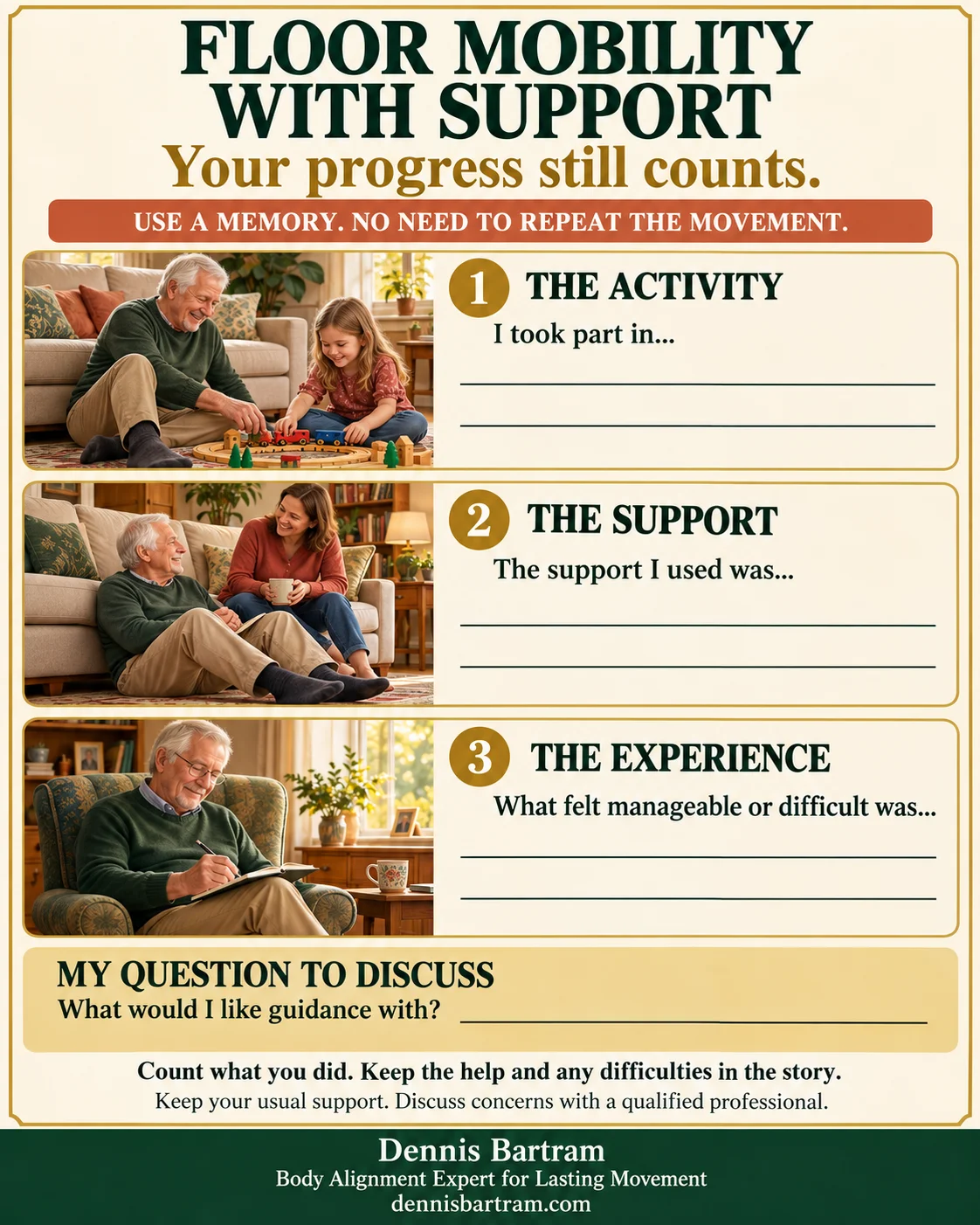
A straightforward way to keep the account balanced is to describe the activity, the support and the experience. The activity tells us what you did. The support records the assistance or arrangements you used.
The experience includes what felt manageable and what remained difficult. Together, those three parts give Floor Mobility With Support a more useful measure than a simple pass or fail. Peter might say he helped build the railway, used the agreed assistance to get up and down, and enjoyed sitting with his granddaughter but found the return tiring. That sentence recognises participation without concealing the concern. It doesn’t claim a physical improvement or declare the arrangement suitable for future use. It gives an honest account of one occasion, a sounder starting point for discussion than dismissing everything or announcing that everything was fine.
“I Still Needed Help” Is Only Part Of The Account
The word “still” can do surprising damage in a short sentence. “I still needed help” may carry an unstated expectation that the help should have disappeared by now. Yet who established that expectation? Was reducing assistance an individually assessed goal, or did the reader borrow it from somebody else’s video? Those possibilities shouldn’t be treated as equivalent. A demonstration shows what happened for the person demonstrating, under the circumstances shown. It doesn’t supply a timetable for the viewer. Similarly, Alan’s account describes a change he values, without telling Peter what his next step should be. When a comparison makes you discount your own participation, examine the comparison before accepting its verdict. You may be measuring yourself against a result that was never agreed as appropriate for you, while overlooking the activity you actually wanted to share.
Changing the description can restore missing detail without adding forced optimism. Peter doesn’t need to tell himself that everything was wonderful. He can say, “I joined the game and helped build the station. My daughter provided our agreed assistance, and getting up felt tiring.” That is both more encouraging and more accurate than saying the afternoon didn’t count. It also leaves room for the concern to be discussed. The point isn’t to turn every experience into a success story. Some activities may be uncomfortable, unsuitable or simply unenjoyable, and those details deserve to remain visible. However, receiving help doesn’t automatically erase what went well. A complete account can contain enjoyment, assistance and difficulty at the same time. Keeping those elements together lets useful questions emerge without forcing the person to choose between pride and honesty.
Keep The Conditions Beside The Achievement
“I managed it” can be incomplete for the opposite reason: it may leave the assistance out altogether. If someone hears that Peter got down and up, they might assume he did it alone. That misunderstanding matters when future arrangements are discussed. Including the help isn’t an apology; it is part of describing what happened. The same applies to the setting and any relevant guidance already received. Floor Mobility With Support should never depend on pretending the conditions were different from what was actually present. A person can value participation while saying plainly that assistance was needed. This gives relatives and professionals a clearer account to work with. It also protects the meaning of the achievement, because nobody has to discover later that “managed” meant something other than what they understood. Accuracy and encouragement can comfortably share the same sentence.
Family praise can sometimes blur that distinction, even when it comes from kindness. “Perhaps next time you won’t need me” sounds hopeful, but it can suggest that today’s supported activity was only a rehearsal for the proper achievement. A more useful response might recognise the thing the person cared about: “You enjoyed building that railway together.” Any discussion about changing assistance can then happen separately, with appropriate guidance and the person’s priorities included. The granddaughter, meanwhile, may remember that Grandad helped build the station rather than how he reached the carpet. That doesn’t make the practical arrangements unimportant. It reminds us why they mattered in the first place. Support helped make participation possible on that occasion. Before making its removal the next target, keep in sight the activity it enabled and the person who wanted to be part of it.
Floor Mobility With Support Can Mean More Than Less Help
Progress is easy to overlook when we insist it must arrive with a particular certificate. If the only accepted result is getting up and down without assistance, other changes may go unnoticed. Someone might understand their agreed routine more clearly, feel more involved in an activity or explain a troublesome moment more precisely. Those observations don’t prove a physical improvement, but they can describe changes that matter to the person. Floor Mobility With Support leaves room for that distinction. A reader might say, “I needed the same help, but this time I understood what we had arranged and enjoyed taking part.” That account deserves to be heard on its own terms. It records a change in experience without turning it into a claim about strength, balance or readiness to manage alone. The help remained; the afternoon felt different.
Return to Peter and his granddaughter’s railway. Suppose that, on one visit, he spends much of the game thinking about how he will get back up. On another, he arranges and understands the same assistance, and he finds himself absorbed in locating a missing carriage. In our illustrative example, he reports less worry during the activity. That is useful information, though it doesn’t explain why the change occurred or whether his physical ability changed. The honest conclusion stays close to his account: he could give more attention to the game. Calling that meaningless because his daughter still helped would overlook something he valued. Calling it proof that he no longer needed assistance would go further than the evidence allows. Between those two judgments lies a clear, worthwhile observation about how he experienced time with his granddaughter.
Compare The Circumstances Before Judging Yourself
A difficult Wednesday doesn’t automatically overturn a manageable Monday. First, consider whether you are describing the same situation. Was the usual assistance available? Did the activity happen somewhere else? Were you trying something unfamiliar, or were you already tired before you started? These details don’t explain the difference on their own, but leaving them out can make a comparison misleading. “I managed on Monday and struggled on Wednesday” sounds like a direct measure of changing ability. However, if Monday included agreed help and Wednesday did not, the conditions were different. Before concluding, put those conditions back into the story. You don’t need to investigate every variable or reconstruct the afternoon minute by minute. Record what you actually know, preserve anything uncertain and discuss concerns that need individual assessment rather than guessing what caused them.
This works in both directions. Completing a movement with less assistance doesn’t, by itself, establish that the change was appropriate or that it should be repeated. Someone might be pleased to report what happened while still needing guidance about what it means. Equally, receiving more help on a particular occasion isn’t a verdict on the person’s worth or determination. For Floor Mobility With Support, the useful question is what changed in the activity, the arrangements and the experience. That gives you information you can work with. A score produces a winner and a loser, even when the comparison was unfair from the beginning. Keep your account descriptive: “This time I used different help, and this part felt harder.” It is a sensible starting point for a conversation, without becoming a diagnosis or an instruction to alter your next attempt.
Floor Mobility With Support Should Serve Your Own Purpose
Alan’s twenty-minute morning routine has a clear place in his life. He describes feeling flexible, walking with a “float”, and getting up and down without the old struggle. Those reported benefits explain why he protects that time before leaving the bedroom. However, borrowing his purpose is different from borrowing every detail of his routine. Another reader might want to join a suitable session with assistance, or understand what help they currently need. The relevant starting point is that person’s circumstances. Alan’s experience can open a conversation about possibilities without requiring everyone to follow it. It also reminds us that his commitment matters because of what he values in his day. The routine is connected to living. Counting minutes or comparing support tells only part of that much larger story.
Sometimes a person’s valued activity can be arranged without going onto the floor. Peter and his granddaughter could build a smaller railway on a suitable table if that better met his current needs. That would change how they played, rather than show that his floor mobility had improved. Keeping the distinction clear prevents an unnecessary choice between taking part and feeling that he has failed. A practical alternative can preserve something important while questions about floor activity are addressed separately. The same reasoning applies when a reader decides a particular exercise session isn’t right for them right now. Their purpose deserves attention, and so do the ways they can pursue it. The floor is one possible setting for an activity. It shouldn’t become an admission ticket that someone must purchase with discomfort, uncertainty or the removal of needed assistance.
Ask What A Change In Support Would Actually Give You
Wanting greater independence is understandable, and a person may have good reasons for discussing whether their assistance needs can change. Perhaps relying on someone else’s availability limits when they can participate. Perhaps they want professional help assessing a movement they currently find difficult. Those are concrete concerns worth explaining. The useful question is, “What would changing this support allow me to do?” An answer about participating at a different time or managing a particular task gives the discussion a purpose. An answer centred only on looking more capable suggests that comparison may be setting the target. Neither answer decides what is physically appropriate. That requires individual guidance. However, separating the reason for wanting change from its suitability keeps the conversation focused on the person’s life rather than an impressive-looking demonstration.
Clear descriptions also make it easier to bring a concern to an appropriate professional. “I want to stop needing help” is a broad ambition. “I enjoy the floor activity, but arranging assistance means I can only participate when my daughter visits” explains the practical limitation. Another person might say, “The support is available, but I find the return difficult and want our arrangement reviewed.” These are different questions, even though both involve assistance. Floor Mobility With Support becomes more useful when the person’s aim and current experience align. There is no need to arrive with a proposed solution or insist that assistance must be reduced. Explain what you want to do, what currently happens and what concerns you. That gives the professional something specific to assess while leaving room for an answer suited to your circumstances.
Floor Mobility With Support Everyday Routine I Do & I Feel Great Want To Know How Drop Me a Comment
#5 Unlocking Body Alignment Fascinating Insights from Active Balance
And This Is What’s Already Built, Trained & Waiting For Your First Command.
Today’s Routine: Build One Front Door
“Every morning, I spend twenty minutes+ following a sequence of movements Dennis Bartram taught me. In my early seventies, getting down to the floor needed support, and getting up was a struggle. Now I manage both without holding on, feel pain-free and more flexible, and have a float in my walk. That’s why I keep returning to my Active Balance morning routine: I value what it gives back to my day.”
Recall one occasion when you took part in an activity with assistance. Use a memory rather than repeating the movement for this task. Write three sentences: “I took part in…”; “The support I used was…”; and “What felt manageable or difficult was…”. Keep the details factual, including anything that remained uncomfortable or uncertain. If your first reaction is that the experience didn’t count, look again at the activity sentence. Did you leave out something you enjoyed or contributed? Restore that detail without inventing progress or dismissing a concern. Finally, write one question you would like to discuss with a qualified professional about your experience or current arrangements. Your finished note should describe participation, support and difficulty together. It isn’t a test to pass, and it doesn’t require you to change the assistance you use.
The support you use isn’t a score you must beat. Describe what you participated in, preserve the conditions that made it possible and give any difficulty the attention it deserves. Alan’s experience can encourage your own enquiry without becoming your personal deadline. Before asking whether you can manage with less help, ask what you want that change to make possible and seek guidance about whether it suits you.
Floor Mobility With Support Powerful Ways To Feel Proud
Spread the love
Dennis Bartram
Dennis Bartram is the Director of the Active Balance Home or on the Go System Dennis’ journey began in 1969 when he qualified in Swedish remedial massage and in 1974, he began his practice in remedial sports massage and manipulative
Retiree Posture Alignment Training and Lower-Back Control Retiree Shoulder Balance Training Fixes Rounded Posture Retiree Posture Alignment Training for Opening the Body…
Protective Movement Habits Remain Protective Movement Habits Remain After The Original Trouble Settles The body may continue using yesterday’s safest route. Could…

 Before counting how many hands helped, establish what the activity was for. Peter wanted to join his granddaughter’s game. Someone else might want to participate in an appropriate floor session, while another person hopes to spend time beside a pet. Each purpose gives the movement meaning beyond the mechanics of getting up and down. Without that purpose, removing assistance can quietly become the entire ambition. A person begins by wanting to take part and ends up judging every experience by whether they needed help. Those are different questions. The first concerns participation; the second concerns how participation happened. Both deserve attention, but neither should swallow the other. A useful conversation therefore starts with something concrete: what would being able to join this activity allow you to enjoy or do? The answer belongs to the person, rather than to an imagined standard.