Healthy Ageing by Decade for Confident Later Life
Healthy Ageing by Decade Through Movement and Balance
Daily Movement for Healthy Ageing by Decade
Healthy Ageing by Decade: Staying Mobile From Your 60s Onwards
 Ageing doesn’t arrive overnight.
It arrives quietly, one small adaptation at a time.
A slightly shorter stride.
A pause before standing.
A moment’s hesitation on uneven ground.
A pause before standing.
A moment’s hesitation on uneven ground.
This is why healthy ageing by decade matters so much after 60. At this stage of life, well-being is no longer about pushing limits or chasing peak fitness. It’s about protecting capability, the ability to move, balance, breathe, and live with confidence.
Healthy ageing by decade recognises a simple truth:
What your body needs at 65 is not what it needs at 85, and pretending otherwise can cost people their independence later.
What your body needs at 65 is not what it needs at 85, and pretending otherwise can cost people their independence later.
This guide focuses on the decades where movement, posture, and balance make the biggest long-term difference, starting with the decade that quietly sets the tone for everything that follows.
Healthy Ageing by Decade in Your 60s, Protecting Independence Early
Your 60s are often described as a “bonus decade.” Many people retire, slow down externally, and finally have time to focus on themselves. Ironically, this is also when the body begins sending its first serious warning signals, subtle but important.
From a healthy ageing by decade perspective, your 60s are not about decline. They are about prevention.
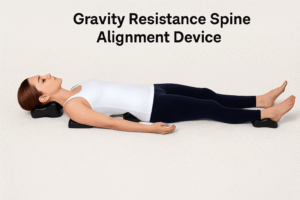
#1 Trusted SpineAlignmentDevice Reset Method Powered by Breathwork and Craniosacral Flow

This is the decade where:
- Muscle mass naturally begins to reduce
- Joint stiffness becomes more noticeable.
- Balance reactions slow just enough to matter.
The danger is not these changes themselves, it’s ignoring them because “nothing hurts that much yet.”
What healthy ageing by decade looks like in your 60s
The primary goal here is resilience.
That means maintaining enough strength, mobility, and balance to handle everyday life without hesitation. Getting up from the floor. Walking confidently outdoors. Turning quickly without feeling unstable.
Key priorities include:
- Leg and hip strength to support walking and stairs
- Joint mobility to maintain comfortable movement ranges.
- Postural awareness to support breathing and circulation
Healthy ageing in your 60s by decade is not about intensity. Short, consistent daily movement routines outperform long, irregular workouts every time.
Ten to twenty minutes a day focused on controlled movement, balance, and joint health can slow, and often reverse, many age-related declines before they become problems.
This is also the decade to stop outsourcing your body entirely to professionals. Movement becomes self-maintenance, not an optional extra.
Ageing by Decade in Your 70s – Staying Steady and Capable
By your 70s, the benefits or consequences of earlier habits become much clearer.
Two people of the same age can look completely different in how they move, stand, and engage with life. The difference is rarely genetics alone; it’s confidence in movement.
From a healthy ageing by decade standpoint, the biggest threat in your 70s is not weakness. It’s uncertainty.
Why balance dominates healthy ageing by decade in your 70s
Balance is more than standing on one leg. It’s the system that allows you to:
- Walk on uneven ground.
- Turn without dizziness
- React quickly if you stumble.
When balance feels unreliable, people unconsciously restrict movement. They walk less, avoid social situations, and stop challenging themselves physically. Over time, this creates a downward spiral.
Healthy ageing by decade in your 70s focuses on:
- Maintaining upright posture
- Practicing balance deliberately
- Keeping movement transitions smooth
Transitions matter more than most people realise. Standing up from a chair, turning around, and stepping sideways are the movements most likely to cause falls if neglected.
Walking remains one of the most effective tools for healthy ageing by decade at this stage, especially when done mindfully. Paying attention to foot placement, posture, and rhythm turns walking into a balance-and-coordination exercise.
Strength training still has value, but control, awareness, and confidence now take priority over load or repetition counts.
Healthy Ageing by Decade Is About Confidence, Not Fitness
A key misunderstanding around healthy ageing by decade is the idea that you need to “stay fit” in the traditional sense.
In reality, fitness matters far less than movement confidence.
People who trust their bodies:
- Stay socially active
- Move more throughout the day.
- Recover better from setbacks.
People who don’t trust their bodies gradually shrink their lives.
In your 60s and 70s, healthy ageing by decade means choosing movements that reinforce trust:
- Slow, controlled exercises
- Balance work with support when needed
- Gentle challenges that feel achievable
This approach builds confidence without fear, which is the foundation of long-term independence.
How Much Movement Supports Ageing by Decade?
One of the most common questions is how much movement is “enough.”
Healthy ageing by decade does not demand long workouts or extreme routines. What matters most is frequency and intention.
For most people in their 60s and 70s:
- 10–20 minutes of daily movement
- A mix of balance, mobility, and gentle strength
- Regular walking where possible
Consistency beats intensity every time. Five minutes a day is more powerful than an hour once in a while.
Why the 60s and 70s Shape Every Decade That Follows
If healthy ageing by decade had a tipping point, it would sit firmly between 60 and 75.
This is when:
- Small habits create large outcomes.
- Balance can be improved relatively quickly.
- Strength and mobility are still highly adaptable.
The choices made here directly influence what ageing looks like in later decades. Maintaining movement confidence now makes everything easier later.
Healthy ageing by decade is not about delaying age. It’s about extending capability.
Healthy Ageing by Decade in Your 80s, 90s and Beyond
If the 60s and 70s are about building resilience and confidence, the later decades are about protecting what you’ve earned.
Healthy ageing by decade changes tone after 80. The focus moves away from progress and towards preservation, safety, and quality of life. That shift is not a failure; it’s an intelligent adaptation.
Ageing well at this stage isn’t about doing more.
It’s about doing what matters.
It’s about doing what matters.
Wellbeing Ageing by Decade in Your 80s, Preserving Mobility and Safety
By your 80s, the margin for error narrows.
This is the decade when one incident, a fall, an illness, a period of inactivity, can significantly change daily life. From a healthy ageing by decade perspective, the goal now is clear:
Maintain mobility safely and consistently.
The three biggest threats in your 80s
- Falls
- Loss of confidence
- Reduced movement due to fear
These three often appear together. A fall reduces confidence. Fear reduces movement. Reduced movement accelerates decline.
Healthy ageing by decade in your 80s focuses on breaking that cycle.
Key priorities include:
- Balance practice with support (chairs, walls, rails)
- Lower-body strength to stand, walk, and sit safely
- Joint mobility to reduce stiffness and discomfort
Short, frequent movement sessions are more effective than long ones. Five minutes in the morning and five minutes later in the day can be enough to maintain function without fatigue.
At this stage, support is not weakness; it’s a strategy. Using aids allows safe practice and preserves independence for longer.
Healthy ageing in your 80s means staying mobile enough to choose how you live.
Healthy Ageing by Decade in Your 90s, Comfort, Confidence and Connection
Reaching your 90s is a significant milestone. Few people do, and those who do often teach us important lessons about what truly matters.
At this stage, healthy ageing by decade shifts again. Optimisation gives way to comfort, dignity, and connection.
Movement remains important, but expectations change.
What healthy ageing by decade looks like in your 90s
- Gentle mobility to reduce stiffness
- Assisted walking or standing where appropriate
- Seated or supported exercises to maintain circulation
Regular movement helps manage pain, improves digestion, and supports mental clarity. Even small movements, ankle circles, gentle spinal motion, and breathing exercises make a meaningful difference.
Equally important is emotional well-being. Loneliness has a profound impact on health outcomes in later life. Conversation, routine, and familiarity often contribute more to well-being than formal exercise.
Healthy ageing by decade in your 90s is about supporting life, not pushing the body beyond its limits.
Wellbeing Ageing by Decade in Your 100s, Quality Over Quantity
Centenarians offer a powerful reminder that healthy ageing by decade is not about chasing numbers.
Living longer only matters if life remains meaningful.
In your 100s, physical ability varies widely. Some people remain surprisingly mobile. Others require significant assistance. In both cases, the principles of healthy ageing by decade still apply, but gently.
Movement in your 100s
- Assisted posture changes
- Gentle hand and foot mobility
- Light stretching to maintain comfort.
These small actions support circulation, breathing, and comfort. They also provide a sense of participation rather than passivity.
Mental engagement often becomes the strongest pillar of well-being. Music, storytelling, family interaction, and familiar routines help maintain orientation and emotional stability.
Healthy ageing by decade in your 100s is about presence, not performance.
The Common Thread of Healthy Ageing by Decade
From your 60s through to your 100s, one principle remains constant:
Movement you trust keeps you engaged with life.
When people trust their bodies:
- They move more
- They socialise more
- They retain independence longer.
When trust disappears, life contracts.
Healthy ageing by decade is not about extreme fitness or rigid programs. It’s about building and maintaining movement confidence appropriate to each stage of life.
Can You Still Improve Wellbeing Ageing by Decade Later in Life?
A common myth is that it’s “too late” to improve.
Healthy ageing by decade does not mean reversing time. It means improving today’s capacity, whatever that looks like.
Even small changes can produce real benefits:
- Balance practice reduces fall risk.
- Gentle movement improves joint comfort.
- Better posture enhances breathing.
Progress may be slower, but it still matters.
How Little Movement Can Support Healthy Ageing by Decade?
Another myth is that you need long sessions to stay healthy.
In later life, frequency beats duration.
For most people over 80:
- Short daily movement sessions
- Gentle walking where safe
- Regular posture changes
Five minutes done consistently is often more effective than longer sessions done sporadically.
Healthy ageing by decade rewards consistency, not intensity.
The Big Picture of Healthy Ageing by Decade
Healthy ageing by decade is not about avoiding ageing. Ageing is inevitable.
What’s optional is how much independence, confidence, and comfort you retain along the way.
From your 60s onward:
- You protect movement to protect choice.
- You practise balance to preserve freedom.
- You move daily to stay connected to life.
Final Thoughts on Healthy Ageing by Decade
Healthy ageing by decade is a practical, humane way to think about later life.
It respects reality.
It adapts expectations.
It focuses on what actually improves daily living.
It adapts expectations.
It focuses on what actually improves daily living.
You don’t need perfection.
You don’t need intensity.
You need attention, consistency, and respect for your body.
You don’t need intensity.
You need attention, consistency, and respect for your body.
That’s how you age well, one decade at a time.
#healthyageingbydecade, #healthyageingafter60, #movementforageing, #balanceforseniors, #ageingwellnaturally, #dailygentlemovement, #preventfallsnaturally, #independentlaterlife, #postureandbalance, #functionalmovementaging, #confidentageing, #retireewellbeingguide,