Science of Biotensegrity Explained Becomes Clear Why Movement Changes
Understanding Balance Through the Science of Biotensegrity Explained in Daily Life
How the Science of Biotensegrity Explained Reshapes Traditional Posture Thinking
Science of Biotensegrity Explained for Lasting Movement Health
 For years, people described the human body as a machine of separate parts: bones acting as levers, muscles as motors, and joints as hinges.
That logic never fully explained movement, lasting balance, or real comfort.
The science of biotensegrity, as explained, offers a different picture.
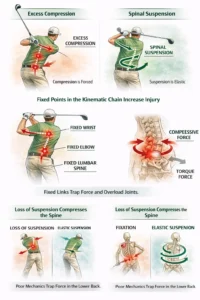
Rather than isolated parts, the body behaves as one connected tension-compression system; every movement, adjustment, and force circulates throughout the whole structure.
Rather than isolated parts, the body behaves as one connected tension-compression system; every movement, adjustment, and force circulates throughout the whole structure.
This idea is not motivational language.
It relies on mechanics, biology, and observable movement.
It relies on mechanics, biology, and observable movement.
When people begin to understand the science of biotensegrity, they often realise something important:
The body is not weak.
It is simply responding to the organisation of forces inside it.
It is simply responding to the organisation of forces inside it.
That single shift in thinking changes everything about posture, flexibility, and long-term physical ease.
Why the Science of Biotensegrity Explained Changes How We View the Body
Understanding the Science of Biotensegrity Explained in Simple Terms
To keep things practical, we can set aside complicated wording.
Biotensegrity means:
- Continuous tension holds the structure together.
- Compression elements float within that tension.
- Force spreads through the entire system.
- Stability comes from balance, not stiffness.
In the human body:
- Bones provide compression support.
- Fascia, muscles, tendons, and ligaments provide tension.
- Movement distributes force everywhere, not just at joints.
So the body is not stacked like bricks.
It is suspended like a living network.
It is suspended like a living network.
That is the heart of its structural science.
Once understood, many old ideas about stretching, strength, and posture seem incomplete.
Real-World Comfort Improvements Using the Science of Biotensegrity Explained
Understand The Science of Biotensegrity Part A

Where Traditional Thinking Misses the Bigger Picture
Older movement models focused on isolated correction.
Tight hamstring?
Stretch it.
Stretch it.
Weak core?
Strengthen it.
Strengthen it.
Rounded shoulders?
Pull them back.
Pull them back.
But the science of biotensegrity explains why these single-part solutions rarely last.
Because tension is shared, the visible problem is often not the real source.
A restriction in the foot can influence the neck.
Breathing patterns can alter spinal balance.
Jaw tension can affect walking rhythm.
Breathing patterns can alter spinal balance.
Jaw tension can affect walking rhythm.
Everything connects through the continuous fascial tension network.
When change does not last, effort is rarely to blame.
It is simply the wrong model being used.
It is simply the wrong model being used.
Understanding the science of biotensegrity replaces frustration with clarity.
The Real Meaning of Stability in the Human Body
Most people think stability means holding still.
Stability, in living systems, actually means balanced responsiveness.
A biotensegrity structure:
- Adapts quickly to force
- Distributes pressure safely
- Stores and releases energy efficiently.
- Maintains shape without rigidity
This is why healthy movement feels:
- Light
- Springy
- Effortless
- Coordinated
It does not feel forced. It does not feel braced. It does not feel tense.
The science of biotensegrity explained reveals that true support comes from the organisation of tension, not muscular gripping.
That insight alone can transform how someone approaches movement after fifty, sixty, or beyond.
What Ageing Adults Notice After the Science of Biotensegrity Explained Properly
Why This Matters More With Age
As years pass, many people notice:
- Reduced flexibility
- Slower recovery
- Increased stiffness
- Less confidence in movement
Often, people blame these changes on age itself.
Yet the science of biotensegrity suggests another possibility.
What if the issue is not ageing…
But long-term tension imbalance inside the body’s network?
But long-term tension imbalance inside the body’s network?
When tension loses coordination:
- Force stops spreading efficiently.
- Certain tissues overload
- Movement feels heavier
- Energy use increases
The result feels like a decline.
But the root cause may be disorganisation, not damage.
But the root cause may be disorganisation, not damage.
This is why understanding the science of biotensegrity becomes more valuable later in life, not less.
Because an organisation can improve at any age.
How Movement Quality Reflects Internal Tension Balance
You can often recognise biotensegrity in action just by watching someone walk.
Balanced system:
- Smooth rhythm
- Quiet foot contact
- Natural arm swing
- Upright ease
Unbalanced system:
- Heavy steps
- Shoulder tightness
- Limited rotation
- Visible effort
These differences are not personality traits.
They are mechanical expressions of the distribution of tension.
They are mechanical expressions of the distribution of tension.
The science of biotensegrity explains how movement can be seen as information, not just activity.
And once movement becomes information, it becomes something that can be reorganised.
Seeing Whole-Body Coordination Differently With the Science of Biotensegrity Explained
The Quiet Shift From Forcing to Allowing
Many traditional exercise ideas rely on forcing change:
- Push harder
- Stretch further
- Hold longer
- Strengthen more
Biotensegrity points in another direction.
Lasting improvement usually follows better coordination, clearer alignment, more efficient load sharing, and less tension.
- Better coordination
- Clearer alignment of force
- Efficient load sharing
- Reduced unnecessary tension
In other words:
Less force.
More organisation.
More organisation.
That is the practical meaning behind the science of biotensegrity, explained.
And it explains why some gentle, precise movement methods create bigger change than aggressive training.
A Foundation for Smarter Movement After Fifty
For adults focused on maintaining comfort, balance, and independence, this understanding becomes powerful.
Instead of chasing endless exercises, the focus shifts toward:
- Restoring natural tension balance
- Improving whole-body coordination
- Allowing efficient posture to emerge
- Supporting movement that feels sustainable
This is not about doing more.
It means doing what matches how the body works.
It means doing what matches how the body works.
The science of biotensegrity, as explained, provides that missing map.
And once someone sees the body this way, movement is no longer a battle to win.
It becomes a system to understand.
It becomes a system to understand.
Practical Walking and Standing Insights From the Science of Biotensegrity Explained
Applying the Science of Biotensegrity Explained to Everyday Movement
Understanding theory is helpful. Applying it in real life brings real value.
This model is not only about anatomy or research language.
It is about how a person:
It is about how a person:
- Stands from a chair
- Walks across a room
- Reaches for a shelf
- Turns to look behind them
Ordinary actions show if tension is shared or stuck.
When tension is distributed well, movement feels:
- Quiet
- Smooth
- Light
- Economical
When distribution is poor, movement feels:
- Heavy
- Restricted
- Effortful
- Unstable
So the science of biotensegrity becomes a practical tool for observation rather than just an abstract concept.
Once-daily classroom movement can be improved without complex routines.
Why Stretching Alone Rarely Solves the Real Problem
Many people spend years stretching tight areas.
Some feel short-term relief.
Few experience lasting change.
Some feel short-term relief.
Few experience lasting change.
The science of biotensegrity, as explained, shows why.
If tightness is caused by a global imbalance in tension, then stretching a single location cannot reorganise the entire network. The body reverts to old patterns unless the tension map changes.
This does not mean stretching is useless. Stretching without full-body coordination is incomplete.
Lasting comfort usually requires:
- Balanced load sharing
- Coordinated muscle timing
- Responsive fascial elasticity
- Efficient alignment with gravity
These qualities sit at the centre of the science of biotensegrity, explained.
And they explain why gentle, precise movement often outperforms aggressive flexibility work.
The Role of Gravity in Whole-Body Organisation
Gravity is constant.
The body must organise around it every second.
The body must organise around it every second.
In a well-balanced biotensegrity system:
- Force travels through the entire structure.
- No single joint carries excessive load.
- Muscles guide rather than fight gravity.
- Energy use remains low.
In a poorly organised system:
- Certain tissues overload
- Muscles grip to create false stability.
- Breathing becomes restricted
- Fatigue appears quickly
So improvement is not about escaping gravity.
It is about working with gravity intelligently.
It is about working with gravity intelligently.
This framework provides the mechanical reasoning behind this idea, turning posture from a rigid instruction into a dynamic relationship with force.
Small Changes That Influence the Entire Structure
One of the most powerful insights in this model is that small adjustments can create a global effect.
Because tension connects everything:
- A change in foot pressure can alter spinal ease.
- A shift in breathing can release neck tension.
- A softer jaw can influence balance.
- A smoother step can reduce back effort.
These are not tricks.
They are predictable results of an interconnected system.
They are predictable results of an interconnected system.
This is especially encouraging later in life.
It means improvement does not always require strength, speed, or intensity.
It means improvement does not always require strength, speed, or intensity.
Sometimes it begins with awareness and precision.
Re-Thinking Strength Through the Lens of Biotensegrity
Traditional strength often means more muscle force.
But this model invites a different question:n?
In this model, strength includes:
- Elastic recoil through fascia
- Coordinated muscle sequencing
- Stable yet adaptable alignment
- Minimal wasted effort
This is why some individuals appear strong without visible strain.
Their bodies are not working harder.
They are working more intelligently.
Their bodies are not working harder.
They are working more intelligently.
For ageing adults, this perspective is liberating.
It shifts the goal from fighting decline to restoring organisation.
It shifts the goal from fighting decline to restoring organisation.
An organisation can improve at any stage of its life.
Confidence, Balance, and the Nervous System Connection
Movement is not controlled by muscles alone.
The nervous system constantly reads tension, pressure, and position.
The nervous system constantly reads tension, pressure, and position.
When the body’s tension network is balanced:
- The brain receives clear information.
- Reactions become quicker
- Balance feels automatic
- Confidence increases naturally
When tension is chaotic:
- Signals become noisy
- Movements feel uncertain
- Balance reactions slow down.
- Fear of falling may grow.
The science of biotensegrity, therefore, links mechanics and confidence in a very real way.
Improving structure is not just physical.
It also changes how safe movement feels.
It also changes how safe movement feels.
A Simpler Direction for Long-Term Physical Comfort
After decades of conflicting advice, many adults feel overwhelmed by the rules of exercise.
The science of biotensegrity, explained simply, simplifies the path forward.
Instead of asking:
- Which exercise is best?
- How many repetitions matter?
- How hard should I push?
The better questions become:
- Does movement feel lighter afterwards?
- Is breathing easier during motion?
- Does balance improve without force?
- Can effort decrease while ability increases?
These signs indicate better tension organisation, which sits at the heart of lasting comfort.
And this direction is sustainable, not exhausting.
The Deeper Message Behind the Science of Biotensegrity Explained
At its core, this science carries a reassuring message.
The body is not fragile.
It is adaptive, responsive, and intelligent.
It is adaptive, responsive, and intelligent.
What often looks like decline may simply be:
Years of accumulated tension patterns
that no longer distributes force efficiently.
that no longer distributes force efficiently.
When the organisation improves:
- Movement can feel younger.
- Energy can return
- Confidence can rebuild
- Comfort can increase
Not through force,
But through understanding.
But through understanding.
That is why the science of biotensegrity matters deeply to anyone wishing to remain active, capable, and independent in later life.
It replaces struggle with clarity.
And clarity opens the door to change.
And clarity opens the door to change.
Long-Term Mobility Becomes Possible Once the Science of Biotensegrity Explained Is Applied
#science of biotensegrity explained, #biotensegrity movement health guide, #whole body tension balance, #natural posture movement system, #fascia based movement science, #efficient body force distribution,
#movement coordination after fifty, #balance and posture improvement, #gentle functional movement method, #long term mobility support, #gravity aligned body movement, #integrated human movement design