Pain-Free Everyday Movement Grows Through Simple Daily Practice After Sixty. Imagine ordinary movement becoming calmer, steadier and more familiar each day.
Why Pain-Free Everyday Movement Needs Regular Gentle Practice
Feel your confidence growing through small movements you can comfortably repeat.
How Pain-Free Everyday Movement Becomes A Daily Habit
See yourself standing, walking and turning with less hesitation.
When Pain-Free Everyday Movement Supports Greater Independence
Picture yourself continuing the everyday activities that keep life enjoyable.
Part Two: Your Next Step Is To Practise What You Want To Keep
Understanding your movement is the beginning. The next step is turning that awareness into a simple daily practice. In Part Two, we will explore how to maintain important everyday movements, build a realistic movement routine, and make greater confidence part of ordinary life.
Continue To Part Two: Pain-Free Everyday Movement Through Daily Practice
That gives you two complete, purposeful posts rather than making Part Two feel like the leftover half of a single long article.
How To Create A Simple Daily Movement Reset
A daily movement reset does not need to take an hour.
You can begin with just a few attentive minutes.
Stand comfortably and notice how your feet meet the floor. Shift your weight gently from side to side. Allow your knees and hips to respond without forcing them.
Next, turn your head and eyes slowly towards one side. Return to the centre and repeat towards the other side. Keep the movement small and remain within a range that feels manageable.
Then allow your arms to hang naturally. Turn your body gently from side to side, letting your arms follow instead of holding them rigidly.
Finally, walk across the room without attempting to correct everything at once. Notice your rhythm. Feel your feet meeting and leaving the floor. Let your arms move naturally, and continue breathing.
That is enough for a beginning.
You are not trying to fix yourself in one session. You are giving yourself a calm opportunity to notice, explore and move.
Measure Progress Through Everyday Experiences
Progress is not always a dramatic before-and-after moment.
Sometimes it is putting on your coat without thinking about your shoulder.
It is standing up from the sofa without rocking several times first.
It is walking to the shops and noticing that you feel more upright.
It is turning to reverse the car with a little more confidence.
These everyday changes may be more meaningful than numbers on an exercise chart because they show how your movement practice supports your actual life.
Pay attention to small signs of greater ease.
Perhaps you feel less hesitant before taking the first step in the morning. Maybe you notice when you tense your shoulders. You might find that slowing down helps you feel more balanced.
Do not dismiss these experiences because they appear small.
Small experiences repeated regularly can rebuild trust.
Gentle movement can be valuable, but it should not replace appropriate medical advice.
Seek professional guidance if you have severe or worsening pain, unexplained weakness, numbness, a recent injury, sudden changes in balance or symptoms that concern you.
A qualified healthcare professional can help you understand whether a particular activity is appropriate for your circumstances.
The goal is not to ignore warning signs or convince yourself that every discomfort is harmless.
The goal is to use sensible movement practice as part of self-care.
Pain-Free Everyday Movement Is A Direction
No responsible movement approach can promise that every person will become completely pain-free.
Bodies are different. Histories are different. Health circumstances are different.
However, pain-free everyday movement can still be a meaningful direction to pursue.
It can represent your intention to move with less fear, less unnecessary tension, and greater confidence. It can also encourage you to pay attention to the movements you perform each day rather than waiting until they become difficult.
Most importantly, it gives you something practical to do.
You can notice your breathing.
You can feel your feet.
You can slow a movement down.
You can explore a smaller range.
You can practise a little and return tomorrow.
That is how confidence often grows, not through a single heroic effort, but through regular experiences that show you that movement can feel safe, manageable, and even enjoyable.
Watch The Pain-Free Everyday Movement Video
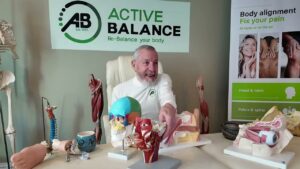
In the video below, you can see how gentle Active Balance principles may support better awareness, steadier coordination, and more confident everyday movement.
You do not need to copy everything perfectly.
Watch, notice and begin with the movement that feels most relevant to your life.
[PLACE VIDEO WITH SCROLL ANCHOR HERE]
Begin With One Movement Today
Choose one ordinary movement you would like to make easier.
It might be standing from a chair, reaching for a shelf, turning comfortably or walking with a steadier rhythm.
Do it slowly.
Keep breathing.
Notice where you tighten.
Then explore whether you can complete the movement with slightly less force.
You do not have to transform your entire body today.
You only need to begin paying attention.
Pain-free everyday movement is not about fighting against age or pretending discomfort does not exist. Instead, it is about continuing to explore what your body may still be capable of through gentle, regular, and thoughtful practice.
Your body has carried you through every stage of your life.
Now give it the time, attention and variety of movement it needs to keep carrying you forward.
Turn Pain-Free Everyday Movement Into A Daily Habit
Knowing that gentle movement may help is useful.
Practising it regularly is what makes it part of your life.
The biggest mistake many people make is waiting until they feel stiff, uncomfortable, or frustrated before paying attention to how they are moving. By then, they may already be rushing, bracing, and trying to force their way through the activity.
A daily movement habit gives you another option.
Instead of treating movement as something you only think about when it becomes difficult, you make a few minutes of gentle exploration part of your normal routine.
You do not need special clothing.
You do not need a gym.
You do not need to complete an exhausting workout before breakfast.
You simply need a safe space, a few minutes and a willingness to notice how your body feels today.
Some mornings may feel easier than others. That is normal. The purpose is not to perform identically every day. It is to respond to the body you have in front of you.
Begin Before The Day Starts Rushing
Morning can be a useful time to reconnect with your movement.
After several hours in bed, you may feel slower, tighter or less steady when you first stand. Instead of immediately hurrying into the day, allow yourself a brief transition.
Sit on the edge of the bed or stand beside it with support nearby.
Notice your breathing.
Move your feet gently.
Roll your shoulders without forcing them.
Turn your head slowly from side to side.
Then stand and feel your weight travelling through both feet.
This may take only two or three minutes.
Yet those minutes can help you start the day with awareness rather than immediately go on autopilot.
You are giving yourself a chance to notice whether one side feels tighter, whether you are leaning or whether you are already gripping your shoulders.
Awareness does not mean worrying about every sensation.
It simply means listening before demanding more from yourself.
Use Movement Snacks Throughout The Day
You do not have to complete all your movement practice in one session.
In fact, brief movement breaks throughout the day may feel more manageable, especially if you spend long periods sitting.
Think of these breaks as movement snacks.
They are small enough to fit naturally into your routine but regular enough to remind your body that it can do more than stay in one position.
Stand while the kettle boils.
Gently transfer your weight between your feet.
Turn your head and shoulders before sitting back at your desk.
Walk around the room after finishing a television programme.
Reach your arms forward and allow them to relax.
None of these actions needs to become a formal exercise routine.
Their purpose is to interrupt long periods of stillness and add a little more variety to your day.
A few minutes completed regularly may feel less daunting than one long session you continually postpone.
The best routine is often the one you can realistically continue.
Pain-Free Everyday Movement Needs Patience
It is natural to want quick results.
When something feels uncomfortable, you want it to change immediately. You may search for one perfect exercise, one stretch or one technique that will solve everything.
However, movement habits usually develop over time.
Your current way of standing, bending or walking may be the result of years of repetition, old injuries, working positions, protective habits and reduced activity.
Therefore, it is reasonable to allow yourself time to explore something different.
Patience does not mean doing nothing.
It means practising without demanding an instant outcome.
Repeat a gentle movement because it helps you become more familiar with it. Notice your breathing to reduce unnecessary effort. Move regularly because confidence grows through experience.
Some days you may notice a meaningful difference.
On other days, the same movement may feel less comfortable.
Progress is rarely straight.
Do Not Compare Your Movement With Someone Else’s
Comparison can quickly turn useful practice into a source of frustration.
You watch another person bend easily, rise from the floor, or walk quickly, and you decide that your own movement is not good enough.
But you do not know their full story.
You do not know their health history, previous injuries, daily habits or how long they have been practising.
Your responsibility is not to move like them.
It is to discover how you can move more confidently from your own starting point.
A smaller movement, executed with comfort and control, may be more valuable than a larger movement performed with tension and fear.
This is especially important when following online videos.
The person demonstrating cannot feel what you feel. They cannot know exactly how a particular movement affects your body. Therefore, use demonstrations as guidance—not as a command to copy every angle or repetition.
Remain curious.
Remain sensible.
Stay within a range that feels manageable.
Rebuild Trust One Successful Movement At A Time
Fear can change the way you move.
After an uncomfortable experience, you may begin expecting the movement to hurt again. You tense before it begins, hold your breath and try to complete it as quickly as possible.
That reaction is understandable.
Your body is trying to protect you.
However, the anticipation itself may heighten the tension in the movement.
Rebuilding trust begins with achievable experiences.
Choose an easier version of the activity. Make the movement smaller. Use stable support where appropriate. Slow down enough to feel what is happening.
Then recognise the success.
Perhaps you stood from the chair more smoothly.
Perhaps you turned without gripping your shoulders.
Perhaps you walked across the room feeling steadier.
These moments matter because they offer a different experience of movement—one grounded in awareness rather than alarm.
Trust does not return because someone tells you to be confident.
It returns when your own experience gives you a reason to feel more confident.
Make The Environment Work For You
Your surroundings can either support comfortable movement or make everyday tasks more difficult.
Look around the places where you spend most of your time.
Is your favourite chair so low and soft that getting out of it requires a major effort?
Are commonly used items stored on shelves that force you to stretch or twist awkwardly?
Do loose rugs or clutter make you nervous about walking through the room?
Is your computer screen positioned so that you spend hours looking down?
Small changes to the environment can reduce unnecessary strain as you build your confidence in movement.
Raise frequently used items to a more convenient height.
Choose a supportive chair.
Create clear walking spaces.
Position screens so you can sit more comfortably.
Wear footwear that helps you feel secure.
This is not admitting defeat.
It is making sensible choices that allow you to practise movement with less anxiety and better control.
Notice The Language You Use About Your Body
The words you use can influence how you approach movement.
If you constantly describe your body as broken, worn out or useless, every movement can begin to feel like further evidence that something is wrong.
That does not mean you should deny genuine discomfort.
It means you can describe your experience without turning it into a permanent identity.
Instead of saying:
“My back is completely useless,”
You might say:
“My back feels stiff today, so I will move gently.”
Instead of:
“I cannot bend anymore,”
You could say:
“I am exploring a smaller, more comfortable bending movement.”
These are not magic phrases.
They do not cure pain or replace professional care.
They simply leave room for possibility.
Your current experience is real, but it does not have to become the final statement about what your body may be capable of.
Pain-Free Everyday Movement And The Movement Of Three
A simple routine can be divided into three short periods during the day.
Your first session might focus on waking the body gently in the morning.
Your second could interrupt a long period of sitting around lunchtime.
Your third may help you unwind and reconnect with your movement before the evening.
Each period does not need to be intense.
You might explore your feet and balance in the morning, practise turning and reaching during the day, and finish with relaxed breathing and gentle whole-body movement later.
This approach can feel easier than trying to complete one demanding routine.
It also reminds you that movement is not separate from life.
Movement supports life.
The goal is not to spend all day exercising. The goal is to keep giving your body regular opportunities to move, respond and remain involved in the things you enjoy.
Your Seven-Day Everyday Movement Experiment
For the next seven days, choose one everyday movement to explore.
Do not attempt to overhaul everything.
Choose one activity that matters to you.
It could be:
Stand from your chair.
Walking upstairs.
Putting on your coat.
Turning to look behind you.
Reaching into a cupboard.
Getting in and out of the car.
Each day, perform the movement slowly enough to notice what happens.
Ask yourself:
Am I holding my breath?
Am I rushing?
Am I leaning heavily towards one side?
Can I use less force?
Can the rest of my body help?
You are not looking for perfection.
You are collecting information.
By the end of the week, you may understand that movement more clearly. You may recognise where you tense unnecessarily or discover a slightly easier way of completing the task.
That awareness is useful progress.
Keep The Goal Connected To Your Real Life
Movement practice becomes more meaningful when it supports something you care about.
Perhaps you want to walk with your partner.
Play with your grandchildren.
Continue gardening.
Travel confidently.
Enjoy golf.
Get down to the floor and return to standing.
Remain independent in your own home.
These are stronger reasons than simply completing a certain number of exercises.
Your daily practice is not really about moving your shoulders, feet or hips.
It is about helping you participate in your life.
When motivation dips, remember what greater movement confidence could allow you to continue doing.
You are not practising for the sake of practice.
You are practising for freedom, participation and choice.
Begin Where You Are Today
You do not need to wait until Monday.
You do not need to purchase complicated equipment.
You do not need to prove that you are fit enough to begin.
Start with one comfortable movement.
Feel your feet.
Allow yourself to breathe.
Move slowly enough to remain aware.
Stop if something feels wrong or concerning.
Then return tomorrow and explore again.
Pain-free everyday movement does not guarantee that every uncomfortable sensation will disappear. It is an invitation to approach movement with greater patience, awareness and confidence.
Your body may not need to be forced.
It may need to be listened to.
It may need more variety.
It may need smaller, calmer movements repeated regularly.
Most importantly, it may need you to stop judging what it cannot do and begin exploring what it can still learn.
Steven Levin’s Perspective on Biomechanics and Load Transfer
Steven L.’s perspective on anatomy highlights the importance of understanding the body as a cohesive unit. He
Spread the love
Dennis Bartram
Dennis Bartram is the Director of the Active Balance Home or on the Go System Dennis’ journey began in 1969 when he qualified in Swedish remedial massage and in 1974, he began his practice in remedial sports massage and manipulative
Pain Free Self Maintenance Requires Gentle Daily Support How Pain Free Self Maintenance Builds Long Term Comfort Pain-Free Self-Maintenance Begins With Gentle…
Effortless Balance Movement Coach for Everyday Confidence How an Effortless Balance Movement Coach Restores Walking Ease Effortless Balance Movement Coach for Lifelong…
Retiree Foot Pressure Mapping Is The Hidden Window Into Balance Decline ⭐ Retiree Foot Pressure Mapping for Early Balance Awareness ⭐ Why Retiree Foot…


 Progress is not always a dramatic before-and-after moment.


