Improve Balance Reduce Pain Through Safer Movement
Improve Balance Reduce Pain Before Strength Training
Improve Balance Reduce Pain: Why Stiffness Appears Even When Scans Are “Normal”
Improve Balance Reduce Pain as You Age Naturally
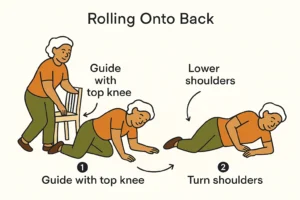 Improve Balance Reduce Pain is one that more people are searching for as they get older, especially when stiffness, discomfort, and movement fear appear, even though scans show “nothing wrong.” If your body feels tighter, less confident, or more cautious than it used to, the problem often isn’t damage. It’s balance, and restoring balance is one of the most reliable ways to reduce pain naturally as we age.
When the nervous system senses uncertainty, instability, or reduced balance, it automatically begins to limit movement. This is one of the key reasons why learning how to improve balance and reduce pain is far more effective than simply stretching or strengthening muscles.
Stiffness is often the body’s way of saying: “I don’t feel safe moving freely.”
Why Improving Balance Reduces Pain More Effectively Than Stretching
Many people are told that stiffness means tight muscles and that tight muscles need stretching. While that idea sounds logical, it frequently fails, especially as we age.
Stretching applies force.
Balance restores confidence.
Balance restores confidence.
When the balance information coming from the feet, joints, and inner ear is unclear, the nervous system responds by tightening muscles to prevent instability. Stretching against that protective response can actually increase tension later in the day.
That’s why so many people report:
Short-term relief from stretching
followed by stiffness returning, or worsening
When you improve balance and reduce pain, you’re not forcing tissues to lengthen. You’re allowing the nervous system to release its grip voluntarily.
This distinction is critical.
Why restoring balance helps reduce pain as you age
Improve Balance, Reduce Pain by Addressing Nervous System Protection
Pain is not the first signal the body uses. It is a secondary warning system.
Before pain shows up, the nervous system often introduces:
Reduced range of motion
hesitation during movement
muscle guarding
loss of confidence
These changes happen quietly and gradually. People often say:
“I don’t remember injuring myself. I just became stiff.”
That’s because protection came first.
When balance and orientation feel uncertain, the nervous system reduces movement as a safety measure. This is why two people with identical scans can experience completely different levels of pain and mobility.
One feels confident.
The other feels restricted.
The other feels restricted.
The difference isn’t damage, it’s balance signalling.
How the Toe-Touch Test Shows Why Balance Reduces Pain
A simple toe-touch test reveals this perfectly.
Many people assume that being unable to touch their toes means their hamstrings are tight. In reality, it often reflects nervous system hesitation, not muscle length.
When balance input improves, even briefly, the range of motion can increase immediately without stretching. This demonstrates a powerful truth:
If you can improve balance, you reduce pain by removing protective tension.
The nervous system releases restriction when it feels safe.
Muscles follow instructions.
Muscles follow instructions.
How daily movement can improve balance and reduce pain
Improve Balance, Reduce Pain as You Age Without Forcing the Body
One of the most damaging beliefs people adopt as they get older is that stiffness and pain are unavoidable. That belief subtly changes how people move:
They bend less
They twist cautiously
They avoid the floor.
They limit rotation
Over time, reduced movement reinforces reduced balance. This creates a loop where fear of movement leads to stiffness, and stiffness reinforces fear.
When people learn to improve balance and reduce pain, they interrupt this loop.
Balance training restores trust between the brain and the body. When trust returns, movement becomes smoother, more confident, and less guarded, often before pain fully disappears.
Why Improving Balance Reduces Pain Even When Scans Look “Fine”
Medical imaging is excellent at identifying structural damage. It is not designed to measure:
balance confidence
neurological hesitation
protective movement patterns
That’s why someone can be told “there’s nothing wrong” while still feeling stiff, cautious, and uncomfortable.
When balance signalling is restored, movement becomes safer in the nervous system’s eyes. As a result, pain signals often quieten naturally.
This is why approaches focused on improving balance to reduce pain consistently succeed where force-based methods struggle.
The Real Improve Balance Reduce Pain Goal: Confidence Before Comfort
Pain scores fluctuate.
Confidence is observable.
Confidence is observable.
When someone:
Moves without bracing
bends without holding their breath
turns without hesitation
…the nervous system has already changed.
Improving balance reduces pain, not by attacking pain directly, but by restoring safety first.
What happens when you improve balance to reduce pain naturally
What This Means for You,
If you’ve tried stretching, strengthening, or “pushing through,” yet still feel stiff or uncertain, the missing link may not be effort.
It may be balanced.
Learning how to improve balance and reduce pain allows the body to release its protective response rather than fight it. And once movement is allowed again, pain often has nowhere left to hide.
✅ 👉 Why modern habits quietly destroy balance as we age (and how to reverse it)
Improve Balance, Reduce Pain by Understanding What Changed in Modern Life
If you compare how people moved fifty years ago to how they move today, the difference is stark.
It’s not just ageing that reduces balance.
It’s how modern life trains the body to stop trusting movement.
It’s how modern life trains the body to stop trusting movement.
Most people didn’t suddenly lose their balance. It was slowly trained out of them.
Chairs replaced the floor.
Cars replaced walking.
Screens replaced rotation.
Shoes replaced sensory feedback.
Cars replaced walking.
Screens replaced rotation.
Shoes replaced sensory feedback.
Over time, these changes quietly erode the body’s ability to orient itself in space. When orientation declines, balance declines. And when balance declines, the nervous system responds by limiting movement.
This is why learning how to improve balance and reduce pain starts with understanding what daily habits are doing to your body, often without you noticing.
The real reason balance work reduces pain without force
Why Sitting Is One of the Fastest Ways to Lose Balance
Sitting isn’t neutral. It teaches the nervous system that movement is optional.
When you sit for long periods:
Your feet stop sending rich sensory information.
Your hips lose rotational input.
Your spine becomes rigid in one plane.
Your head stays fixed.
Balance relies on constant micro-adjustments. Sitting removes the need for them.
Over time, the nervous system adapts by lowering its expectation of movement. When you later stand up, bend, or twist, those movements feel unfamiliar, even threatening.
This is one of the main reasons people feel stiff after sitting, not before.
To improve balance and reduce pain, the body must relearn how to process movement information, not just strengthen muscles.
Why modern habits make it harder to improve balance reduce pain
Improve Balance, Reduce Pain by Restoring Foot-to-Brain Communication
Your feet are not passive supports. They are sensory organs.
Every second, thousands of signals travel from the feet to the brain, informing it about:
pressure
surface changes
weight distribution
direction of movement
Supportive shoes, thick soles, and rigid footwear may feel comfortable, but they often reduce sensory input. Less input means less certainty.
When the brain receives unclear information from the feet, it compensates by tightening muscles higher up, particularly in the calves, hamstrings, hips, and lower back.
This is why improving balance often reduces pain in areas far from the feet.
When foot input improves, the nervous system relaxes its grip elsewhere.
Why Forward-Only Movement Reduces Balance and Increases Pain
The modern movement is mostly linear:
walking forward
sitting forward
driving forward
looking forward
But the body is designed to move in multiple planes:
rotation
side-bending
shifting weight
changing direction
When rotation and lateral movement disappear, the nervous system loses its reference points. Balance becomes fragile because the body only feels safe moving in one direction.
This leads to:
Stiffness during twisting
hesitation during turns
discomfort during reaching
To improve balance and reduce pain, movement must reintroduce safe rotation and weight transfer, without forcing the range of motion.
Why confidence returns when balance improves and pain fades
Improve Balance, Reduce Pain by Reducing Sensory Conflict
Another hidden contributor to balance loss is sensory conflict.
This happens when:
The eyes say one thing.
The inner ear says another.
The body feels something different.
For example:
Scrolling on a phone while sitting still
watching fast-moving screens
focusing visually without body movement
Over time, the brain prioritises vision and suppresses bodily input. This makes balance dependent solely on eyesight.
When visual dominance increases, movement confidence decreases, especially in low light or uneven environments.
Balance training restores harmony between:
vision
inner ear
body sensation
And when harmony improves, pain signals often reduce automatically.
The hidden link between confidence, movement, and improve balance reduce pain
Why Avoiding Movement Feels Sensible, but Makes Things Worse
When balance declines, avoidance feels logical.
People stop:
reaching overhead
bending fully
turning quickly
moving on uneven ground
But avoidance teaches the nervous system that those movements are dangerous.
The result is a shrinking comfort zone.
Pain doesn’t always increase immediately, but confidence drops steadily. Eventually, even small movements feel risky.
Learning how to improve balance and reduce pain reverses this process by gradually expanding safe movement again, without triggering protection.
Improve Balance, Reduce Pain by Reintroducing Safe Complexity
The body doesn’t need more intensity.
It needs more information.
Balance improves when movement:
Involves weight shifts
changes direction
includes rotation
stays controlled and calm
This kind of movement feeds the nervous system clarity.
As clarity improves:
Muscles release unnecessary tension.
range of motion returns
Pain sensitivity reduces
Importantly, this happens without pushing through discomfort.
That’s why balance-based approaches work so well for people who feel stuck despite trying everything else.
Why Pain Often Improves After Balance Improves, Not Before
This sequence matters:
balance improves
confidence increases
Movement becomes smoother, and pain reduces
Trying to reverse the order rarely works.
Pain-focused strategies often fail because they ignore the underlying instability the nervous system is trying to manage.
When you improve balance and reduce pain, you’re addressing the cause, not the symptom.
What really happens when you improve balance reduce pain, and safely
What This Means Going Forward
Modern life quietly strips away balance through comfort, convenience, and repetition. The resulting stiffness and pain aren’t signs of damage; they’re signs of adaptation.
The good news is that adaptation works both ways.
When balance is restored gradually and intelligently, the nervous system allows movement again. And when movement is allowed, pain often fades without being chased.
In the next section, we’ll look at what most people get wrong when trying to fix stiffness and pain, and why effort is often the enemy of progress.
Improve Balance Reduce Pain: What Most People Get Wrong About Flexibility and Strength
Most people tackling stiffness and discomfort are given the same advice:
Stretch more and strengthen everything.
Stretch more and strengthen everything.
On the surface, that sounds sensible. In reality, it often keeps people stuck.
The reason is simple: flexibility and strength don’t fix a system that doesn’t feel safe.
Until the nervous system trusts movement, gains in strength or flexibility either don’t stick or come with a cost later in the day. That’s why so many people say they feel looser after exercise, only to stiffen up again by evening.
To improve balance and reduce pain, it’s essential to understand what flexibility and strength alone can’t do.
Flexibility Without Improve Balance Reduce Pain Is Temporary
Mechanical stretching increases range of motion.
Balance increases the range of motion neurologically.
Balance increases the range of motion neurologically.
When balance is compromised, the nervous system limits movement regardless of muscle length. You can stretch a muscle all you like, but if the brain doesn’t trust the position, it will tighten it again.
This is why:
- Stretching often feels good briefly.
- The Range of motion disappears later.
- stiffness returns without warning
Stretching works best after balance improves, not before.
How everyday movement can improve balance reduce pain naturally
Strength Training Can Increase Protection
Strength is valuable, but only when layered correctly.
When someone strengthens a body that lacks balance, the nervous system often responds by adding more tension. Stronger muscles don’t automatically move better; sometimes they guard more effectively.
This is why people can be:
- Strong but stiff
- fit but cautious
- active yet uncomfortable
Strength without balance can reinforce compensation patterns rather than resolve them.
To improve balance and reduce pain, the body must first feel oriented and stable. Strength then becomes useful instead of defensive.
The Real Mistake: Treating the Body Like a Machine
Machines respond to force.
Humans respond to information.
Humans respond to information.
The body constantly asks Improve Balance Reduce Pain:
- Where am I in space?
- Am I stable?
- Is this movement safe?
If the answer isn’t clear, it automatically restricts movement.
Flexibility and strength don’t answer those questions. Balance does.
When balance input improves, the nervous system allows:
- smoother movement
- greater range
- reduced pain sensitivity
And it does so without being forced.
Why learning to improve balance reduce pain matters more as we age
Why Effort Often Slows Improve Balance Reduce Pain Progress
One of the biggest myths in pain recovery is that effort equals results.
For balance-based change, excessive effort can be counterproductive. It increases threat, tension, and vigilance, the very things the nervous system is trying to avoid.
Improving balance is about:
- Precision over intensity
- clarity over force
- confidence over exertion
When the body feels guided rather than pushed, it responds faster and more permanently.
The Shift That Changes Everything
They stop chasing pain.
They stop forcing flexibility.
They stop overworking their strength.
They stop forcing flexibility.
They stop overworking their strength.
Instead, they restore stability, and movement follows naturally.
That’s why learning how to improve balance and reduce pain isn’t about doing more. It’s about doing the right thing at the right time.
Where This Improve Balance Reduce Pain, Leaves Us
If stretching and strengthening haven’t solved the problem, it doesn’t mean you’re failing.
It means the order is wrong.
In the next section, we’ll look at the missing link that makes balance-based improvement actually stick, and why small, precise movements outperform big workouts every time.
How restoring stability helps improve balance reduce pain long term
#ImproveBalanceReducePain, #ImproveBalanceAsYouAge, #BalanceExercisesReducePain, #RestoreBalanceReducePain, #ImproveBalanceWithoutStretching, #BalanceTrainingForSeniors, #ReducePainImproveBalance, #ImproveBalancePreventFalls,
#BalanceAndPainRelief, #ImproveBalanceNervousSystem, #SafeBalanceExercisesSeniors, #ImproveBalanceDailyMovement,