Retiree Body Alignment Wisdom Explained Clearly
How Retiree Body Alignment Wisdom Improves Movement
Retiree Body Alignment Wisdom and Why It Matters After 50+
Retiree Body Alignment Wisdom: The Science of Moving Freely at Any Age
 Retiree body alignment wisdom is far more than a collection of posture tips. It’s a science-backed understanding of how the body, brain, fascia, and nervous system work together to create effortless movement well into the retirement years.
Many people believe posture declines with age because muscles weaken or joints stiffen. But modern movement science reveals a different truth: most age-related pain patterns come from habitual movement maps in the nervous system.
These maps determine how you stand, walk, breathe, and carry your weight. Over decades, daily habits, often unconscious, shape these maps. If you slump while reading, collapse into one hip while standing, or brace your ribs when walking, those patterns eventually become automatic. This is why many retirees feel their posture “set” into a shape they don’t like.
But here’s the good news: neural maps are never permanent. They can be reshaped with gentle, sensory-based practices that improve alignment without strain.
This is the heart of retiree body alignment wisdom, the understanding that the body does not improve through force, but through clarity, comfort, and consistent sensory input.
Why Alignment Declines (and Why It Doesn’t Have To)
The modern retiree often carries a lifetime of accumulated tension patterns. Years of desk work, injuries, emotional stress, poor footwear, and repetitive habits create compensation in the fascial system. Fascia, the connective tissue that holds everything together, stiffens in the areas you overuse and weakens where you underuse. By retirement age, many people have a deeply ingrained “body story” held in fascia, breath patterns, and movement shapes.
However, unlike muscles, fascia are richly innervated by sensory nerve endings. This means gentle, precise cues can rewire movement faster and more effectively than forceful stretching or aggressive workouts. Retiree body alignment wisdom uses this principle: small sensory upgrades produce big, lasting changes.
The Nervous System’s Role in Retiree Body Alignment Wisdom
The nervous system is the real governor of posture. Every movement you make, even standing still, is predicted and shaped by the brain. Your brain creates an internal map of your body’s position in space. If that map becomes blurry or distorted from years of habitual movement, your posture suffers. Retiree body alignment wisdom focuses on clearing these “neural smudges.”
Fascia’s Role in Retiree Body Alignment Wisdom
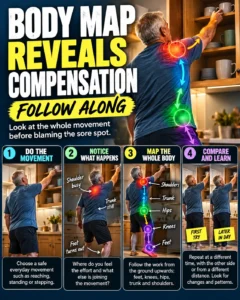
For example, many seniors unconsciously hold their breath when balancing. This restricts diaphragm movement and tightens the lower back. Others brace their shoulders while walking, leading to neck tension and reduced arm swing. These may feel like “aging issues,” but they are actually learned patterns, not biological decline.
When retirees receive correct sensory input, slow, gentle alignment cues, the brain updates its map. Improved alignment becomes natural rather than effortful. This is why retirees who practice sensory-based alignment often report:
- “I feel taller.”
- “I walk lighter.”
- “My joints feel freer.”
- “I’m breathing better.”
- “I don’t feel like I’m fighting my body anymore.”
These improvements are signs of a nervous system regaining clarity, not muscles becoming stronger.
Alignment Is Not Mechanical – It’s Sensory

A common mistake is treating posture like stacking blocks: push the shoulders back, tuck the pelvis, lift the chest. This mechanical approach creates tension.
Retiree body alignment wisdom teaches the opposite: posture emerges from ease, not effort.
When the brain receives consistent, gentle feedback through aligned micro-movements, the spine lengthens naturally.
The shoulders settle. The hips glide. Breathing deepens. These changes come from the inside out, not from forcing the body into a shape.
This is also why many alignment experts emphasise the connection between:
- Head and tailbone
- Breath and rib position
- Feet and fascial tension up the legs
- Eyes and balance reflexes
The body is a web, not a machine of isolated parts. Retiree body alignment wisdom respects this interconnected system.
How Fascia Holds Your Movement History (and How To Reset It)
The fascial system plays a starring role in the alignment of the retiree. Fascia is the fabric that shapes your movement. It adapts to how you use your body daily. If you favour one leg, the fascia stiffens to support the habit. If you collapse your chest, the fascia thickens across the front ribs. If you brace the lower back, the fascia there also becomes rigid.
The Nervous System in Retiree Body Alignment Wisdom
This creates a “fascial memory” that influences posture more than muscles do.
Fortunately, fascia responds beautifully to gentle movement, breath, and light pressure. Retiree body alignment wisdom often uses:
- Sensory touch
- Joint decompression
- Breath cues
- Slow spinal wave patterns
- Small, precise alignment resets
These techniques send signals to the fascia that tell it, “You can soften. You can reorganize. You can release old tension stories.”
Retirees often feel immediate relief because fascia changes more quickly than muscles.
Emotional Tension and Alignment
One often overlooked element of retiree body alignment wisdom is emotional posture. Emotions shape posture instantly and long-term. Years of worry tighten the chest. Stress hardens the abdomen. Fear grips the diaphragm. Sadness collapses the shoulders.
When retirees learn to move with ease, breathe with clarity, and follow gentle alignment cues, emotional tension begins to unwind. Many retirees describe emotional release as:
- Feeling lighter
- A sense of relief
- Renewed energy
- Less mental fog
- More confidence in movement
This emotional shift complements the physical alignment improvements.
⭐ Retiree Body Alignment Wisdom: Daily Practices, Practical Tools, and Lifelong Ease
✅Daily Practices That Build Retiree Body Alignment Wisdom
Retiree body alignment wisdom becomes most powerful when it transforms into daily habits. You do not need long workouts or strenuous routines. The nervous system responds best to small, frequent alignment signals, not big, dramatic changes.
Think of them as upgrades, little reminders that guide the body back into balance.
Here are the key daily practices retirees can use to maintain or restore alignment effortlessly:
Practice 1: The Morning Alignment Reset
Start each day with a simple sensory reset. Sit or stand comfortably. Allow your breath to move freely without forcing it. Gently lengthen your spine as though creating space between each vertebra. Imagine your head floating upward, your tailbone releasing downward, and your ribcage expanding with soft breath.
This small reset wakes up the fascial web and gives your nervous system a clean “starting point” for the day.
Practice 2: Micro-Movements Throughout the Day
Retiree body alignment wisdom thrives on micro-movements, tiny adjustments that keep the nervous system alert and adaptive. Every hour, try:
- A gentle shoulder roll
- Softening your knees
- Relaxing your jaw
- Widening your collarbones
- Loosening your lower back with a slow sway
Micro-movements prevent the stiff “frozen posture” that develops from sitting too long.
Practice 3: Breath-Led Posture Reset
Breath is the most powerful alignment tool retirees possess. The diaphragm connects to the spine, ribs, and deep fascia. When the breath is tight, posture collapses. When the breath is spacious, alignment improves effortlessly.
Try this:
- Inhale softly, letting your ribs widen in every direction.
- Exhale slowly, allowing tension to leave your lower back.
- Repeat for 5 breaths.
This rebalances rib mechanics, improves oxygen flow, and naturally resets spinal alignment.
Practice 4: The Foot-to-Spine Connection
Many retirees struggle with balance, unaware that the feet act as the foundation of alignment. Practice connecting your feet to your spine:
- Stand with feet hip-width apart.
- Feel the tripod of each foot: heel, big toe, little toe.
- Imagine a line rising from your arches through your knees, hips, and spine.
- Let your shoulders soften as the spine lifts.
This simple awareness instantly improves posture and reduces joint load.
How Tools Can Support Retiree Body Alignment Wisdom
Alignment tools can turbo-charge your progress, especially those designed to work with the nervous system rather than forcing the body.
The most effective tools are gentle:
✔ sensory-focused
✔ non-forceful
✔ designed for fascia and neural upgrading
✔ sensory-focused
✔ non-forceful
✔ designed for fascia and neural upgrading
This is why gentle alignment devices have become popular with retirees. They are safe, effective, and support nervous-system learning.
Why Gentle Tools Work Better Than Aggressive Ones
Traditional posture tools force the body into a position which often triggers bracing or resistance. But the wisdom of the retiree body shows that proper alignment occurs when the nervous system chooses a healthier position, not when it is forced into one.
Gentle alignment tools:
- Encourage micro-adjustments
- Guide the spine without stress.
- Release old tension patterns.
- Allow fascia to reorganise safely.
- Work with the breath and nervous system.
This creates alignment from comfort, relaxation, and natural intelligence, not mechanical pressure.
The Role of Sensory Feedback
The nervous system learns through feedback. When you lie on a gentle alignment device or practice small, mindful movements, sensory nerves fire messages to the brain:
- “This is centre.”
- “This is balance.”
- “This is ease.”
- “This is safe.”
The brain then updates its posture maps, allowing realignment to feel natural and sustainable.
How Retiree Body Alignment Wisdom Improves Mobility and Reduces Pain
Many retirees feel a gradual decline in mobility. But most of that decline is related to tension, collapsed posture, and outdated neural maps, not ageing itself. When alignment improves, mobility often “returns” faster than expected.
Here’s how retiree body alignment wisdom restores movement:
— 1. Freer Joints Through Decompression
As posture collapses, joints become compressed. Gentle alignment practices relieve this compression, giving joints more space and freedom.
Retirees frequently notice:
- Less hip pain
- Reduced lower back stiffness
- Easier turning of the head
- Softer shoulders
- Better walking stride
Decompression is one of the fastest ways to restore comfort.
— 2. Better Balance Through Sensory Clarity
Balance declines when the brain receives unclear messages from the body. Alignment practices sharpen sensory awareness, helping retirees feel more grounded and stable.
— 3. Softer Fascia = Easier Movement
When fascia softens and rehydrates, movement becomes smoother. Stiff fascia is one of the biggest hidden causes of “old age posture.”
— 4. Breathing Space for the Organs
Good alignment creates space for the lungs, diaphragm, heart, and digestive system to function better. Many retirees feel:
- More energy
- Reduced fatigue
- Deeper breath
- Clearer thinking
- Better digestion
Posture literally changes how the organs work.
Breathwork in Retiree Body Alignment Wisdom
Emotional Benefits of Retiree Body Alignment Wisdom
Physical alignment and emotional well-being are tightly linked. As posture collapses, confidence often drops. When posture opens and lifts, mood and clarity often rise.
Retirees practising alignment wisdom frequently report:
- Feeling lighter and more hopeful
- Greater calm throughout the day
- Less worry and internal tension
- Improved self-confidence
- Better grounding and presence
This is because alignment resets the “bodymind” connection, the link between posture and emotional resilience.
Stress Dissolves When Alignment Improves
Collapsed posture stimulates the stress response. Expanded, aligned posture activates the relaxation response. This is why people often say they feel “relieved” after alignment work.
A Simple Action Plan for Retirees Wanting Better Alignment Today
To apply retiree body alignment wisdom in daily life:
✔ 1. Start with a 30-second morning alignment reset
Just breathe and allow gentle elongation.
✔ 2. Add micro-movements throughout the day
Every hour: soften, lengthen, unwind.
✔ 3. Use breath to guide posture
Breath = alignment fuel.
✔ 4. Support your alignment with gentle tools
They accelerate fascia and neural improvements.
✔ 5. Make alignment a ritual, not a workout
Ease beats effort.
✔ 6. Honour your body’s story
Alignment is learning, not forcing.
Micro-Movements and Retiree Body Alignment Wisdom
The Heart of Retiree Body Alignment Wisdom
Retiree body alignment wisdom is not a technique; it’s a philosophy. It respects the body’s intelligence. It teaches that alignment is not about being rigid or holding positions. It’s about:
- listening
- sensing
- softening
- upgrading patterns
- moving with ease
- breathing with freedom
- trusting your body again
Retirees who embrace this wisdom feel younger, lighter, and more capable, not because they changed their age, but because they changed their habits, posture maps, and relationship to movement.
And they rediscover something profound:
Your body is not wearing out – It’s waiting for better instructions.
Confidence Through Retiree Body Alignment Wisdom
#retireealignmentbalanceguide, #retireeposturehealingmethod, #gentleseniormovementreset, #fasciasoftnessdailypractice, #breathledalignmentroutine, #nervoussystembalanceshift, #seniorspinemobilitywisdom, #effortlessagingmovementpatterns, #retireeheeltoheadbalance, #everydayalignmentbreathingreset, #naturalseniorposturerecovery, #mindfulretireemobilityfreedom,