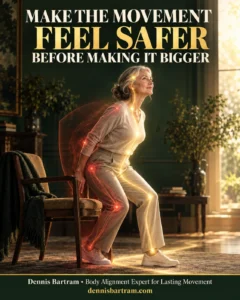
Retiree Posture Alignment Training and Lower-Back Control
Retiree Shoulder Balance Training Fixes Rounded Posture
Retiree Posture Alignment Training for Opening the Body
Why Posture Alignment Training Reduces Chest Tightness
 ⭐Modern life causes us to slouch forward and overstretch our backs. Retirees notice this after years of sitting, looking at phones, working at computers, or driving with arms outstretched. These habits shorten the muscles on our chest and shoulders and weaken the postural muscles that keep us upright. Retiree posture alignment training restores balance, helping you sit, stand, and move comfortably again.
The forward-flexed posture seen in many retirees is not a sign of ageing or weakness, but a pattern formed over years of repeated daily habits. Gravity wins when the front body tightens and pulls the shoulders forward. Retiree posture alignment training reverses this pattern with gentle movements that lengthen the front and re-activate the upper back muscles.
Maintaining a Neutral Spine During Retiree Posture Alignment Training
Before changing posture, retirees must understand why it becomes rounded. The body adapts to whatever it does most. Forward arms shorten pectorals, a tilted head strains the neck, and prolonged sitting in flexion makes back muscles less active. Retiree posture alignment training addresses these adaptations with targeted, gentle movements.
This training does not use forceful stretching. Instead, it applies gentle arm rotation and ribcage awareness to open your front. When you release tension in the front, your back muscles relax naturally. Your chest expands, shoulders float back, and your upper spine rises more easily.
Retiree Posture Alignment Training Using Safe Floor Positions
Begin the exercise by lying flat on your back on the floor. Keep your knees slightly bent, your head supported (such as with a folded towel), and your spine in a neutral, comfortable position. This position reduces pressure on the back and allows you to focus on the movements in your chest and shoulders.
From this position, lift the arms to 90 degrees and rotate the palms back as the hands lower. The movement is small, slow, and controlled, not forced. The aim is not flexibility, but softening and lengthening front-body tissues. This training restores natural movement without discomfort.
Break Free from Debt Pain, Defeat Financial Fears, And Discover Your True Desires for a Better Life!

Many retirees find the first movement challenging. Your hands may not reach the floor. Your shoulders may lift or tighten. Your lower back may arch. These reactions show how your body adapts to forward-flexed habits. The floor position lets you sense and correct these compensations without strain.
How Retiree Posture Alignment Training Prevents Lower-Back Compensation
One of the biggest mistakes retirees make when opening their shoulders is allowing the lower back to over-arch. This does not increase shoulder mobility; it simply shifts effort into the lumbar spine. In retiree posture alignment training, the goal is to maintain a neutral lower back while the shoulders work independently. This isolates the tight front-body tissues and encourages the correct muscles to respond.
Maintaining a neutral lower spine protects your back from strain. Open your shoulders from the shoulder girdle, not with your lower back. Clean movement comes from proper muscle action.
Why Retiree Posture Alignment Training Helps Hands Reach the Floor Over Time
With consistent practice, your hands will lower closer to the floor without force. The front of your body will slowly lengthen. You may feel more openness across your chest, breathe more easily, and notice less strain in your upper back and neck. These benefits build over weeks or months, depending on your initial tightness.
Patience matters. Retiree posture alignment training works with the body’s capacity for change. Shoulders need exposure to the right pattern, not force.
Some Retiree Posture Alignment Training Awakens the Posterior Chain
Once the front opens, retiree posture alignment training adds a gentle movement to activate the posterior chain, the upper back muscles for upright alignment. The video shows “walking” your hands up the floor while keeping your spine neutral. This wakes up muscles between the shoulder blades and along the thoracic spine.
When these muscles switch on, retirees feel their chest lift, their shoulders align, their neck lengthen, their posture improve, and a new lightness in the upper body.
Awakening the posterior chain is key to fixing rounded shoulders because it restores balance between your front and back.
⭐Effortless Posture Posture Alignment Training for Upright
As retirees open the front of the body and activate the upper back muscles, posture becomes upright and aligned. Retiree posture alignment training helps maintain this position throughout daily life.
Breathing Improvements Through Retiree Posture Alignment Training
Rounded shoulders compress the ribcage, making breathing shallow. As tension releases, breathing deepens. Training improves rib mobility and can increase energy.
Upper-Back Muscle Engagement During Retiree Posture Alignment Training
Most neck and upper-shoulder discomfort comes from a forward head posture. When the shoulders open and the upper back activates, the head returns to natural alignment. Benefits can include reduced neck tension, fewer headaches, softer jaw muscles, reduced upper trapezius tightness, and better balance.
You feel better because your shoulders stop pulling your head forward.
How Posture Alignment Training Helps With Sitting and Computer Use
Many retirees spend time on computers or paperwork. Posture alignment training teaches sitting upright. With more open chests and balanced shoulders, retirees experience reduced fatigue, fewer aches, and a more active neck and upper back.
Why Retiree Posture Alignment Training Improves Walking Coordination
Walking needs arms and legs to counter-rotate. Rounded shoulders restrict arm swing, affecting the whole pattern. When shoulder mobility returns, arm swing does too, making walking smoother, more rhythmic, and less tiring.
Better rhythm leads to better coordination and more confidence.
Emotional Ease Posture Alignment Training
Body and emotional state are closely linked. Rounded shoulders signal stress. Opening the chest and lifting the spine can help retirees feel lighter, calmer, and more confident. Posture alignment training encourages openness and vitality.
Retiree Alignment Training for Long-Term Postural Change
The goal is lasting structural change. Daily practice of 3 to 5 minutes retrains the nervous system. Retirees learn to naturally hold better posture because the body rediscovers efficient support.
⭐ How Retiree Posture Alignment Training Supports Shoulder Glide
One of the most powerful aspects of retiree posture alignment training is how dramatically it improves strength without requiring any heavy exercises or gym equipment. Most retirees believe they need to “strengthen their back” or “strengthen their core” to improve posture, but true postural strength does not come from muscular effort. It comes from alignment, activation, and coordination, not force.
When the front of the body gradually lengthens and the posterior chain switches on, the body begins to support itself as it was originally designed. This is why retirees often feel stronger after a few minutes of posture alignment training, without lifting a single weight. Instead of using large muscles to brace and hold the body upright, retirees use structural alignment and natural muscle recruitment.
Balance Benefits Seen With Retiree Posture Alignment Training
Functional strength is the strength you feel when:
• Lifting a kettle
• Carrying groceries
• Getting up from a chair
• Reaching overhead
• Walking up stairs
• Gardening
• Doing household tasks
• Carrying groceries
• Getting up from a chair
• Reaching overhead
• Walking up stairs
• Gardening
• Doing household tasks
It is NOT the kind of strength built through pushing or pulling exercises. It is the strength that comes from the body being correctly organised.
When retirees open the chest, lengthen the front of the shoulders, and activate the upper back, the arms can finally connect to the body again. This means that loads are transferred through the ribcage and spine, not dumped into the shoulders, neck, or lower back. This is why retiree posture alignment training improves strength without strain. The body stops fighting itself and starts working as one coordinated unit.
Posture Training Improves Hand and Arm Function
A tight chest and rounded shoulders affect more than posture; they also impact the hands and arms. When the shoulders collapse forward, the arms lose their natural support from the trunk. The forearms and hands try to compensate, leading to:
• Grip fatigue
• Wrist stiffness
• Achy elbows
• Tingling sensations
• Weakness when holding objects
• Difficulty opening jars or bottles
• Wrist stiffness
• Achy elbows
• Tingling sensations
• Weakness when holding objects
• Difficulty opening jars or bottles
Retiree posture alignment training frees the shoulders and activates the upper back, allowing the arms to hang naturally. This restores proper movement through the shoulder-to-hand chain. When the shoulders are balanced, the hands feel lighter, and tasks requiring dexterity become easier.
Retirees often report that after practising this training, their hands feel warmer, more coordinated, and less stiff. This is a direct result of freeing the front-body tension that was blocking the natural neural pathways supporting arm and hand movement.
Alignment Training Helps With Balance and Fall Prevention
Rounded shoulders may not seem directly related to balance, but shoulder position has a significant impact on the body’s centre of gravity. When the shoulders collapse forward, the head shifts out of alignment, and weight moves toward the toes. This makes retirees feel unsteady or top-heavy.
Retiree posture alignment training corrects this by opening the front of the body and activating the upper back muscles to support the head and neck. As the head returns to its natural alignment, the centre of gravity moves back over the feet. This restores stability and helps retirees feel more grounded.
Improved arm swing during walking, a direct result of shoulder realignment, also helps the body maintain rhythm and balance. These subtle improvements create a powerful effect, reducing the fear of falling and increasing overall movement confidence.
Rib Expansion Changes From Retiree Posture Alignment Training
The ribcage plays a critical role in walking rhythm. When the ribcage is stiff, the torso cannot rotate properly. This causes the arms to stop swinging and the hips to tighten. Many retirees begin shuffling or taking smaller steps because their ribcage and shoulders are not participating in the movement.
Retiree posture alignment training frees the ribs by releasing the front-body tension and allowing the shoulders to glide. This improves rotational movement in the torso, creating a smoother, more coordinated gait. Retirees often notice that their steps lengthen naturally and walking feels easier.
Long-Term Structural Change From Retiree Posture Alignment Training
Posture and emotion are deeply connected. Rounded shoulders often signal protection, stress, or withdrawal. Upright posture signals confidence, openness, and vitality. Retiree posture alignment training supports emotional well-being by restoring a posture that reflects ease and openness.
As retirees experience more upright posture, they often feel:
• Calmer
• More confident
• More energised
• More optimistic
• More present in their movements
• More confident
• More energised
• More optimistic
• More present in their movements
This emotional shift reinforces the physical improvements, making posture alignment a holistic practice.
Daily Mobility Gains Through Retiree Posture Alignment Training
The greatest benefit of retiree posture alignment training is that it creates long-lasting change. Unlike exercises that give temporary relief, this type of training rewires structural habits. The body learns a new way of organising itself, and that becomes the new normal.
When practised daily, even for two to five minutes, retiree posture alignment training gradually lengthens the front body, strengthens the upper back, and improves alignment from head to pelvis. Over time, retirees feel:
• Lighter
• More mobile
• More balanced
• Less tense
• More coordinated
• More mobile
• More balanced
• Less tense
• More coordinated
This increased ease supports healthier ageing, greater independence, and more enjoyable everyday activity.
#retireeposturealignmenttraining, #seniorposturemobilityroutine, #dailyroundedshouldercorrection, #gentlefloorpostureexercise, #naturalchestopeningmethod, #improveseniorspinalalignment, #upperbackactivationtechnique, #retireefrontbodyrelease, #seniorshouldermobilitysupport, #naturalribcageposturereset, #healthyageingmovementpractice, #balancedposturetrainingflow’