
Subtalar Joint Balance Explained for Natural Movement
Subtalar Joint Balance Explained for Natural Movement
Why Your Balance Feels Off and Never Fully Improves
How Restoring Subtalar Joint Function Improves Balance Naturally
What the Subtalar Joint Actually Does in Movement
If your balance feels off, your walking has changed, or movement feels less natural… this shows you where it really starts.
Not in your back.
Not in your hips.
But in how your foot meets the ground.
Why Your Balance Feels Off (And Why It Keeps Coming Back)
If your balance feels inconsistent, your knees ache, or your movement feels restricted… the issue may not be where you think.
Most people focus on:
- Stretching
- Strengthening
- Posture correction
But they miss the foundation.
This is where the importance of the subtalar joint balance explanation becomes clear.
The subtalar joint controls:
- How your foot adapts to the ground
- How is weight distributed
- How your body stabilises itself
When it’s not working properly, everything above it compensates.
Why Most Subtalar Joint Balance Explained Solutions Don’t Work
Most approaches treat symptoms, not the cause.
You’ve likely tried:
- Orthotics that restrict movement
- Exercises that don’t carry into walking
- Stretching only gives temporary relief
The problem?
They ignore foot alignment and body balance.
The subtalar joint allows:
- Inversion (rolling in)
- Eversion (rolling out)
Without this natural adaptability:
- Ankles stiffen
- Knees rotate poorly
- Hips and back overload
That’s why issues return.
How Your Walking Pattern Reveals the Problem
When we look at the subtalar joint balance, your walking pattern tells the story.
Your body is always adapting.
If something is off, your walk shows it.
You may notice:
- Uneven steps
- Hesitation or wobble
- Feet collapsing inward or turning out
- Lack of rhythm
These are not habits.
They are compensation patterns.
What’s Really Happening Underneath Subtalar Joint Balance Explained
Each step requires your foot to:
- Accept weight
- Adapt to the surface
- Transfer force forward
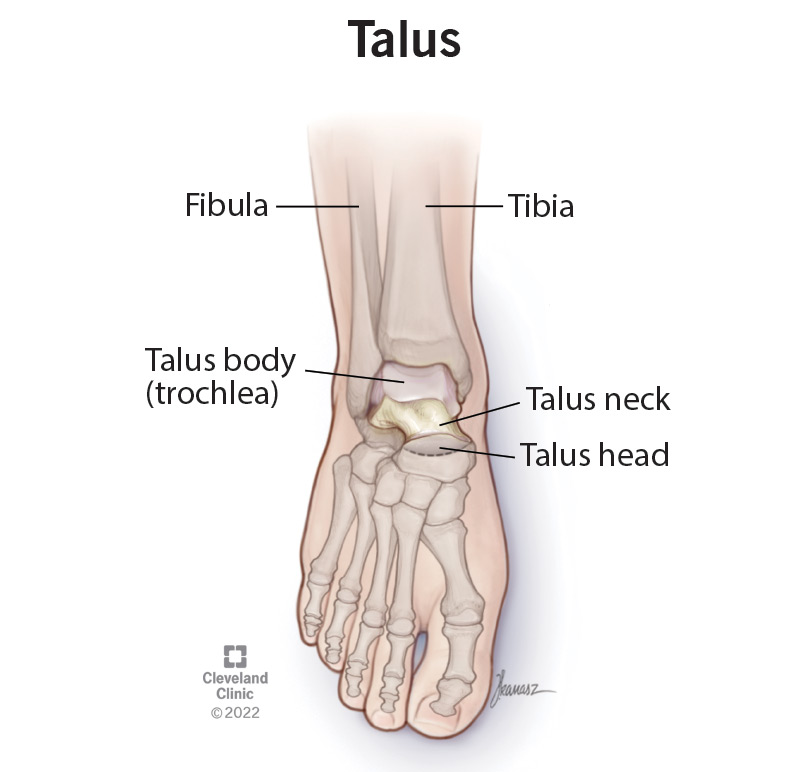
This is where the talus bone’s function in movement becomes critical.
If the talus is not positioned correctly:
- Weight enters poorly
- The subtalar joint cannot adapt
- The body shifts the load elsewhere
This leads to tension, instability, and reduced confidence.
What Actually Controls Subtalar Joint Balance Explained Natural Movement
The talus is unique.
It has:
- No muscle attachments
- A central role in weight transfer
- Direct influence on balance
That means it cannot be “strengthened” into position.
It must be aligned.
When it is:
- Movement becomes smooth
- Weight distributes evenly
- Balance improves automatically
This is the core of subtalar joint balance explained.
The Chain Reaction Through Your Body
The foot is your foundation.
When it’s not working properly, the effects travel upward:
- The foot loses adaptability
- Ankle stiffens
- The knee rotates incorrectly
- Hip compensates
- Lower back tightens
This is why symptoms of subtalar joint dysfunction appear in multiple areas.
The pain is real.
But the source is often hidden.
How the Subtalar Joint Balance Explained Body Restores Itself
The goal is not to force stability.
It is to restore the system that creates it.
This involves:
- Re-aligning the talus
- Restoring natural foot movement
- Allowing proper weight transfer
When this happens:
- The nervous system relaxes
- Reflex patterns return
- Movement becomes fluid again
This is how you naturally improve foot balance.
Visualizing Subtalar Joint Balance Explained Mechanics

- The foot adapts instantly
- Balance becomes reactive
- Walking feels lighter
When You Start to Feel the Subtalar Joint Balance Explained Change
At first, the shift is subtle.
You may notice:
- A lighter step
- Less effort in balance
- Less tension in your body
You stop thinking about movement.
And that’s the sign.
Your body is no longer compensating.
It is organising itself properly again.
Why Simplicity Works Better Than Complexity
Most systems overcomplicate movement.
More exercises.
More routines.
But the body doesn’t need more.
It needs:
- Clear input
- Proper alignment
- Space to respond
When foot alignment and body balance are restored:
- Movement becomes natural
- The nervous system calms
- Balance returns without force
Final Subtalar Joint Balance Explained Thought
You don’t fix movement by forcing it.
You restore it by removing what’s interfering with it.
Once the subtalar joint begins to function properly, balance doesn’t need to be trained.
It returns.
Free M.O.T. One Day of Movement-Oriented-Training With Coach Dennis Bartram
 When you think of a car M.O.T., you picture your vehicle being checked once a year, tuned, tested, and made safe for the road ahead. Not because it’s broken, but because without regular checks, problems build up quietly until they become dangerous.
Your body is no different. The hours at your desk, the years of standing or lifting, the slow creep of bad posture, they all compress you. Day by day, joints stiffen, fascia binds, breath shortens. And just like a car that misses its M.O.T, a breakdown feels inevitable.
That’s where the Pain Free M.O.T. comes in. Instead of waiting until the pain screams at you, Dennis Bartram offers a proactive, preventative way to keep yourself moving freely. Think of it as a body check-up that doesn’t just catch problems, it resets them.
Dennis has spent over 50 years combining martial arts mastery and physical medicine into a system of alignment that he now calls Movement-Oriented Training. The inspiration came from watching his teacher, Masaaki Hatsumi, move with grace and fluidity into his 90s. What Dennis realised was simple but profound: decline isn’t inevitable. It’s compression. And compression can be reversed.
Your Pain Free M.O.T. with Dennis is designed to do just that. One day with a master coach, and you’ll experience what it means to feel your body lighten. To feel your bones float again. To leave the day with the knowledge and the tools to keep yourself aligned, not for a week, but for life.
It’s not therapy. It’s not endless appointments. It’s a coach showing you how to run your own system check and pass it every time.
💡 Posture Truth #1: Compression isn’t ageing, it’s un-checked mileage.
🔑 M.O.T Action Step: Give yourself a 10-minute heel and sacrum reset daily to release hidden strain.
What Happens in Your Pain Free M.O.T Day
Most people envision a “body check-up” as something clinical, involving scans, charts, and prescriptions. However, your Pain-Free M.O.T. with Coach Dennis Bartram is nothing like that. This is hands-on, personal coaching, designed to give you a direct experience of what effortless alignment really feels like.
The day begins with a full-body evaluation. Dennis studies how you stand, walk, and move. Decades of martial arts and medical practice have trained his eye to see patterns most people, even most practitioners, miss. He looks for repetitive strains, small imbalances, and the subtle ways your body has been compensating for compression. This isn’t guesswork. Every step is filmed, so you can see your movement clearly and track your progress later.
From there, you’re introduced to the body’s three compass points: the atlas at the top of your spine, the sacrum at the base, and the talus in your ankle. When these are aligned, your body organises around them naturally. When they’re off, everything else, knees, hips, shoulders, even breath, is forced to compensate. Dennis’s coaching helps you feel these points reset, often for the first time in years.
The afternoon is where your Pain Free M.O.T. becomes practical. Dennis doesn’t just align you, he equips you. You’ll learn a personal maintenance routine you can continue at home, simple enough to fit into daily life, yet powerful enough to reset years of strain. This includes training with the Spine Aligner Device, which fits into a shoebox-sized box Dennis designed to help you repeat the same corrections anytime, anywhere.
By the end of the day, you don’t just leave lighter, you leave with a plan. A video record of your evaluation. A personalised self-help system. And the confidence that you can keep your body aligned without constant appointments or dependency.
That’s the heart of your Pain Free M.O.T. walk in, compressed, walk out with floating bones and know how to keep them that way.
💡 Posture Truth #2: Alignment isn’t cosmetic, it’s organ space and nervous system calm.
🔑 M.O.T Action Step: Use the neck float each evening to let your atlas reset and breath deepen.
The Science Behind the Pain-Free Subtalar Joint Balance Explained M.O.T
What makes the Pain Free M.O.T. so powerful isn’t magic; it’s the way your body is designed to work when given the right conditions. Coach Dennis Bartram has spent over 50 years studying the mechanics of movement and their relationship to health. The result is a system that blends modern anatomy with timeless martial wisdom.
Fascia: The Body’s Web
Fascia is the connective tissue that wraps every bone, muscle, and organ. When it’s supple, you move with ease. When it stiffens due to stress, sitting, or injury, it restricts movement and creates tension throughout the body. The Pain-Free M.O.T. routine cues fascia to soften and glide again, freeing your entire body.
Sinews: Movement’s Memory
Sinews record your habits. Years of slouching or bracing write grooves in them, making poor posture feel “normal.” Dennis’s methods teach sinews to relearn better patterns, smooth arcs of movement instead of stiffness. It’s like giving your body a new script.
The Nervous System: From Alarm to Ease
Every misalignment signals danger to your nervous system. Muscles tighten, breath shortens, and digestion slows. That’s why compression feels like fatigue. However, when the atlas, sacrum, and talus are properly aligned, the nervous system shifts into a state of safety: muscles relax, energy flows, and calm returns.
The Compass Points: Your Roadworthy Checklist
Think of the atlas, sacrum, and talus as your body’s MOT checklist. When these three are set correctly, the rest of your system organises itself. Your head floats, your hips balance, your feet stabilise. When they’re off, strain spreads everywhere.
This is why Dennis’s Pain Free M.O.T. works so deeply. It doesn’t chase symptoms. It addresses the underlying systems, fascia, sinews, nerves, and compass points so your whole body moves as one. The result is effortless poise, the feeling Dennis calls floating bones.
💡 Posture Truth #3: Sinews remember your past habits, good or bad.
🔑 M.O.T Action Step: Practice one slow arc movement today to re-train sinews for flow, not stiffness.
Who Benefits From a Pain-Free M.O.T.
The beauty of a Pain Free M.O.T. is that it isn’t just for one kind of person; it’s for anyone who wants to move better, age better, and live without the creeping weight of compression.
For the desk worker, it’s a reset button for hours spent folded over a screen. That slow forward collapse of the shoulders, the tight hips, the aching neck, all signs of compression. Ten minutes in alignment can undo ten hours at your desk.
For the retiree, it’s the difference between shrinking with age or standing with ease. Balance improves, confidence returns, and the fear of falling fades. Instead of shuffling or bracing, you rediscover the upright poise you thought was lost.
For the performer or athlete, it’s recovery and longevity. Fascia is freed, sinews reset, and the nervous system calms, meaning quicker healing, smoother flow, and the ability to keep doing what you love without burnout.
And for anyone who refuses to accept that “getting older means getting stiffer,” the Pain Free M.O.T. is proof that decline isn’t inevitable. Dennis’s coaching shows you how to step out of pain patterns and into movement that feels ageless.
The truth is simple: you don’t need to be broken to benefit. Just like a car doesn’t wait for a breakdown before its M.O.T., your body doesn’t need to wait for a crisis. You can choose to align, reset, and feel lighter now, regardless of your age or background.
That’s why Dennis calls it Movement-Oriented-Training. Because the M.O.T. is not about fixing what’s wrong. It’s about giving your body the freedom to move as it was designed today, tomorrow, and years from now.
💡 Posture Truth #4: Balance doesn’t fade with age; it fades with neglect.
🔑 M.O.T Action Step: Anchor your sacrum once a day; watch how hips and knees find symmetry.
The Subtalar Joint Balance Explained Legacy + The Call
Every system has a lineage. For Dennis, it began when he watched Masaaki Hatsumi move with fluid grace well into his 90s. What he saw wasn’t just martial skill; it was proof that alignment and effortless poise could defy age itself.
This real demonstration shows how the subtalar joint and talus work together to restore natural balance and walking.
Watch closely as tension is reduced, movement is restored, and the body reconnects to its natural reflex patterns.
Notice how the foot adapts, how the body stabilises, and how balance improves without force.
This is not an exercise. This is restoring the system that controls movement.
Over the next fifty years, Dennis tested and refined that truth. From massage and osteopathy to fascia research and martial training, every discipline became a piece of the puzzle. The Pain Free M.O.T. is the result of a distilled, practical way to pass this legacy on.
And now, at 75, Dennis is opening a handful of spaces for those who are ready. This isn’t a seminar. It isn’t therapy. It’s a one-day, one-on-one immersion where you experience floating bones for yourself and leave knowing how to keep them.
Opportunities like this are rare by design. Dennis isn’t offering endless appointments. He’s offering a chance to inherit a lifetime of wisdom in a single day.
If you’re ready to move without strain, to stand tall with ease, and to discover what ageless movement feels like, this is your invitation.
👉 [Request Your Pain Free M.O.T Day With Dennis] Coming Soon. Please ensure that you enter your name in the sign-up box to the right to be added to our mailing list.
💡 Posture Truth #5: Pain Free Living is not an event, it’s a routine.
🔑 M.O.T Action Step: Schedule your daily M.O.T like brushing your teeth. Consistency builds freedom.
#subtalarjointbalanceexplained,#footalignmentbodybalance,
#talusbonefunctionmovement,#improvefootbalancenaturally,
#naturalmovementwalking,#balanceafter50, #anklemobilitycontrol, #bodyalignmentmovement,#movementrestorationmethod, #activebalance,#dennisbartram


