Feel Your Body Respond Before You Believe Anything
A simple before-and-after movement check can tell you more than another promise ever will.
The Reader Doesn’t Need Another Promise
Test one familiar movement, make one gentle change, then retest to see what actually happened.
One Small Change Can Be Enough
The most useful response may be a tiny shift in ease, smoothness, balance, or effort.
Feel Your Body Respond Before You Believe Anything
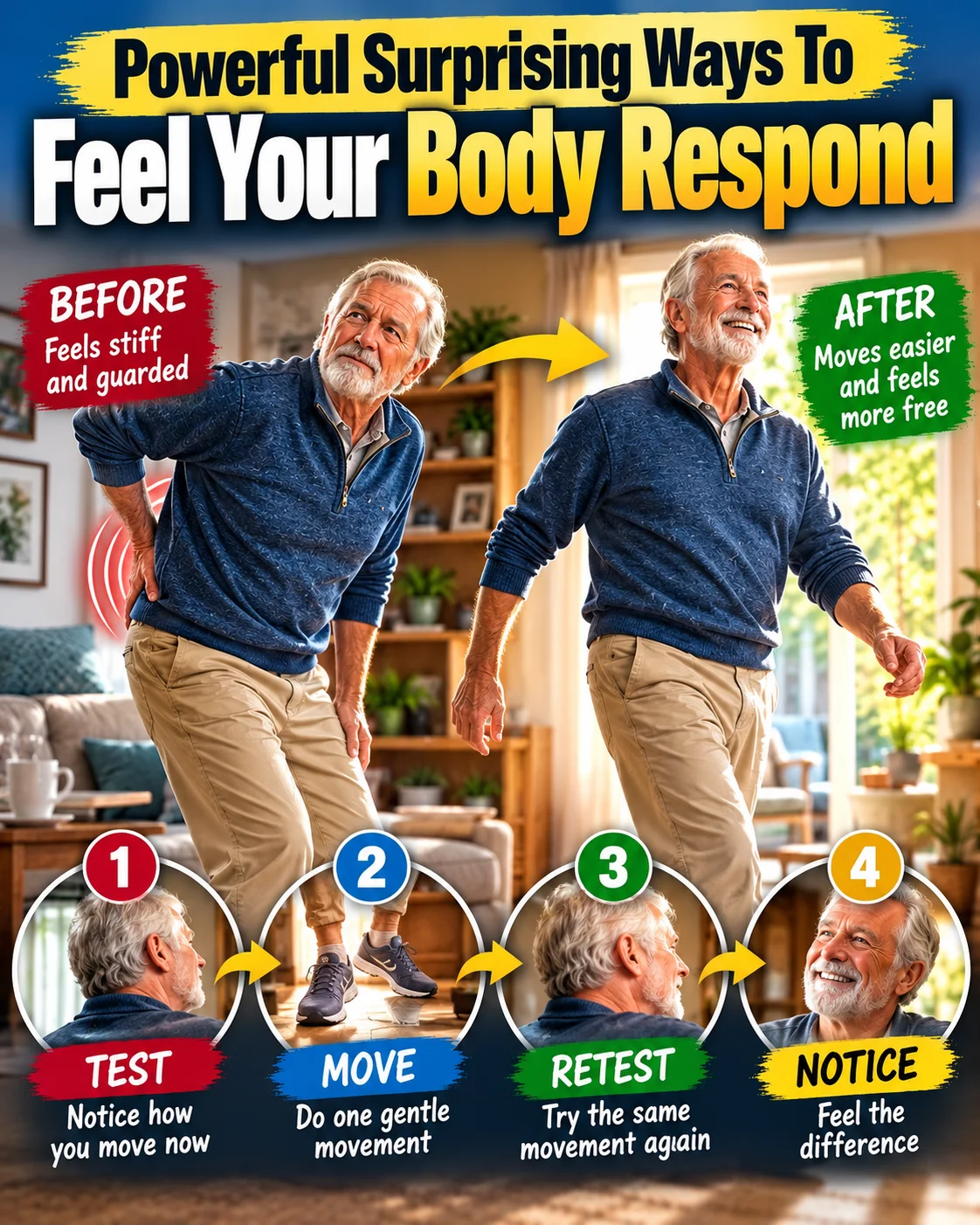
Powerful Surprising Ways To Feel Your Body Respond
At a certain moment in the morning, your body tells the truth before your mind can dress it up. You get out of bed, straighten up, take those first few steps, and maybe turn to look out the window. One side moves easily. The other feels reluctant. Your shoulders may feel as though they arrived five minutes after the rest of you. Nothing dramatic has happened, yet you know perfectly well that you are not moving quite as freely as you did later yesterday. For years, people have been handed exercises at precisely this point and told, “Do these every morning.” Active Balance asks a more interesting question. Before doing anything, notice how you move now. Then make one small movement and check again. That is where Feel Your Body Respond stops being a slogan and becomes something you can experience for yourself.
Let Experience Help You Feel Your Body Respond

Many exercise guides urge you to rely on an instructor, on programs, or on fixed repetitions. That approach isn’t wrong, but it can leave you at home seven o’clock unsure about adding a new routine. Dennis Bartram’s method begins with TEST, MOVE, RETEST, and NOTICE.
One Small Change Can Be Enough
This is where people often miss the point. They chase fireworks: dramatic stretches or a dramatic before-and-after. Yet the most persuasive changes are usually small. Turn to the right before the movement and sense that familiar hesitation. You perform a gentle cross-crawl for a short spell, then stop and turn again.
And Then Something Important Happens Tomorrow
TODAY’S QUICK WATCH
Watch Today’s Video
See today’s problem-solving lesson in action.
▶ Watch Video
This is more than an exercise trick. If you notice even one useful difference, tomorrow’s decision can change. You are no longer memorizing a routine because someone says consistency matters. Yesterday, your turn felt easier afterward. You moved more smoothly and felt a curious moment when your body whispered, “Do that again.” That moment makes a routine feel natural, not like a new chore. A small response sparks curiosity.
Curiosity fuels repetition, and repetition builds familiarity. Soon the movement becomes your morning choice rather than another item on someone else’s sheet. And your body may give you a reason to do it again tomorrow.
The Retest Helps You Feel Your Body Respond
The clever bit is not the movement itself. It is the second look.
Most people finish an exercise and move on. They count the repetitions, tick the box, maybe congratulate themselves on doing something useful, then move on with the day. Active Balance asks you to stay with the moment for a few seconds longer. Turn again. Walk again. Stand again. Reach again. Use the same movement you tested before, because that is the only way to make the comparison worth anything. If you change the test, you change the measuring stick. The point is not to prove that the routine works. The point is to give your body a fair chance to show you whether anything has changed. That distinction matters because Feel Your Body Respond is not about collecting exercises. It is about collecting useful responses. That is why Feel Your Body Respond depends on using the same test before and after the movement.
Don’t Hunt For A Miracle
Suppose your first few steps each morning feel heavy and your right turn feels more guarded than your left. You test it, perform a gentle cross-crawl for a short period, then retest. The difference may be tiny. Perhaps the right turn is still limited, but it feels less reluctant. Your steps may not be faster, but they may feel smoother. Perhaps nothing changes at all. Every one of those outcomes tells you something. The mistake is deciding beforehand what success should look like. If you demand a dramatic result, you can miss the smaller clues that make self-maintenance useful. The smallest change is often the best clue. It gives you something specific to notice tomorrow rather than a vague instruction to “keep exercising.”
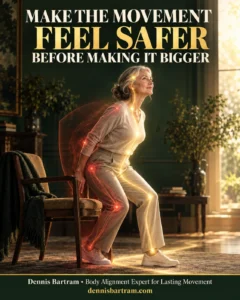
That also gives us a practical rule for the whole series. Never force a result just because you want one. If a movement feels painful, sharply uncomfortable or clearly worse, that is not a cue to push harder. Stop and reassess. This is not a self-diagnosis system, and it is not a replacement for appropriate professional advice when symptoms are new, severe or persistent. It is a simple way of paying attention to ordinary movement. The aim is not to make your body obey the routine. The aim is to notice whether the routine is helping your body move with less effort.
Tomorrow’s Choice Can Follow How You Feel Your Body Respond
Now we arrive at the part I think makes this such good bait for the fourteen-day Active Balance series.
What if tomorrow’s routine is not chosen entirely from a printed list?
What if your body gets a vote?
If one safe movement repeatedly leaves an everyday action feeling easier, smoother, freer or more natural, that movement has earned some attention. It may deserve another place in tomorrow morning’s routine. If another movement produces no useful change, you do not need to pretend it was magical just because it appeared on the page. You can stay curious, retest on another day, or move on to the next lesson. That is a much calmer way to build a routine because it replaces blind obedience with observation.
Think about how different that feels from the usual New Year approach. Do not make a heroic promise to exercise for an hour. A cupboard does not hold unused equipment. Avoid any programme that turns into another job before breakfast. You begin with one thing. One test. One movement. One retest. One honest observation. Feel Your Body Respond gives the reader a simple reason to keep what seems useful and stay curious about what does not.
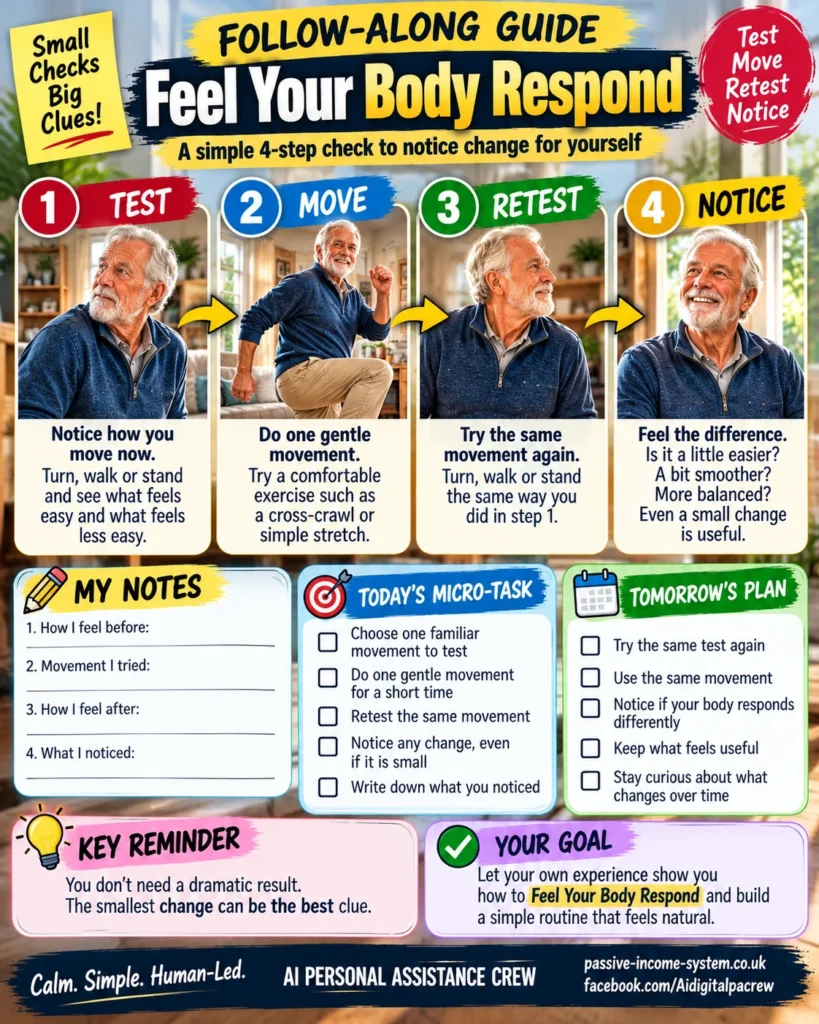
TEST → MOVE → RETEST → NOTICE.
That is enough for Day One.
And if the reader gets even one little “Oh, that is interesting” moment, we have done something more valuable than giving them another article to read. We have given them a reason to come back tomorrow.
Your Active Balance 60-Second Test
Choose one ordinary movement you can repeat comfortably. It could be turning gently left and right, walking several steps, reaching an arm comfortably, or standing from the same chair.
TEST: Do it once and notice how it feels.
MOVE: Perform one gentle Active Balance movement without forcing range or chasing discomfort.
RETEST: Repeat the same original action.
NOTICE: Ask only, “Does anything feel easier, smoother, freer, more balanced or more natural?”
You do not need a stopwatch, a scorecard or a dramatic result. You need an honest comparison.
Assuming nothing changes, you have learned something.
If something feels worse, stop.
If something feels noticeably easier, remember it.
Because that tiny bit of feedback may become the most powerful part of the entire routine.
Do one movement. Notice one change. Let your body give you a reason to do it again tomorrow.
Real Experience Makes Feel Your Body Respond Meaningful
That is why this opening article matters so much. We could spend two thousand words explaining posture, gravity, gait, coordination and movement patterns, and all of that has its place. But information alone does not create belief. A small personal experience can do more. If the reader tests one ordinary movement, performs one comfortable Active Balance movement, then retests and notices even a modest change, the rest of the series suddenly feels different. They are no longer reading simply because Dennis says the method is useful. They are reading because their own body has given them something worth investigating. That changes the question from “Does this work?” to “What else can I notice?” and that is a far stronger reason to return tomorrow.
The fourteen-day series does not need to promise fourteen dramatic transformations. Its value lies in helping the reader build fourteen useful observations about how their own body responds. Some movements may feel immediately relevant. Others may produce very little noticeable change. That is perfectly acceptable, because the purpose is not to force a result but to become more observant, more selective and more confident about what deserves a place in a personal morning routine. Over time, the reader may begin to recognise patterns that were previously hidden beneath stiffness, habit or repetition. They may notice that one movement regularly makes turning easier, another seems useful after long periods of sitting, while another does not earn its place.
That is the point where self-maintenance begins to feel less like exercise and more like practical body awareness. The routine becomes easier to continue because it is no longer based only on instruction. It is based on experience. The reader knows what they are looking for, can compare before and after, and has a simple rule for deciding what deserves another try tomorrow. That is a much calmer route to consistency than relying on willpower, motivation or a long list of movements completed simply because they were printed on a page.
So tomorrow morning, the task is not to impress yourself or chase a dramatic stretch. Choose one ordinary movement, test it honestly, perform one comfortable Active Balance movement, then repeat the original test. Notice whether anything feels easier, smoother, freer or more natural. If it does, remember the response. If it does not, that is useful information too. The important thing is that you are no longer guessing. Did your body give you a reason to do that again tomorrow? That keeps the ending fuller, smoother, and much more like our house style.
Today’s Apprentice Task: Build One Front Door
Feel Your Body Respond How To Notice What Changes
Dennis Bartram is the Director of the Active Balance Home or on the Go System Dennis’ journey began in 1969 when he qualified in Swedish remedial massage and in 1974, he began his practice in remedial sports massage and manipulative