Everyday Movements Reveal Progress
Everyday Movements Reveal Progress You Might Otherwise Miss
An ordinary morning can contain a useful change.
The Chair Hasn’t Changed, But Your Morning Might Have
Notice how the familiar task feels from beginning to end.
How Everyday Movements Reveal Progress Through Fair Comparisons
Keep the task familiar and your usual support available.
The chair was still beside the window, guarding the same patch of carpet and offering its usual view of the neighbour wrestling with the recycling bin. Breakfast was finished. You stood, collected your plate and headed towards the kitchen. Only halfway there did something occur to you: getting up had involved rather less discussion than usual. No second attempt, no repeated shuffling of the feet, and no pause before moving away. That is how Everyday Movements Reveal Progress. Sometimes the first sign is an ordinary job completed with a little less fuss, noticed only after it has happened.
Such moments are easy to overlook because they lack the ceremony we associate with improvement. Nobody presents a certificate for putting on a cardigan more comfortably. No finishing tape stretches across the kitchen doorway. Yet these tasks occupy real life, and changes within them can matter a great deal. The useful question is whether we can recognise those changes accurately. A pleasant morning deserves to be noticed, but it should not become proof that every movement problem has disappeared. Likewise, an awkward afternoon should not erase a week of more manageable mornings.
Give Progress A Familiar Place To Appear
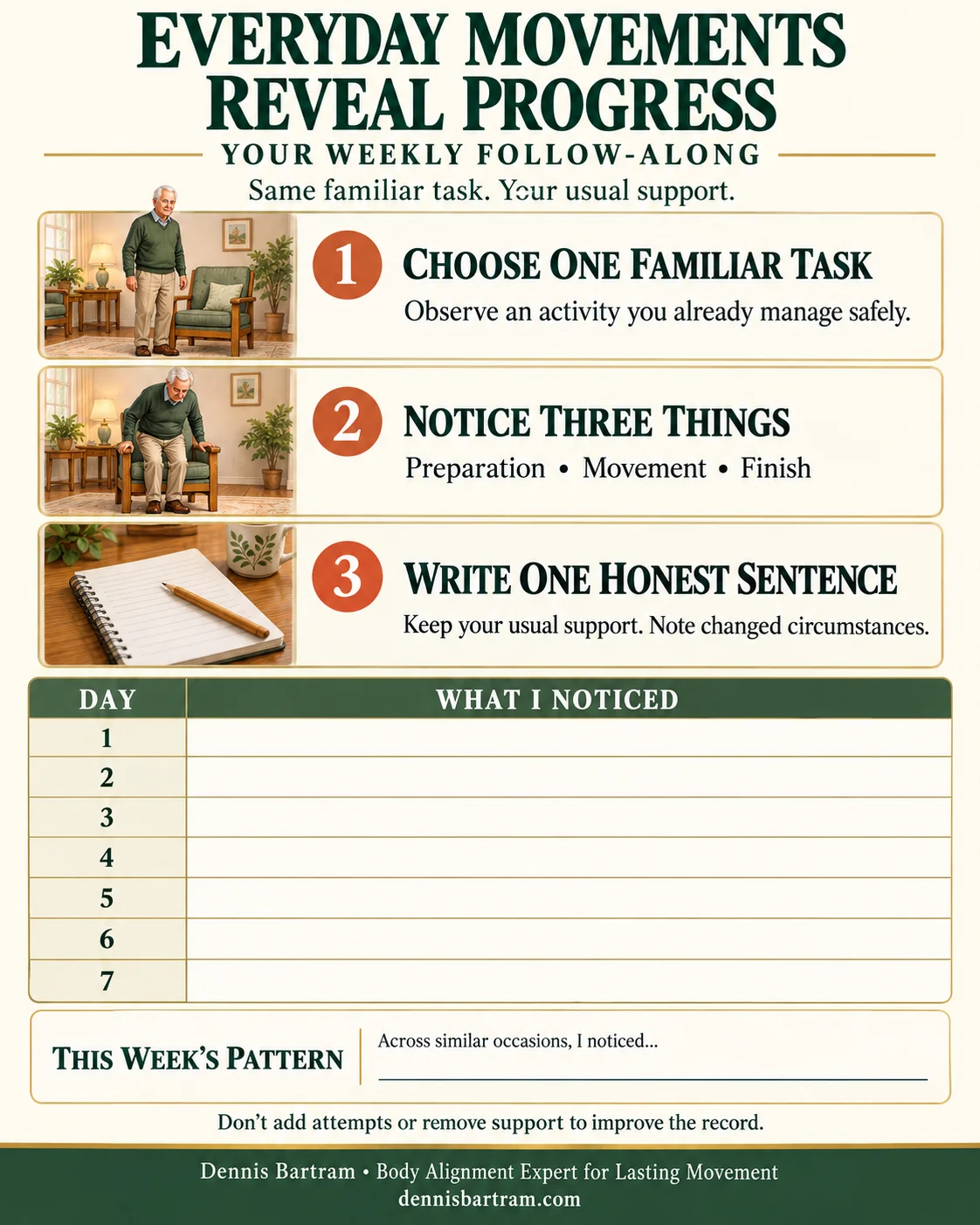
Choose one familiar action you already manage safely in ordinary life. It might be leaving a stable chair after breakfast, putting an arm into a loose sleeve or walking along a clear indoor passage. The task should happen naturally, without requiring a special performance. You don’t need to choose your hardest movement just because it looks more impressive. A dependable reference gives you something you can observe repeatedly under reasonably similar circumstances. Its value comes from familiarity. If the task keeps changing, the comparison becomes harder to interpret before you have even begun.
Everyday Movements Reveal Progress When The Comparison Is Fair
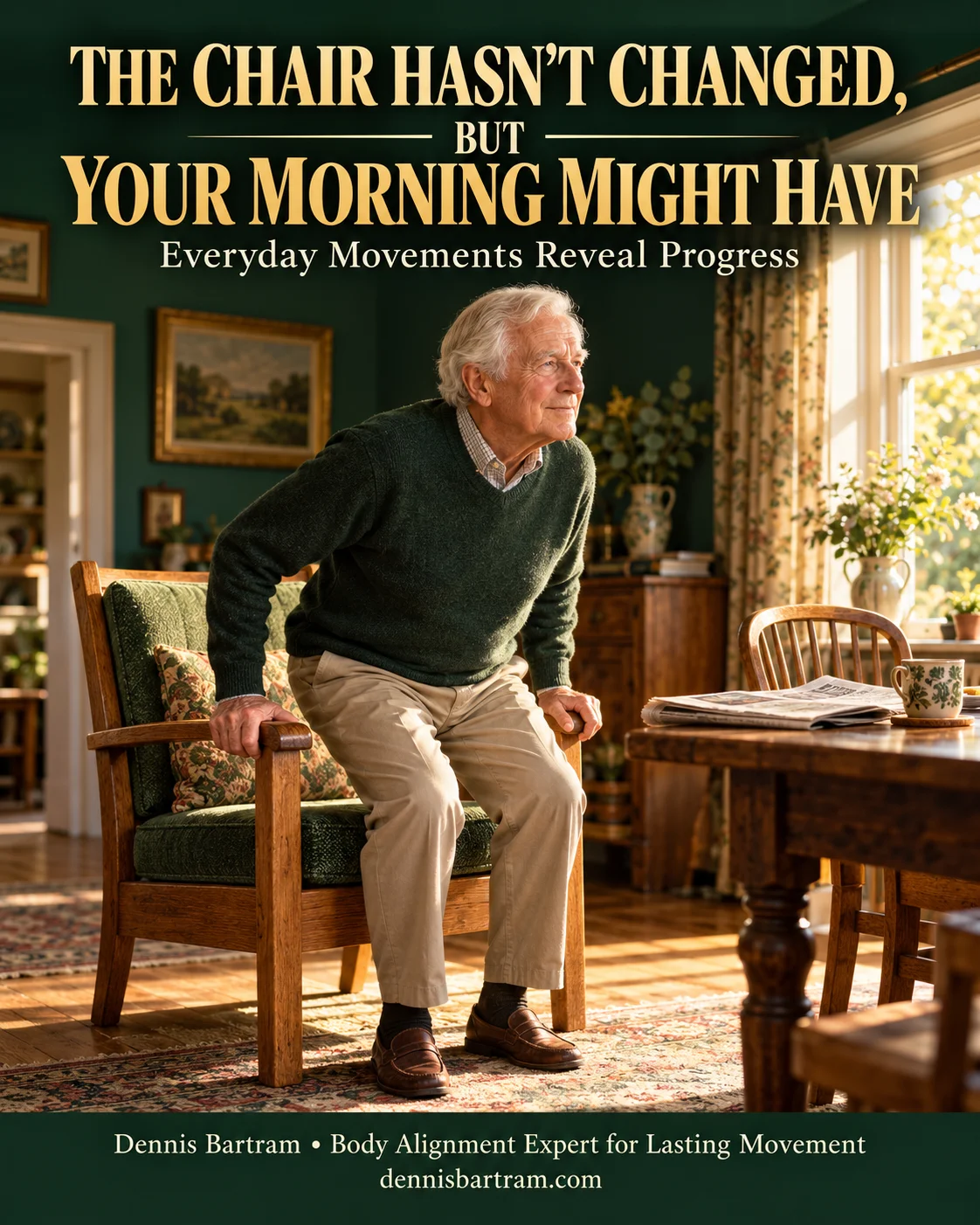 A chair seems like a simple reference until you consider how many versions exist in one house. There is the firm dining chair, the welcoming armchair and the sofa that appears determined to retain its occupants until spring. Each offers a different task when standing. Therefore, an easier rise from one seat cannot fairly be compared with a difficult rise from another as though the furniture played no part. Keep the same chair where practical, with its usual cushion and available support. You are giving your observations a consistent starting point, not arranging a scientific laboratory around the breakfast table.
The circumstances need not be identical down to the last cornflake. Life is too untidy for that. However, record obvious differences. Perhaps the cushion changed, you were interrupted, or the observation took place much later than usual. Note the difference without deciding immediately what caused what. “Different chair today” is enough to prevent a misleading comparison. The aim is to describe the occasion honestly. You do not need to calculate how much each detail affected your movement, and an everyday observation cannot establish that on its own.
Your Usual Support Belongs In The Picture
Hand support is part of the task, not something to conceal when reporting success. If you normally use both chair arms, continue using them. Taking your hands away to produce a better-looking result changes what you are asking yourself to do. A comfortable rise with familiar support is worth recognising on its own terms. The same applies to any aid or assistance you ordinarily need. This observation method is not an invitation to discard it. You are looking for changes within an ordinary activity, while keeping the arrangements that help you complete it safely.
That distinction also makes your notes clearer. “Stood comfortably using both arms” gives useful information. “Managed unaided” may sound more impressive, but it leaves unanswered questions about effort, steadiness and how the movement finished. Independence includes knowing how to use suitable support and arrange daily tasks sensibly. It does not require turning every chair into an examination. When Everyday Movements Reveal Progress, the change may be less hesitation or a more comfortable finish with the same assistance as before. You don’t have to remove something helpful before the improvement counts.
Notice What Happens Before You Stand
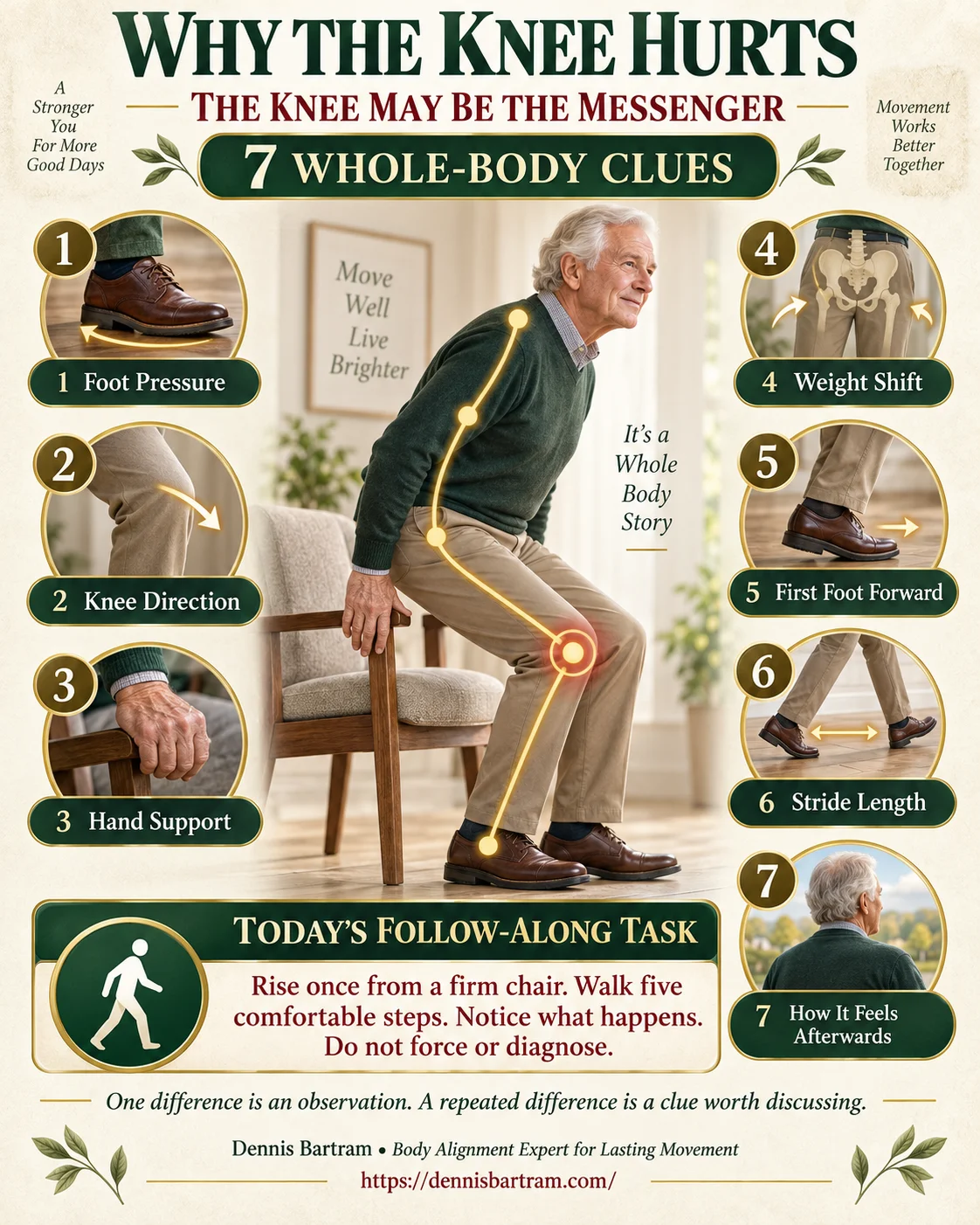
Preparation is often the part we forget. We remember being seated and then being upright, while the small decisions between those positions disappear from the account. Perhaps you moved your feet several times, checked your hand position or paused before beginning. These actions are observations, not automatic faults. Some preparation is sensible and useful. What matters here is whether the experience changes across comparable occasions. If you find your position more readily and complete the task comfortably, that is a detail worth recording. It tells you more than a vague feeling that the morning was good.
Imagine a reader called Sheila, used here as an illustration rather than a patient case. On Monday, she writes: “Breakfast chair, both hands on the arms, repositioned my feet twice before standing.” On Thursday, her note reads: “Same chair and support, feet settled sooner, stood once and felt comfortable.” Sheila has not demonstrated why the difference occurred. She has described a specific change under similar conditions. That gives her something to look for again. If it recurs, she has a more informative account than either “I am completely better” or “Nothing ever changes.”
Everyday Movements Reveal Progress Without A Stopwatch
Speed can easily take over because it supplies a number. But this records ordinary experience, not a timed assessment. Getting upright sooner does not tell the whole story if you feel hurried or unsettled afterwards. Conversely, taking the same amount of time may still feel more manageable. The preparation may be simpler, the movement may involve one attempt rather than two, or the finish may feel more controlled. Choose the feature that matters to the task you have selected. You don’t have to monitor everything, and you certainly don’t need to race yesterday’s breakfast.
Include the ending in your observation. For leaving a chair, that means noticing whether you feel settled before moving away. For putting on a cardigan, it includes completing the second sleeve and adjusting the garment comfortably. A task has more than a halfway point, even when that halfway point attracts most of our attention. The question is whether the whole action became more manageable. This keeps the observation connected to daily usefulness. Reaching one position successfully is welcome; completing the ordinary job comfortably provides a fuller account of what happened.
Describe The Change Before Explaining It
A clear sentence can preserve what memory would otherwise blur. “One attempt, usual hand support, comfortable finish” is specific enough to revisit later. It does not claim increased strength, improved alignment or a particular tissue change. You can’t establish those explanations from a brief household observation. Keeping the description separate from the explanation makes the record more trustworthy. It can also help you explain a persistent difficulty to a professional. Instead of trying to diagnose yourself, describe the task, the conditions and the part that remains troublesome.
For now, give one familiar movement your attention when it occurs naturally. Keep the usual support, notice its preparation and include its finish. Afterwards, capture the feature that stood out in one honest sentence. Everyday Movements Reveal Progress most usefully when we let the evidence accumulate without demanding better performance each day. The chair may remain exactly where it was. What matters is whether leaving it becomes more manageable across several comparable mornings.
Let The Week Speak Before You Deliver A Verdict
By Wednesday, the notebook may grow on its own. Monday felt comfortable, Tuesday involved more hesitation, and Wednesday passed almost unnoticed. Which morning tells the truth? All three describe something that happened, but none deserves to represent the entire week. The purpose of recording a familiar task is to see whether an experience recurs. Everyday Movements Reveal Progress through those repeated observations, provided the circumstances are reasonably comparable. One easy occasion is encouraging. Several similar occasions give you a firmer basis for saying that this particular part of your day has become more manageable.
Begin by looking for repeated descriptions rather than selecting your favourite entry. Perhaps “two attempts” appears early in the record, while later entries usually describe one. Perhaps the task still requires the same support, but you mention less hesitation more often. Read the difficult entries as carefully as the comfortable ones. They may reveal a change in circumstances or show that the improvement is not consistent yet. Either finding is useful. The notebook should help you understand the experience you are having, including the parts that remain uncertain.
Everyday Movements Reveal Progress In Comparable Moments
Return to Sheila, our illustrative reader with the breakfast chair. Her Thursday entry describes a comfortable rise using both chair arms. On Friday, she records difficulty leaving a deep sofa after watching television. It would be tempting to conclude that Thursday’s progress had vanished overnight. However, Friday’s entry describes another seat and another occasion. Sheila keeps the observation because it matters, but she does not place it alongside the breakfast-chair entries as though they were interchangeable. She now has information about two tasks, one of which may be becoming easier while the other remains troublesome.
That distinction prevents a common mistake: turning a specific improvement into a promise about everything. A more comfortable chair rise does not establish that getting into the bath, climbing stairs or carrying shopping has also improved. Each activity deserves its own attention when it matters to you. You can value a change without enlarging the claim. “Breakfast is easier to get up from” may sound modest, but it describes something useful and recognisable. A precise improvement is more helpful than a sweeping declaration that falls apart the next time a different task becomes difficult.
A Blank Entry Is Better Than A Manufactured Result
Some days, the routine changes completely. You eat elsewhere, have visitors or forget to notice. Leave the entry blank or write that the usual task did not occur. You don’t need to do it later to fill the space. Once the record starts demanding extra attempts, it has acquired a job it was never meant to have. The observation belongs to your ordinary day. Your day should not have to rearrange itself to satisfy a notebook, no matter how handsome the notebook or how determined the person holding the pencil.
The same applies when nothing particular stands out. “Usual task, usual support, no clear difference” is an entirely respectable entry. You do not owe the page a breakthrough. Recording an unchanged experience protects the value of the changes you do notice because you are not inventing improvement to keep the story cheerful. If the observations remain much the same throughout the week, say so. You have still gained a clearer account of one daily activity, which can help you explain what remains difficult or decide what you want to discuss at an appointment.
Everyday Movements Reveal Progress Beyond The Practice Session
A useful next question is where improvement shows up. You may feel more comfortable during a movement routine yet remain uncertain about its effect on daily life. Choose an ordinary task that matters to you and observe it on its own. For example, a turning movement during practice might feel easier, while putting on a seat belt still presents a challenge. The positions and demands differ. This does not cancel the easier practice experience. It tells you that the improvement you have noticed has not yet addressed the particular everyday difficulty you wanted to address.
That distinction can sharpen a conversation with a practitioner or instructor. Instead of saying, “The exercises aren’t working,” you can explain, “The practice turn feels easier, but reaching for the seat belt is still awkward.” You have identified both the improvement and the remaining problem. The professional then has something concrete to explore. Everyday observations are useful because they describe the jobs you actually need to perform. They need not imitate a formal assessment, and you should not use them to decide independently what treatment or exercise changes are required.
Helpful Changes Deserve An Accurate Label
Sometimes the task becomes easier because you have changed its arrangement. You might sit down to dress, move an everyday item to a more accessible shelf or use a chair recommended for your needs. Those can be valuable practical improvements. Record them as changes to the setup rather than assuming they demonstrate a change within the body. “Getting dressed is more manageable since I started sitting in the firm chair” is an honest and useful conclusion. It recognises the benefit while preserving the reason the comparison differs from the earlier entries.
If the new arrangement becomes your normal routine, let it establish a fresh starting point. Keep the previous notes, but begin comparing occasions that use the new setup. Don’t return to an unsuitable arrangement to preserve the original comparison. The record serves your everyday life, including sensible adaptations. When Everyday Movements Reveal Progress, the practical benefit may involve a task becoming more accessible through better support. What matters is describing that benefit accurately, so it is neither dismissed as cheating nor misrepresented as proof of physical recovery.
Encouragement Works Best When It Stays Specific
Family members may notice a change before you do, particularly when something that once required discussion becomes routine. Their observations can be helpful if they describe what they saw. “You stood on the first attempt this morning” gives you something concrete to consider. “You’re completely better now” asks one moment to carry rather too much responsibility. If somebody offers a useful observation, include it as their observation. You might write that your daughter noticed less hesitation, while you felt about the same. Both perspectives can sit on the page without one defeating the other.
However, keep the process comfortable and private enough to remain useful. Nobody needs an audience assembled around the breakfast chair, waiting to award marks. If being watched makes the task feel awkward, make your own brief note afterwards. Nor should encouragement become pressure to remove support, hurry or repeat the movement for someone else. The aim is to recognise ordinary experience as it occurs. A quieter, less demanding routine is worth noticing without turning the person living it into the star attraction of a household demonstration.
Everyday Movements Reveal Progress Without Explaining Every Change
A record may show a pattern without revealing its cause. If a task repeatedly feels easier, you can report that improvement while remaining uncertain about why it happened. Likewise, a difficult day does not need an immediate explanation involving age, posture, fascia or confidence. Note any obvious differences in circumstances, but resist filling the gaps with a theory. This restraint makes the account more useful. You are preserving information that can support a discussion, rather than narrowing that discussion before an appropriate assessment has taken place.
Persistent worsening deserves attention rather than a determined search for a positive interpretation. If an everyday task is becoming increasingly difficult, or new pain or difficulty develops, discuss it with an appropriate healthcare professional. Do not keep repeating a troublesome movement to obtain a more reassuring entry. The record can help you explain when the change began and what you are finding difficult. Its purpose is to make experience clearer, including experiences that need help. A page full of encouraging language is of little value if it conceals what is actually happening.
Open to See This Video, And This Is What’s Already Built,
Trained & Waiting For Your First Command.
Everyday Movements Reveal Progress Apprentice Task
Choose one familiar activity you already manage safely and expect to perform naturally over the coming week. Keep your usual support and use a reasonably consistent setup. After the activity, write one sentence describing its preparation, the movement itself and how it finished. For example: “Breakfast chair, usual hand support, one attempt, felt settled before walking.” If the circumstances differ, add a short note. Do not make extra attempts, chase a faster result or remove assistance to improve the entry. Your task is to notice what happens during ordinary life.
At the end of the week, read the comparable entries together. Identify one recurring observation, whether it shows greater ease, continuing difficulty or no clear change. Keep any conclusion specific to the task you observed. Then complete this sentence: “Across these similar occasions, I noticed…” Let the evidence determine the ending. The most useful progress is something you can describe honestly, recognise again and connect to a part of daily life that matters to you.