Restore Your Natural Footprint Before Changing Your Favourite Shoes
Discover why comfortable footwear can sometimes restrict natural foot movement and what your feet may be telling you during everyday walking.
Your Shoes May Be Hiding What Your Feet Are Trying To Tell You
Learn why cushioning alone doesn’t guarantee enough toe space, appropriate support or comfortable movement.
Why Your Feet Need More Than Comfortable Cushioning
Understand how toe space, stability and freedom of movement work together to support everyday walking after fifty.
Reestablish your natural footprint before changing your favourite shoes.
Discover why comfortable footwear can sometimes restrict natural foot movement, and what your feet may be telling you when you walk every day.
Your Shoes May Be Hiding What Your Feet Are Trying To Tell You. The difference between useful support and unnecessary restriction could change how you choose your next pair of shoes. Why Your Feet Need More Than Comfortable Cushioning: Learn how toe space, foot movement and secure footwear contribute to comfortable walking after fifty.
A familiar pair of shoes sits beside the front door in thousands of British homes. They have joined their owner on trips to shops, strolls in the garden, and long supermarket aisles for years. They feel comfortable and sturdy, and their wear suggests affection. Yet comfort alone cannot reveal how well footwear supports all daily movements. When we consider restoring a natural footprint, a key question arises: do these shoes align with the work your feet must perform, or have you grown so accustomed to their limits that you no longer notice them?
For older adults who want to remain comfortable and confident when walking, that question deserves more attention than the latest fashionable footwear claim. Feet have complicated jobs. They support body weight, adapt to changing surfaces, help manage balance and contribute to the forces involved in every walking step. Shoes can protect against injury, provide cushioning, improve traction and accommodate individual health needs. However, they also influence the environment in which these movements happen. A narrow toe box may restrict comfortable toe positioning, while a stiff sole can change how the foot bends during walking. These features aren’t automatically harmful, because some people benefit from specific support. The important distinction is between useful support and unnecessary restriction. Understanding that difference helps readers assess the footwear they already own without assuming that conventional shoes are unhealthy or that barefoot footwear must be better.
What Your Favourite Shoes Might Be Concealing
George is a retired gentleman who walks to the local newsagent each morning. He has worn the same cushioned walking shoes for years and finds them surprisingly comfortable.
The footwear feels soft at the heels and fits securely, giving him little reason to complain. Recently, however, a subtle issue has begun to surface.
George’s situation reveals a distinction that is often overlooked when people shop for footwear. To restore your natural footprint, begin by checking whether your shoes give your toes enough room without sacrificing a secure fit.
Cushioning underfoot and toe room are two separate characteristics. A shoe can have a wonderfully soft sole while its front section provides limited room for the foot. Equally, footwear with a generous toe box may feel unstable or unsuitable for someone who needs particular support. Neither feature tells the complete story.
Before buying anything, George would benefit from checking how his current shoes fit while standing and during everyday activity. Feet can change shape slightly under body weight, and swelling and other changes may alter their dimensions throughout the day.
A shoe that appears roomy while sitting may feel tighter after prolonged walking. The question isn’t whether George should buy a wider shoe right away. It’s whether his current footwear accommodates his feet comfortably during the activities he actually performs. To restore your natural footprint, start by recognising the difference between footwear that provides useful support and shoes that unnecessarily restrict comfortable movement.
Four Everyday Clues Help Restore Your Natural Footprint
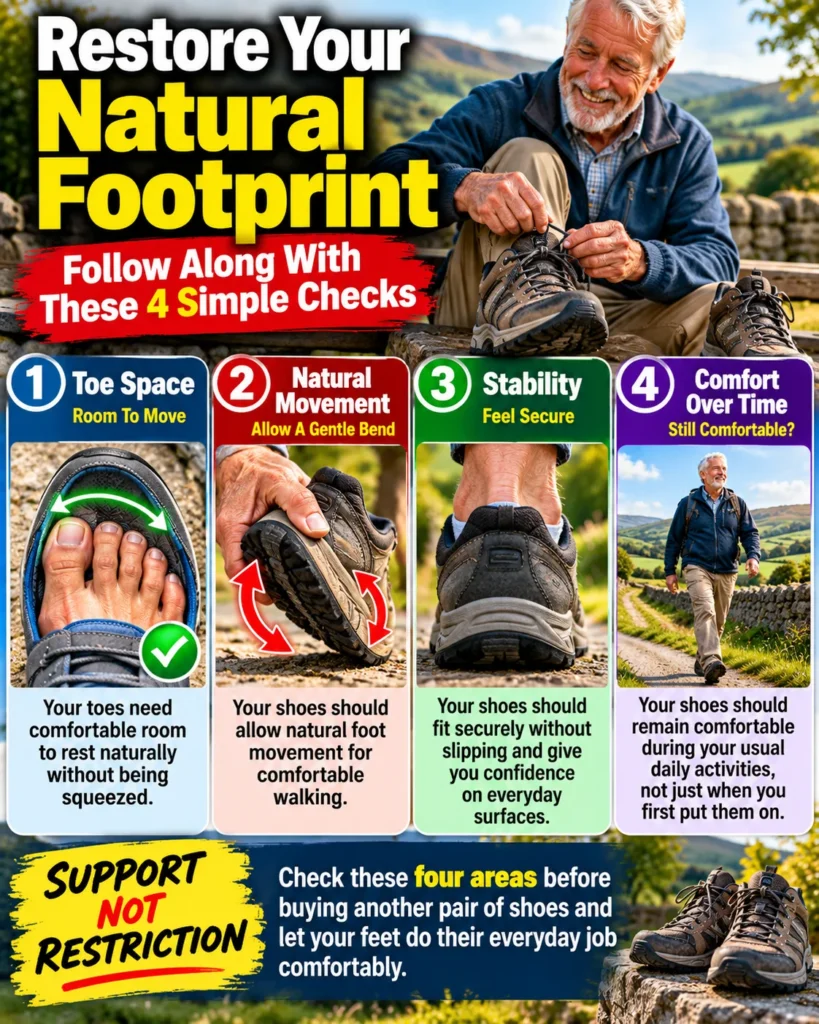
There’s a practical way to examine footwear without turning the exercise into an expensive shopping expedition. Instead of judging shoes by a single feature, consider four separate qualities: space, movement, stability and comfort over time. Each tells you something different about what the shoe needs to do. Space concerns how comfortably the shoe accommodates the foot, particularly around the toes. Movement involves how the shoe interacts with the foot’s ordinary bending and adjustment during walking. Stability concerns secure fit, traction and the feeling of support during activity. Comfort over time asks whether those qualities remain suitable after the wearer has been moving for a while. Don’t judge any one factor in isolation, because a shoe that performs well in one area may be less suitable in another. Together, however, they provide a useful framework for distinguishing supportive footwear from unnecessary restriction.
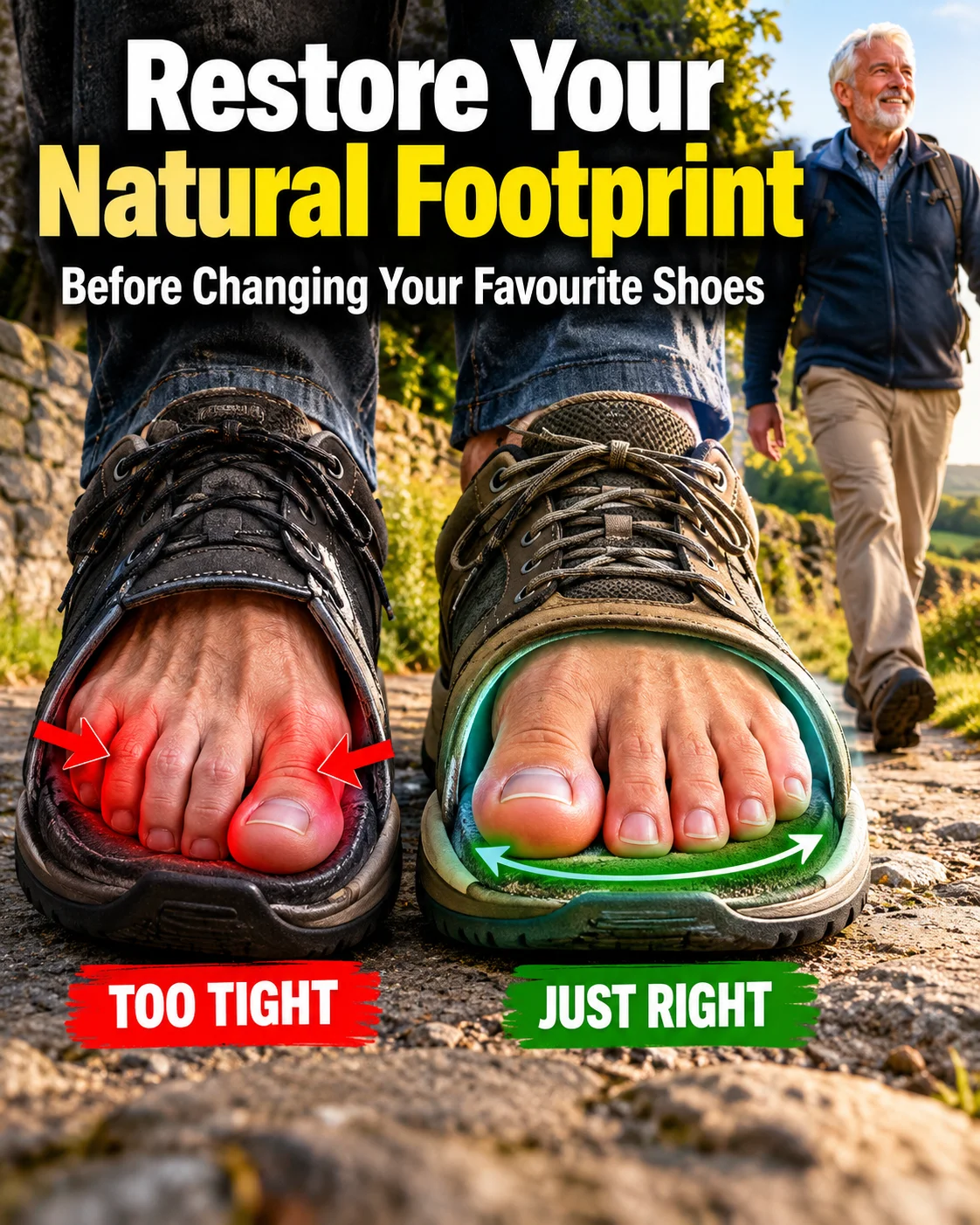
Start with space, particularly around the front of the shoe. Toes need appropriate room to rest comfortably without being squeezed against the sides or front. The amount required varies with foot shape, toe position and individual health circumstances. That’s why the number printed inside a shoe doesn’t tell the whole story. Two pairs carrying the same size may differ considerably in width, depth and toe-box shape. George might discover that his favourite shoes fit securely around the heel but become increasingly snug across the forefoot. This doesn’t prove they’re causing damage, but it suggests it’s sensible to examine the fit. The objective isn’t to force the toes apart or achieve an imagined perfect foot shape. The goal is to find footwear that accommodates the person’s feet during everyday activities. Comfortable room matters, but so does keeping the foot from sliding excessively inside the shoe.
Movement provides the second clue. The feet contain numerous joints that help the body adapt during standing and walking. As a person moves forwards, the foot changes position, and the toes contribute to the later stages of each step. Footwear can influence these movements through its shape, sole design and flexibility. However, greater flexibility isn’t automatically better for everybody. Some people benefit from shoes that provide additional stiffness or specialised support, particularly when joint conditions or other foot problems are present. Someone who has been advised to wear supportive footwear shouldn’t abandon it simply because flexible or minimalist shoes are fashionable. When working to restore your natural footprint, the useful question is whether the shoe allows movement appropriate to the wearer’s needs. That is quite different from insisting that every shoe must bend easily or that every foot should behave in the same way.
Why Restoring Natural Foot Movement Requires Appropriate Support
The growing interest in barefoot and minimalist footwear has sparked a debate about how much support a shoe should provide. Some designs offer reduced cushioning, flexible soles, wider toe boxes or a smaller heel-to-forefoot height difference. These features may appeal to people who want footwear that feels less restrictive. However, changing them also changes the demands placed on muscles, tendons and other structures. Someone accustomed to supportive walking shoes may need time to adapt to substantially different footwear, and certain health conditions make such experiments inappropriate without professional advice. Reduced cushioning isn’t proof of better foot function, just as generous cushioning doesn’t automatically prevent discomfort. The sensible approach is to understand what existing footwear helps the wearer do before removing any of those features. Judge a shoe by its suitability for the person and activity, not by whether its marketing calls it natural.
George has worn cushioned shoes for years, so switching immediately to a minimalist design wouldn’t necessarily address his cramped toes. A different shoe might provide more suitable room without requiring him to abandon the support he finds comfortable. Equally, if his current footwear has worn out, become unstable or fit poorly, choosing the same style again may repeat the problem. This is why understanding footwear characteristics matters more than taking sides in a debate about conventional and barefoot shoes. The foot needs enough freedom for everyday movement, but it also benefits from protection and, in some cases, extra support. Those requirements aren’t opposites. They must be balanced according to the individual. For older adults, especially those managing existing mobility difficulties, making footwear decisions based on realistic needs is far more useful than chasing a supposedly perfect design.
Stability is the third clue because comfortable walking depends partly on feeling secure in motion. Shoes should fit well enough to avoid excessive slipping while providing traction suited to the surfaces they’re worn on. That matters when crossing wet pavements, walking along uneven garden paths or moving across slippery household floors. A shoe may feel wonderfully soft in a shop but feel less reassuring outdoors. Another may hold the foot securely but create pressure around the toes. George’s favourite walking shoes feel stable around his heels, which is useful information. However, that strength doesn’t cancel out his concerns about toe space. The aim isn’t to sacrifice one important feature for another without understanding the consequences. Instead, he needs to consider whether the whole shoe remains suitable for his normal walking activities, including the surfaces he encounters and the distance he comfortably covers.
Restore Your Natural Footprint By Noticing Comfort Over Time
The fourth clue is particularly revealing because footwear doesn’t always feel the same throughout the day. George’s shoes feel comfortable when he first puts them on, yet his toes cramp during the walk to the newsagent. That timing reveals what his first impression couldn’t. Footwear that feels suitable during a brief fitting may become less comfortable after prolonged activity. Pressure, rubbing and changes in foot position may become more noticeable as the wearer continues walking. However, discomfort isn’t automatically caused by poor footwear. Foot conditions, changes in circulation, swelling and other health factors can also influence the experience. George can identify when the problem occurs and where he notices it. Instead of saying that his shoes feel wrong, he can explain that toe crowding develops after a particular amount of walking. That clearer description provides a useful starting point for checking fit or seeking professional advice.
There’s another reason this matters in later life. People often become attached to familiar footwear because they know exactly how it feels. A pair that’s accompanied someone through years of daily activity may seem more trustworthy than anything new on the shop shelves. Familiarity, however, doesn’t prove the fit is still right. Feet and footwear can change over time. Shoes wear out, materials lose some of their original characteristics, and individual foot needs may change because of age, health conditions or changes in activity. None of this means older adults should routinely replace comfortable shoes without good reason. It means occasional attention to fit, stability and condition can be worthwhile. When readers restore their natural footprint through better awareness, they aren’t searching for faults in every pair they own. They’re learning to recognise when familiar footwear still serves its purpose and when an overlooked restriction deserves attention.
Understand Your Footwear Before You Decide To Replace It
The most useful lesson from George’s experience is that he asked the wrong question at first. He wondered whether his shoes needed more cushioning because he associated softness with comfort. Yet the problem he noticed involved his toes becoming crowded during walking. Once he separated those two characteristics, he could investigate the relevant issue rather than buying another pair based on an assumption. That doesn’t tell him which shoes to buy or whether footwear alone explains his discomfort. It gives him a more sensible next step. He can examine the fit, look for pressure or rubbing and consider professional footwear advice if the problem persists. For someone who wants to keep walking comfortably without unnecessary expense, avoiding the wrong purchase is a practical benefit. The value lies in making a clearer decision before reaching for the wallet.
This approach also recognises that some readers need more protection, not less supportive footwear. People with diabetes-related foot complications, reduced sensation, previous foot ulcers or prescribed footwear requirements should follow their healthcare team’s advice before making changes. Reduced sensation can make it harder to detect rubbing or excessive pressure, while existing foot conditions may require specific protection. Persistent pain, numbness, swelling, skin damage or unexplained changes in foot shape also deserve professional assessment rather than repeated footwear experiments. For readers without these concerns, simply observing space, movement, stability and comfort during ordinary activity can still provide useful information. The purpose isn’t to diagnose a foot condition or promise better balance. It’s to understand whether current footwear appears appropriate and recognise when further advice may be needed.
The wider lesson is that comfortable footwear isn’t defined by one feature. Cushioning can help without guaranteeing enough toe space. Flexibility can allow movement without providing the support every wearer needs. A secure heel can improve stability while the front of the shoe remains uncomfortable. A pair that feels delightful for five minutes may behave differently on a longer walk. Understanding these distinctions makes it easier to judge footwear by the job it must do. George doesn’t need to declare conventional shoes unhealthy or rush towards barefoot walking. He needs to understand what his current shoes provide, what they may restrict and which characteristics matter for his feet. That is the practical thinking behind our effort to restore your natural footprint: observe the foot’s ordinary needs before deciding that another design must be better.
For now, the most useful question isn’t whether your shoes are fashionable, expensive or advertised as providing the ultimate walking experience. It’s whether they offer enough room, movement, stability and protection for the activities you actually do. If they do, there’s no reason to assume changing them will improve things. If they don’t, you have a clearer idea of what deserves attention. That understanding can prevent unnecessary purchases and help you describe specific concerns to a footwear specialist or healthcare professional. Your feet have supported you through ordinary life for decades, and their current needs deserve more consideration than an advertising slogan. Before replacing a dependable pair of walking shoes, investigate what they’re already doing well and whether anything has become unnecessarily restrictive.
Riley’s Wisdom Drop
“Your feet don’t need the world’s most fashionable shoes. They need enough room, suitable support and the freedom to do their everyday job comfortably.”
RESTORE YOUR NATURAL FOOTPRINT
Your Everyday Footwear Choices Can Restore Your Natural Footprint
Discover how four simple observations can help you tell comfortable support from unnecessary restriction before you spend money on another pair of shoes.
British shoppers have a curious habit. We can spend twenty minutes comparing the price of two tins of paint, examine the guarantee on a new washing machine and question whether a garden tool will survive another winter. Yet when buying shoes, we often decide after walking a few yards across a carpeted shop floor. If they’re comfortable, look respectable and don’t pinch immediately, the job appears finished. Unfortunately, conditions inside a shoe shop differ from those of an ordinary day. Walking across a smooth floor for thirty seconds tells us little about how footwear will feel after a supermarket trip, standing in the kitchen or navigating an uneven garden path. To restore your natural footprint, the useful question isn’t whether shoes feel pleasant when you first put them on. It’s whether they remain suitable for the activities your feet must perform throughout the day.
Our retired gentleman George provides a useful example. His familiar walking shoes feel soft beneath his heels and secure around the back of his feet. Nevertheless, his toes become crowded during the morning walk to the newsagent. Previously, he assumed that buying shoes with more cushioning would solve the problem. Now he’s beginning to recognise that softness and space are different footwear characteristics. Before buying another pair, he wants to understand what his current shoes already provide and what might be contributing to his discomfort. That’s a sensible approach because changing several footwear features at once can make it harder to tell which difference matters. George doesn’t need to become a footwear expert. He needs a straightforward way to observe how his shoes fit, feel and support him during the ordinary activities he enjoys.
Four Footwear Questions Worth Asking Before Buying Anything
The first question concerns space. Do your shoes accommodate your feet comfortably when you’re standing, or do the toes feel squeezed together? Shoes are often purchased according to the size printed on the box, but the labelled size doesn’t describe every detail of their fit. Width, depth and toe-box shape can vary considerably between styles. A person with broad forefeet may find one design comfortable while another of the same labelled size feels cramped. George can begin by examining his shoes while standing securely, noticing whether his toes feel pressed against the sides or front. He doesn’t need to force his toes apart or try to create a particular foot shape. His task is to recognise whether the footwear gives his feet enough room today.
Next comes movement, which is frequently misunderstood in discussions about natural footwear. The foot has numerous joints that support walking, standing and adapting to different surfaces. As body weight moves forwards during a step, the foot changes position, and the toes contribute to the later stages of walking. Shoe design can influence these movements through sole thickness, flexibility and overall shape. However, the most flexible shoe isn’t automatically the most suitable. Some people benefit from footwear that limits particular movements, especially when managing painful joints or other established foot conditions. Someone already using prescribed footwear shouldn’t abandon it because a flexible alternative looks more natural. When readers consider how to restore their natural footprint, the important distinction is whether their footwear permits movement appropriate to their individual needs, not whether the sole can be folded in half.
Stability forms the third part of the comparison. Footwear should feel sufficiently secure for the activities and surfaces its wearer encounters. George’s morning journey may involve smooth pavements, dropped kerbs and perhaps the occasional wet patch outside the newsagent. Suitable traction and a secure fit therefore matter as much as cushioning and toe space. A shoe that lets the heel slip too much may feel less reassuring when walking, while one that grips too tightly can create uncomfortable pressure. Neither situation should be ignored simply because the sole feels soft. However, stability doesn’t mean holding every part of the foot rigidly. The practical objective is footwear that provides appropriate security while accommodating ordinary movement. This balance matters especially for older adults who value confidence when moving around their homes and neighbourhoods.
The fourth question examines comfort over time. This is where George’s observations become particularly useful because his shoes feel comfortable initially but less satisfactory after walking. Rather than judging footwear solely by its first impression, he can consider when discomfort begins, where he feels it and whether the sensation changes across activities. A shoe that feels comfortable for a brief indoor trip may feel different after a longer outing. Foot swelling, pressure, friction and existing health conditions can also influence these experiences. None of these observations proves that the shoe is responsible, but they help identify the circumstances worth investigating. George can now explain that his toes feel crowded while walking, rather than simply describing the shoes as uncomfortable. That distinction makes it easier to discuss fit with a footwear specialist or healthcare professional. Choosing secure, comfortable footwear is one practical way to restore your natural footprint without giving up the support your feet need
Why Familiar Shoes Deserve A Fresh Look
One reason unsuitable footwear can remain unnoticed is that people become accustomed to how their shoes feel. A favourite pair may have accompanied its owner through years of ordinary activities, gradually becoming as familiar as an old armchair. There’s nothing wrong with appreciating dependable footwear. However, familiarity and suitability aren’t necessarily identical. Feet can change over time, while shoes gradually wear and their materials may lose some of their original characteristics. Someone who previously found a particular style comfortable might later notice pressure around the toes or reduced stability during walking. These observations don’t mean ageing automatically makes existing footwear unsuitable. They suggest that occasional attention to fit and condition is sensible, particularly when something begins to feel different.
George decides to examine his walking shoes before visiting the shops. He notices the soles show ordinary wear, but the heels still feel secure. The front of each shoe looks narrow, and he remembers that the toe crowding has become more noticeable on recent walks. Instead of immediately assuming he needs a different category of footwear, he now has a more specific concern to investigate. Another style might offer more toe room while keeping the support he values. His discomfort may have another explanation that needs professional attention. Either way, he’s better prepared to make a useful decision. He isn’t simply replacing an old pair because the advertising promises superior comfort. He’s identifying what matters for his feet and the walking he actually does.
How To Restore Your Natural Footprint Without Sacrificing Support
The phrase “natural footwear” can sound appealing because it suggests letting feet move as they were designed to. However, that idea becomes less useful when it’s presented as a rule everyone should follow. People have different foot structures, walking habits, health conditions and protection needs. A retired walker accustomed to cushioned shoes may respond differently to minimalist footwear from someone who has worn flexible shoes for years. Changing cushioning, sole stiffness or heel height alters the demands placed on muscles, tendons and other tissues. Some individuals may adapt comfortably to different designs, while others may need additional support or professional guidance. The sensible decision is to understand what existing footwear helps the person do before removing any of those features.
Consider someone who enjoys walking around the garden but occasionally experiences discomfort under the forefoot. They read that barefoot-style shoes allow more natural movement and begin wondering whether removing cushioning would help. Yet the source of their discomfort hasn’t been established, and changing footwear could alter the pressure and forces experienced during walking. A more useful approach is to identify when the discomfort appears, whether the current shoes fit appropriately and whether professional assessment is needed. A fashionable footwear alternative doesn’t prove it addresses the individual’s problem. Understanding the difference between support and restriction helps readers resist attractive but oversimplified explanations. Comfortable movement depends on personal circumstances, not on a single universal footwear philosophy.
This approach also offers a practical financial advantage. Footwear can be a significant expense, especially when someone is living on a fixed retirement income. Buying another pair because the previous shoes felt uncomfortable may seem reasonable, but repeating the same fitting mistake can waste money. George originally intended to purchase something softer, even though his main concern involved toe space. By examining his experience more carefully, he can ask better questions before making that purchase. Does the new design offer sufficient room around the toes? Does it hold the heel securely? Is the sole suitable for his usual walking surfaces? Can he assess its fit under realistic conditions? These questions won’t guarantee that a new pair will be perfect, but they encourage a more informed decision than choosing solely by appearance, brand or cushioning.
A Simple Way To Check Whether Your Shoes Still Suit You
The useful thing about footwear observation is that it begins with shoes you already own. Choose your usual everyday footwear and examine its condition before putting it on. Look for obvious damage, excessive sole wear or areas that might create pressure. If you have reduced sensation or a condition that requires protective foot care, follow your healthcare team’s guidance rather than relying on a general observation exercise. Otherwise, put on your shoes as you normally would and sit comfortably for a moment. Notice how they feel around the toes, forefoot and heel. There’s no need to change your foot position deliberately or attempt to spread your toes. Consider whether the footwear fits without obvious squeezing or discomfort.
Next, stand securely with appropriate support nearby if needed. Your feet support more body weight when you stand, and the fit may feel different than when you sit. Check that your toes stay comfortable and your heels feel secure. Avoid deliberately rocking onto the edges of your feet or trying complicated balance tests. The purpose isn’t to challenge your stability. It’s to compare how the shoes feel in two familiar positions. Some people may notice little difference, while others may notice pressure that wasn’t obvious when seated. Neither observation is a diagnosis. However, it provides information about how the footwear accommodates the foot under different everyday demands. Readers working to restore their natural footprint can use these observations to recognise whether a particular concern deserves closer attention.
Compare Everyday Walking Comfort Without Forcing A Test
If walking is already comfortable and safe, consider how your footwear feels during an ordinary activity you would normally perform. That might be moving around the house, visiting a nearby shop or taking your usual short walk. There’s no reason to extend the distance, increase your speed or continue if discomfort develops. Notice whether the fit remains comfortable as the activity progresses. Perhaps your shoes feel secure throughout. Perhaps pressure appears around the toes, or rubbing becomes noticeable in one particular area. Record where and when the sensation occurs rather than assuming the cause. If the shoes remain comfortable, there’s no reason to manufacture a problem. If discomfort develops, stop the activity as appropriate and consider whether it makes sense to check the fit or seek professional advice.
George can apply this approach during his normal morning routine without turning it into an exercise programme. He already knows that his toes tend to feel crowded towards the end of the walk. Rather than deliberately repeating an uncomfortable journey, he can use that existing observation to guide his next decision. He might examine the toe-box shape, check whether the shoes have become worn and discuss the fit with a footwear professional. If he has persistent pain, numbness or other concerning symptoms, healthcare assessment is more appropriate than repeatedly trying different shoes. The important improvement is his ability to describe what happens. Instead of asking for the softest footwear available, he can explain that the heel feels secure but his forefoot cramps while walking. That information makes the conversation more useful.
When Footwear Problems Need More Than A Different Shoe
Not every uncomfortable foot sensation can be explained by footwear fit. Persistent pain, numbness, swelling, unexplained changes in foot shape or skin damage can have several possible causes. These concerns deserve professional assessment rather than repeated experiments with shoe styles. This is especially important for people with diabetes-related foot complications, reduced sensation, previous foot ulcers or footwear prescribed for a medical condition. Someone who cannot reliably feel pressure or rubbing may be at greater risk of unnoticed injury, making suitable protection and professional advice particularly important. Walking barefoot or switching to substantially less protective footwear may therefore be inappropriate. General footwear observations help you recognise concerns, but they cannot establish whether a medical condition is present or determine what treatment someone needs.
An informed footwear decision differs from trying to solve a medical problem without assessment. A shoe that presses uncomfortably against the toes may justify checking its fit. However, unexplained changes in sensation or persistent pain shouldn’t automatically be blamed on the shoe. Likewise, somebody who feels unsteady while walking may need an assessment of several contributing factors rather than assuming different footwear will restore their balance. The aim is to recognise the limits of what we can see. George can learn something useful from his crowded toes without diagnosing the reason himself. If simple fitting considerations don’t explain the problem, or symptoms continue, a podiatrist or other appropriate healthcare professional can assess the situation more thoroughly. Understanding when to seek help is part of choosing footwear responsibly.
Your Daily Footwear Check: Four Questions Before Your Next Purchase
Today’s practical exercise is designed to help readers make one useful observation about footwear they already own. There’s no requirement to buy anything, change shoes or perform a specialised movement test. Begin with your usual comfortable footwear and consider four questions: Do my toes have appropriate room? Can the shoe accommodate movement that meets my needs? Does it feel secure and stable? Does it remain comfortable during my ordinary activities? These questions cover different features, so resist the temptation to answer them all based on how soft the shoes feel. A comfortable sole doesn’t mean the toe box fits correctly, and generous toe space doesn’t guarantee stability. The goal is to understand the whole shoe and how it meets the person’s everyday needs.
If you identify one concern, describe it in a straightforward sentence. You might write, “My shoes feel comfortable when I first put them on, but my toes become crowded after walking.” Another observation could be, “The front of my shoes feels roomy, but my heel slips when I move.” These descriptions help identify what happens without inventing a cause. They can guide a discussion with a footwear specialist or healthcare professional if necessary. If your shoes feel secure, accommodate your feet and stay comfortable during everyday activity, there’s no reason to assume they need replacing. The purpose of the exercise is to support better decision-making, not to encourage unnecessary purchases. Sometimes the most useful discovery is that the footwear you already own still does its job well.
Riley’s Wisdom Drop
“Don’t judge your shoes by how soft they feel in the shop. Judge them by how well they support your feet during the life you actually live.”
Today’s Takeaway: Support Should Match The Job
The best footwear decision begins with understanding what your feet need during ordinary activity. A shoe should provide suitable protection, appropriate space, secure fit and support matched to the wearer. Don’t judge it entirely by cushioning, flexibility or the promises attached to a particular design. George’s morning walks demonstrate why that distinction matters. His familiar shoes provide comfort under the heels but may not leave enough room around the toes. By recognising the difference, he can investigate the relevant feature rather than buying another pair based on an assumption. For anyone hoping to restore your natural footprint, the real advantage is learning to separate what footwear does well from what may need attention.
Open to See This Video – And This Is What’s Already Built, Trained & Waiting For Your First Command.
Remember, comfortable movement doesn’t require everyone to wear the same type of shoe. One person may benefit from a particular supportive design, while another may need a different fit or feature. Existing health conditions, mobility needs and everyday activities all influence what is appropriate. The purpose isn’t to remove support simply because somebody describes it as unnatural. Nor is it to assume that more cushioning automatically means better footwear. Observe how your current shoes accommodate your feet, consider whether they stay suitable throughout the day, and seek professional advice if discomfort persists or concerning symptoms appear. That approach helps protect both your comfort and your wallet. Before buying another pair, make sure you understand what problem you’re trying to solve.
The final question: Are my shoes helping my feet do their everyday job, or have I got used to how they restrict it?
Restore Your Natural Footprint 4 Surprising Shoe Secrets
Spread the love
Dennis Bartram
Dennis Bartram is the Director of the Active Balance Home or on the Go System Dennis’ journey began in 1969 when he qualified in Swedish remedial massage and in 1974, he began his practice in remedial sports massage and manipulative
Daily Routine Builds Confidence Daily Routine Builds Confidence Through Familiar Movement Confidence often grows when ordinary movement stops feeling like a fresh…
Restore Your Natural Breathing Before Making Every Breath Another Job. Discover why everyday breathing can require unnecessary muscular effort, and how simple…
Understand Your Fascial Connections Before Blaming The Stiff Spot Discover why stiffness in one area can involve several neighbouring body structures working…
Everyday Movements Reveal Progress Everyday Movements Reveal Progress You Might Otherwise Miss An ordinary morning can contain a useful change. The Chair…

 George is a retired gentleman who walks to the local newsagent each morning. He has worn the same cushioned walking shoes for years and finds them surprisingly comfortable.