Powerful Natural Movement therapy can reset the nervous system.
From Tension to Trust: A Gentle Guide to Neuroscience Self-Care
Nervous System Overload in Elite Bodies
Moreover, high performers aren’t just physically taxed; they’re neurologically overdrawn. Indeed, behind the tennis serve, the boardroom pitch, or the perfect posture lies a silent undercurrent of tension. Not just muscular, but neural. The nervous system adapts to pressure and, in doing so, braces.
Nevertheless, bracing is not about strength. Thus, in this context, survival is the focus. Thus, a clenched jaw, held breath, or locked knees signal the nervous system preparing for impact again. Neuroscience self-care movement therapy doesn’t treat this with stillness, but with refined Movement designed to disarm it.
Additionally, the body is invited to move in ways that signal safety to the brain. Additionally, gentle spirals. Moreover, soft gaze shifts occur. Additionally, weighted exhales help signal safety to the brain. Moreover, it’s not about training the muscles; it’s about training perception. Thus, once the nervous system feels safe, the body begins to recalibrate.
The Problem With Pushing Through
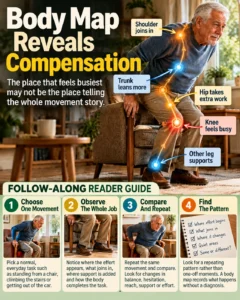 However, in professional and athletic cultures, the default solution to tension is compensation. Nevertheless, more training. However, adding more control. Add another message. But this compounds the problem. Overcorrection is still tension, just rebranded.
However, the neuroscience self-care movement therapy introduces the opposite: informed surrender. In other words, it isn’t collapsing or doing nothing. However, this approach means doing the least precise action that lets the body reboot. However, high performers don’t need more effort. They need more accurate listening.
Moreover, this listening happens on the floor. In stillness. In small sways. As a result, it’s where the spine unravels and the breath returns. Where the nervous system says, finally, “I’m safe.”
Moreover, polyvagal theory tells us that safety is a physiological event, not a mental one. If your body doesn’t feel safe, your brain can’t override it with logic. That’s why the neuroscience self-care movement therapy uses specific sequences to retrain vagal tone, proprioceptive feedback, and emotional holding patterns in the fascia.
This isn’t woo. It’s neuroplasticity, applied gently. When you learn to feel again, without fear, you rewire not just your posture, but your presence.
The Science Behind Repatterning
Rest is good. But stillness alone doesn’t calm the nervous system, especially in bodies conditioned for performance. In fact, prolonged stillness can reinforce freeze responses, especially in nervous systems conditioned by years of performance tension. Lying on the couch alone won’t cut it. We need motion that communicates safety.
Neuroscience self-care movement therapy guides you into just enough Movement: soft, rhythmic, gravity-aware gestures that gently signal “You’re safe” to the brainstem. These movements aren’t designed to burn calories; they’re designed to reset thresholds. Micro-spinal sways, breath-led spirals, and rhythmic resets do what silence alone cannot.
This therapy doesn’t start with effort. It starts with awareness.
✅ Why Self-Care Movement Therapy Matters
The Role of Reflexes and Neural Pathways
Your reflexes aren’t outdated. They’re overloaded. Most adults, especially high performers, carry distorted or dormant reflex patterns. The startle reflex. The righting reflex. Even the grasp reflex. These primal systems underpin posture and coordination. When they’re dysregulated, posture collapses, breath flattens, and anxiety spikes.
Neuroscience self-care movement therapy reawakens these through slow, floor-based, non-goal-oriented Movement. That’s why it’s equally useful for seniors regaining balance and athletes restoring rotation.
You’re not stiff. You’re protected. And the right Movement invites the protection to lift.
From External Strength to Internal Safety
You can lift weights and still feel unsafe. You can meditate and still be hypervigilant. Strength isn’t the same as safety. Movement that resets the nervous system is safety.
This is why neuroscience self-care movement therapy matters. It’s not about fixing the body. It’s about helping the nervous system believe the body is okay. Once that belief is restored, posture returns. Breath deepens. Coordination improves. And yes, performance expands.
✅ Start Neuroscience Self-Care Movement Therapy With Breath
Crawling Reflex in Neuroscience Self-Care Movement Therapy
This is the starting point. Simple but neurologically potent. Here’s how:
- Lie on your back, knees bent.
- Place a small sandbag or book on your chest.
- Breathe in through your nose.
- Exhale slowly, letting the weight drop as you breathe out.
This isn’t breathwork for performance. It’s breathwork for safety. The weight cues the diaphragm and vagus nerve to downregulate the system. After 3–5 minutes, many people report feeling “done performing.”
Cross-Lateral Sway Reset
This Movement mimics the spinal flow of crawling and walking:
- Lie on your side
- Curl one knee toward the chest as you roll the opposite shoulder forward.
- Let the pelvis follow.
- Additionally, breathe into the twist.
Additionally, this sequence re-integrates left-right coordination, reduces asymmetrical tension, and restarts the body’s central rhythm. It’s especially effective for golfers, dancers, and anyone who feels “stuck” on one side of their body.
Eye-Lead Micro Rolls
Moreover, our eyes shape our Movement. Tension often lives in our gaze. This drill retrains the visual field to lead Movement, not resist it:
- Lie supine
- Keep the head still
- Gently let the eyes look left, then slowly follow with the head and shoulders.
Thus, as the spine follows the gaze, the nervous system recalibrates orientation and softens global tension. However, high-performers often forget how visual tension affects physical readiness. This puts them back in sync.
✅ Neuroscience Self-Care Movement Therapy for Every Nervous System
Seniors Thrive With Neuroscience Self-Care Movement Therapy
Not everyone needs intense rehab or psychological therapy. But everyone needs neural regulation. Thus, neuroscience self-care movement therapy offers a bridge for stress between a medical diagnosis and burnout.
This approach prevents muscular compensation from becoming an injury for athletes. Moreover, for coaches and Movement professionals, it clarifies the nervous system behind the Movement. Therefore, for high-pressure executives, it restores the calm foundation productivity relies on.
This therapy also fits retired athletes who are now navigating structural fatigue, chronic micro-traumas, and emotional carrying patterns. However, yoga or stretches do not solve these issues. They require nervous system literacy.
Movement Educators and Manual Therapists
If you teach Pilates, somatics, yoga, or bodywork, this therapy reframes how you see your work. It’s not just the client’s muscles that matter; it’s their safety. Neuroscience self-care movement therapy equips practitioners to recognise bracing, collapse, overcorrection, and hypervigilance not as bad posture, but as nervous system signatures.
This enhances what you already do. It makes your hands more sensitive. Your cues are more precise. Your sessions are more effective.
Seniors and the Nervous System in Ageing
As bodies age, the nervous system becomes either rigid or fluid. People with rigid habits face a higher risk of falling. Those with fluid, responsive reflexes remain stable, grounded, and pain-free. That’s why neuroscience self-care movement therapy is ideal for active retirees.
This isn’t an exercise. It’s preservation. Movement becomes memory repair, emotional regulation, and postural rebalance.
✅Dennis Bartram’s Neuroscience Self-Care Movement Therapy Sessions
Preparing for Neuroscience Self-Care Movement Therapy Day
Dennis Bartram’s method has evolved beyond its Amatsu origins. Today, his Active Balance approach integrates structural rebalancing, movement re-education, and a neuro-somatic reset into one holistic session. Each session is uniquely designed for your neural and postural fingerprint.
In a full-day consultation, clients move through phases:
- Nervous system scan and fascial response testing
- Breath-led, gravity-based movement sequences
- Floor-based neurological reflex resets
- Micro-adjustments through tactile cueing
- Verbal guidance for daily nervous system rituals
Case Profiles From Real Clients
- Pro Golfer (48): Released chronic shoulder tension and regained spinal rotation after just one session.
- Movement Coach (39): Learned how to integrate neuro-literate Movement into her own classes.
- Executive (57): Reported easier breathing, a lifted posture, and mental calm within hours of treatment.
This isn’t therapy as usual. It’s whole-body intelligence training. The results aren’t just structural; they’re systemic.
What to Expect and How to Prepare
Dennis’s sessions are intentionally quiet, gravity-based, and floor-oriented. No tools, machines, or protocols. Just conversation, touch, breath, and nervous system recalibration. Wear soft clothes. Bring openness. Leave transformed.
✅Neuroscience Self-Care Movement Therapy as Daily Practice
Lifelong Benefits of Neuroscience Self-Care Movement Therapy
Neuroscience self-care movement therapy isn’t about fixing what’s broken. It’s about revealing what’s been buried under layers of tension, expectation, and over-efforting. Movement becomes a mirror: how you move reflects how you live. Moving with trust means living with ease.
This work isn’t temporary. It’s not just a reset. It’s a lifelong invitation to reclaim agency over your nervous system, your breath, and your balance.
Building Your Ritual, One Breath at a Time
You don’t need a gym. Or a yoga mat. Or 90 minutes. You need:
- 10 minutes
- A quiet floor
- A curious nervous system
Build the habit:
- Wake up and breathe with weight on your chest.
- Sway side to side before coffee.
- Gaze gently at the wall before screen time.
This isn’t about doing more. It’s about doing differently.
Where to Begin – And Why It’s Never Too Late
Start with your spine. Begin with breath. Start now.
Whether you’re a high-performing athlete, a retired pro, a movement educator, or someone who wants to feel safe in their body again, neuroscience self-care movement therapy meets you where you are. From there, you move not to perform, but to belong.
Open to See This Video, And This Is What’s Already Built,
Trained & Waiting For Your First Command.
Chris Bartram Has Been Actively Balance Training Since Childhood.

Today’s Apprentice Task: Build One Front Door
Long-Term Use of Neuroscience Self-Care Movement Therapy
Ageing Gracefully With Neuroscience Self-Care Movement Therapy
You don’t need hour-long sessions to change your nervous system. The magic of neuroscience self-care movement therapy lies in consistency, not intensity. 10 minutes a day is more potent than an occasional hour. Daily rituals like gravity resets, gaze tracking, and weighted exhales keep your nervous system fluid and responsive.
Consistency trains the brain. Precision retrains the body. Together, they shift your whole presence.
Prevent Breakdown Before It Starts
Most therapy waits until something breaks. But the neuroscience self-care movement therapy is preventative. It helps you catch the early whispers of fatigue, misalignment, or emotional holding, before they become chronic. This makes it the ultimate longevity practice for retirees, athletes, and professionals alike.
It’s a movement as maintenance. Not a reaction.
Movement for the Next Chapter of Life
Your nervous system doesn’t retire. It evolves. With age comes more refinement, not less vitality, if you train your system to adapt. Neuroscience self-care movement therapy empowers that evolution. It keeps your posture dynamic, your breath adaptable, and your presence alert.
This is care that grows with you. Movement that ages well. A practice for life.
Neuroscience Self-Care: Powerful Natural Movement Therapy Routines